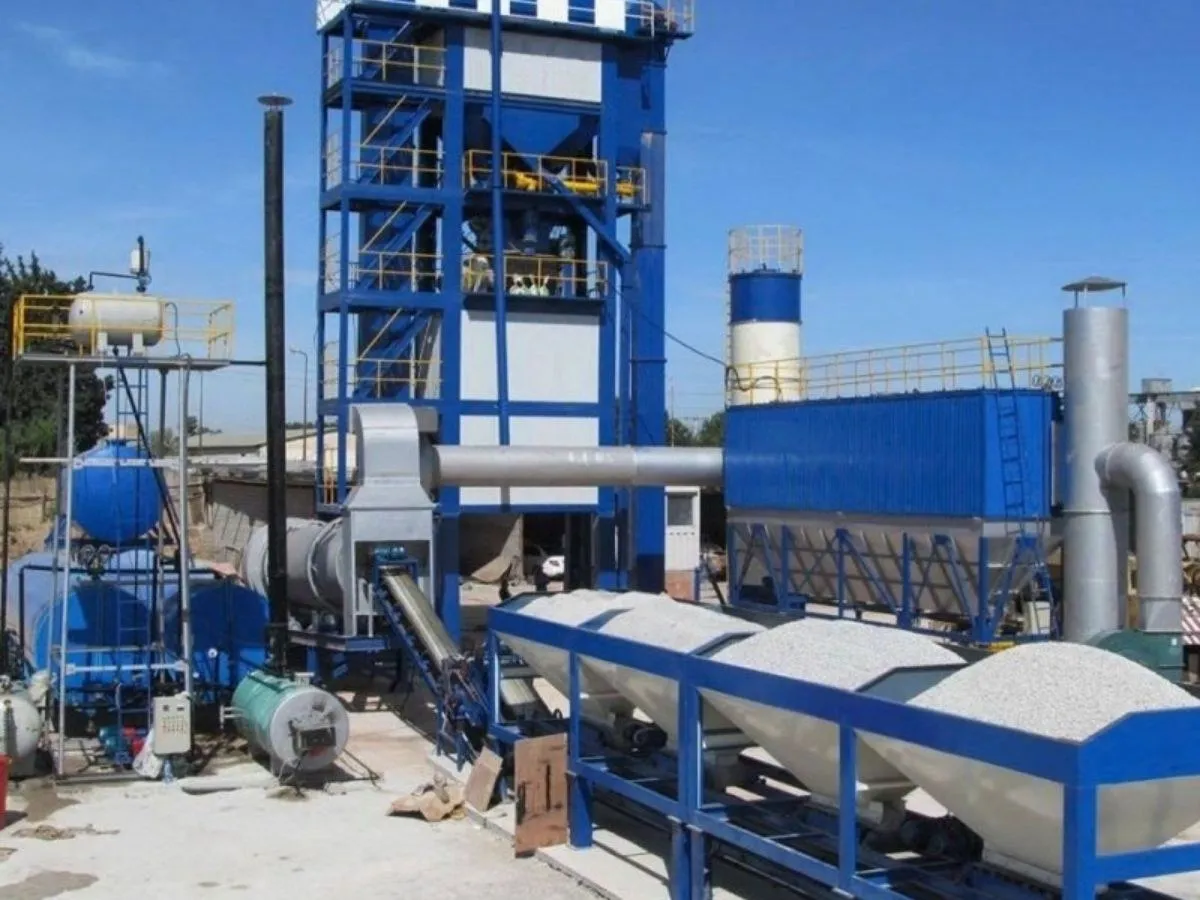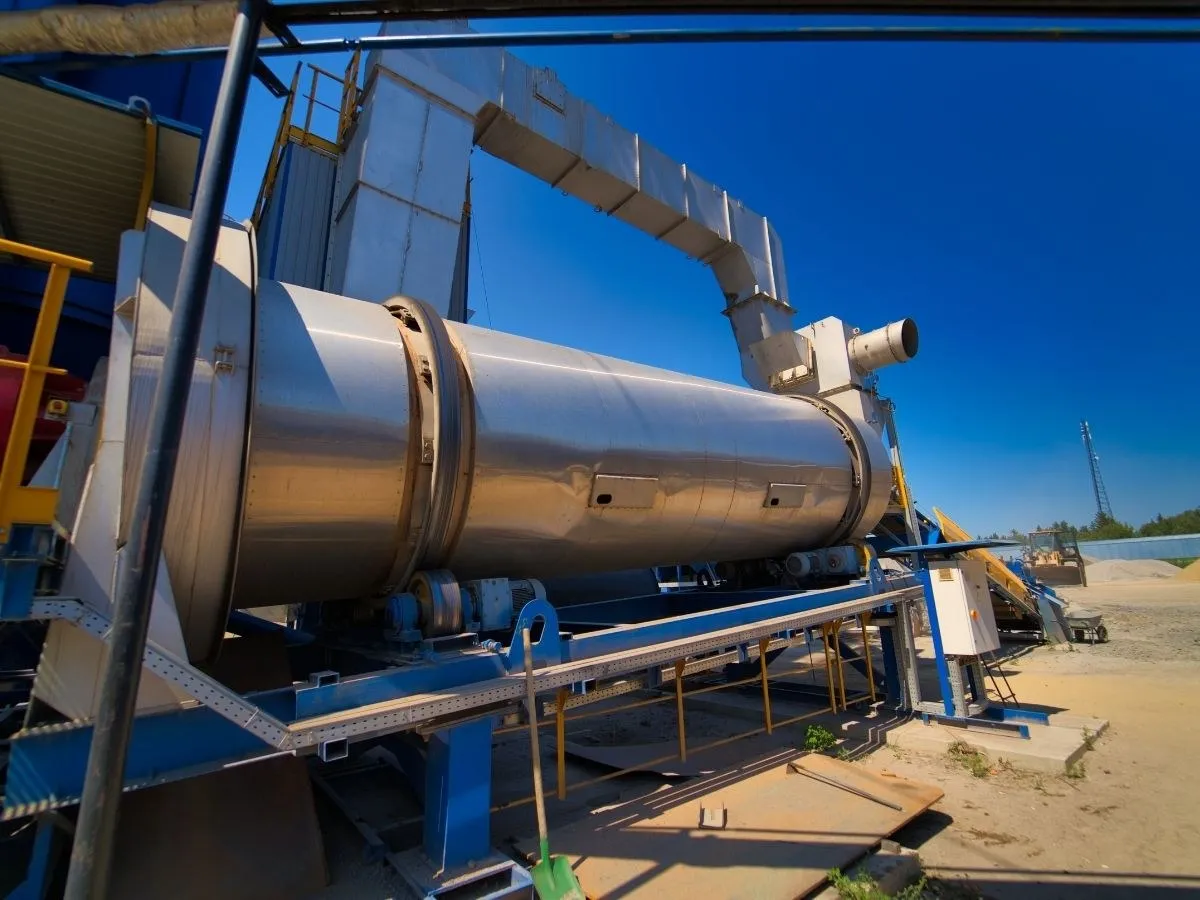
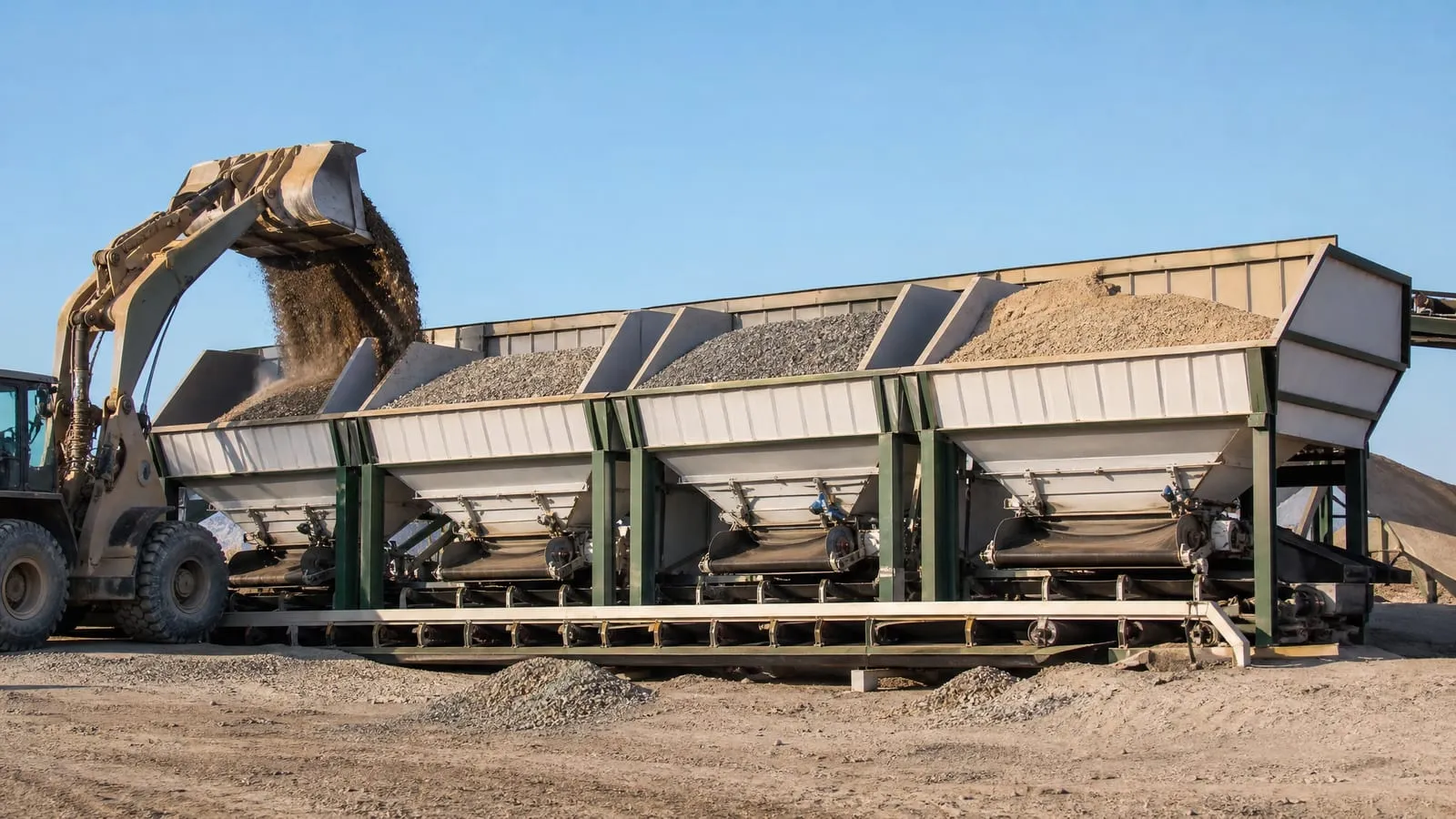
Short answer: Test your aggregate before you buy the plant. Stone is most of the mix by weight, so gradation, hardness, shape, cleanliness, absorption and bitumen adhesion decide whether you can meet the specification and how much binder and fuel you use. The source also sets how many cold bins and screen decks the plant needs.
The sections below cover what to test and how the results shape the plant you order.
What to test
| Property | Why it matters |
|---|---|
| Gradation | Must fit the mix design bands; decides bins and screens |
| Hardness / abrasion resistance | Resists crushing under traffic and in the plant |
| Particle shape | Cubical stone interlocks; flaky and elongated particles weaken mix |
| Cleanliness | Clay and dust coatings stop binder sticking |
| Water absorption | Absorptive stone takes more binder and fuel |
| Soundness | Resistance to weathering |
| Adhesion to bitumen | Some stone types strip — may need an anti-stripping agent |
| Natural moisture | Drives fuel use and drying capacity |
Your specification sets the test methods and limits. A local lab or the project’s materials engineer can run them.
How aggregate affects the plant
| Aggregate issue | Plant consequence | Answer |
|---|---|---|
| High moisture | Lower output, higher fuel | Bigger drum and burner; covered stockpiles |
| High absorption | More binder and fuel per ton | Mix design; cost planning |
| Dirty, clayey stone | Coating problems; baghouse load | Washing at the quarry; scalping screen |
| Many sizes needed | More cold bins and screen decks | Plant configuration |
| Poor gradation control at quarry | Hot bins out of balance | Better crushing and screening; more bins |
Questions to answer before ordering
- Which quarry or pit, and how far from the plant?
- Which sizes does it produce, and how consistent are they?
- Do test results meet the specification?
- What is the natural moisture, and in the rainy season?
- Is filler available, or will the baghouse supply enough?
Send the answers with your inquiry — they decide cold feed, screen and drum configuration. For quality checks after start-up, see quality control lab.