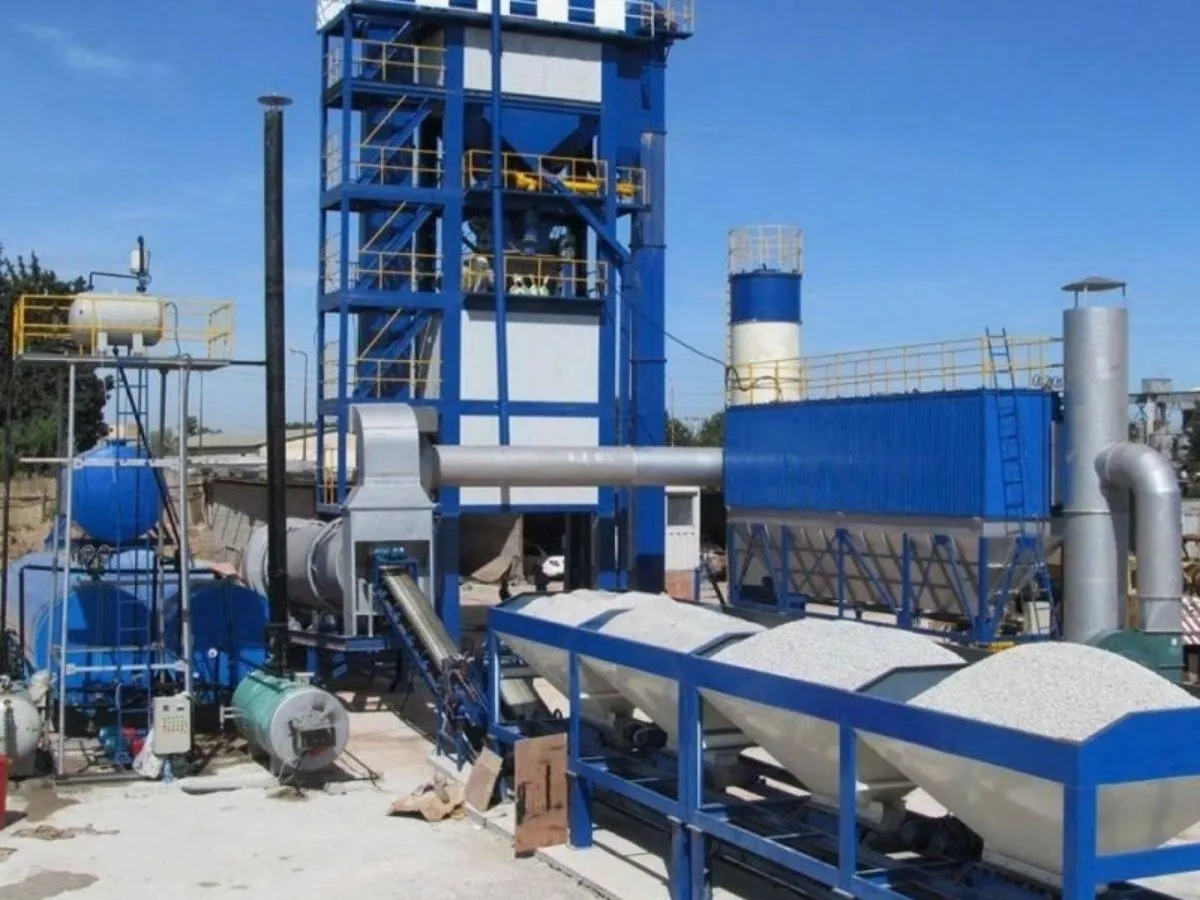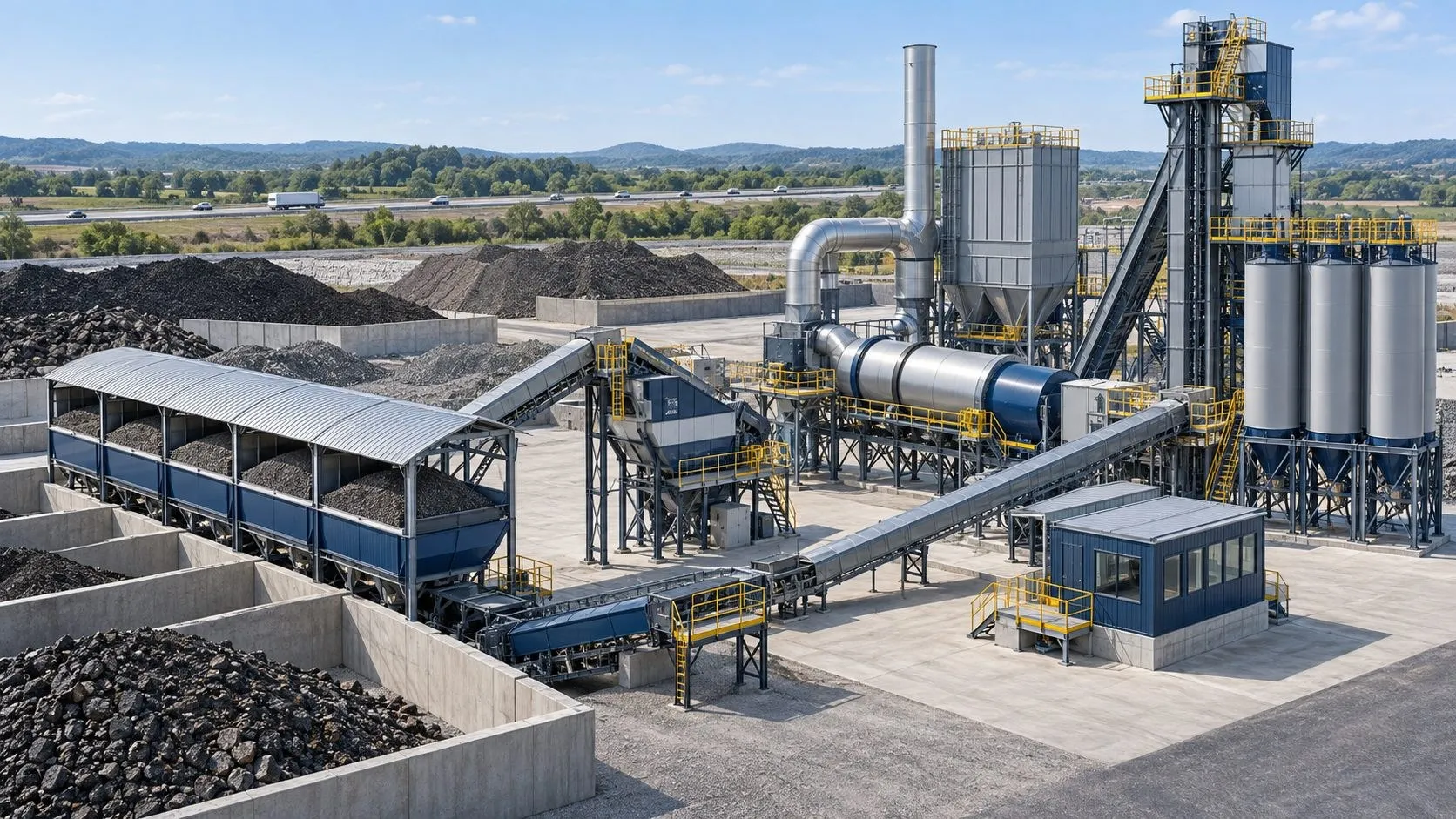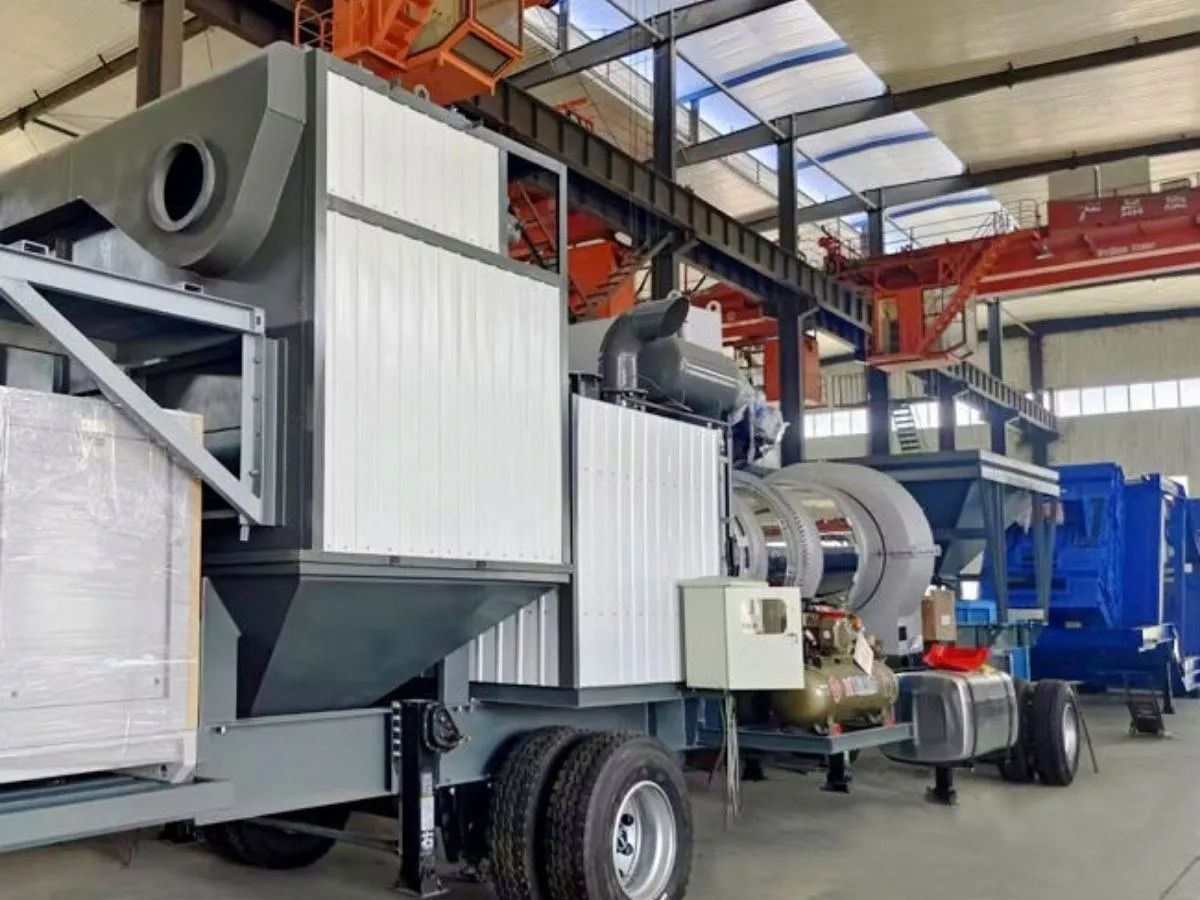
- Mobile
- Batch mixing
- 60–160 t/h
Mobile Asphalt Plant
RMX-M60 ~ RMX-M160
Road maintenance and short-term contracts where the plant moves several times a year.
Asphalt mixing plants and practical support for road projects worldwide

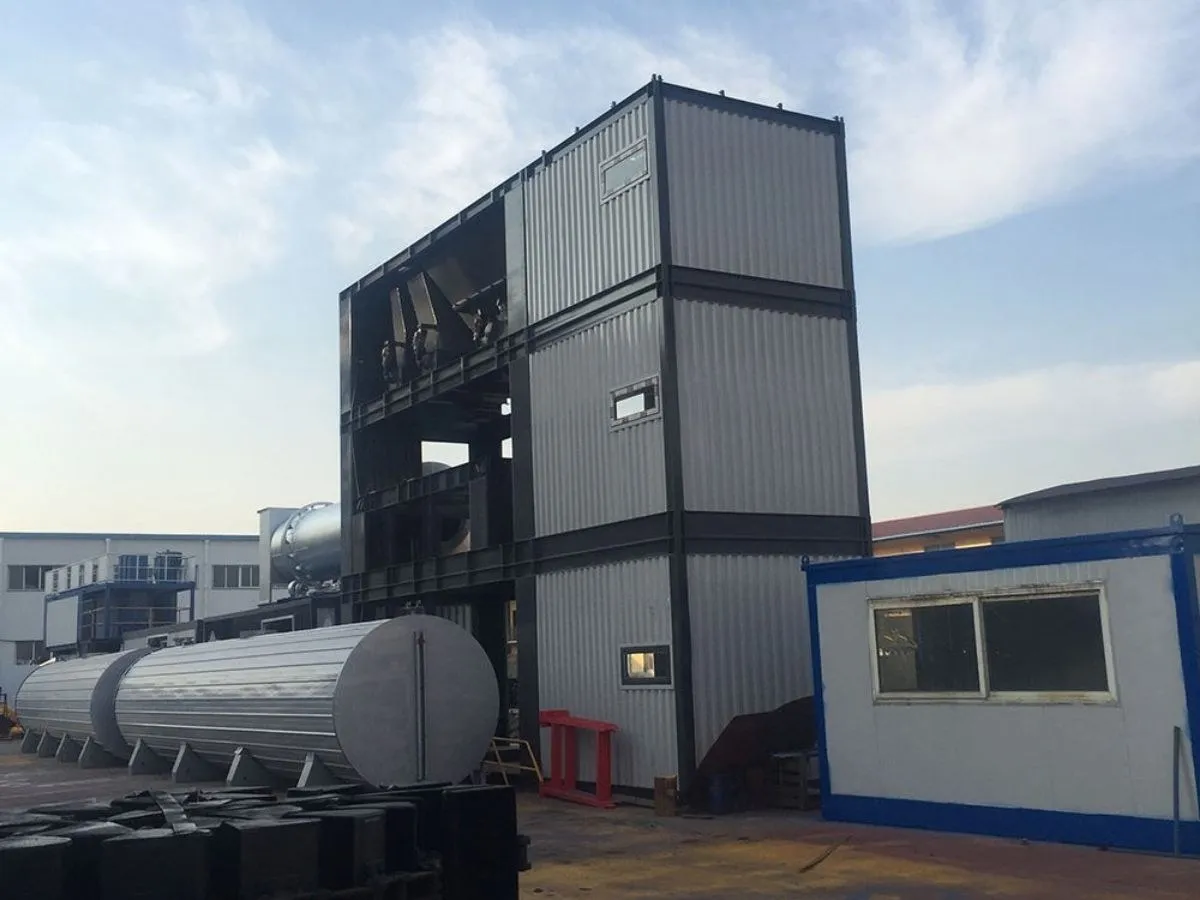
A batch mixing plant built as container-sized modules — ship it like cargo, set it up on compacted ground, and move it again when the project ends.
Best for: Contractors who move between projects or export plants overseas and still need batch-level mix accuracy.
A containerized asphalt plant is a batch plant whose main sections — cold feed, drying, screening and mixing tower, dust collection and control — are built into frames the size of standard shipping containers. That changes three things for the buyer: how the plant travels, how it is installed, and how often it can be moved.
If the plant will stay on one site for many years and you have space and time for civil works, a stationary batch plant gives more freedom in layout and storage. For low-cost continuous production of a single mix, look at the drum mix plant.
An RMX-C plant arrives as a set of self-contained units, each with its own frame, walkways and wiring connectors:
| Module | What it contains |
|---|---|
| Cold feed | Four to six feed bins with variable-speed belt feeders, collecting belt and inclined conveyor |
| Drying | Rotating drying drum, burner, fuel line and drum drive |
| Mixing tower | Hot elevator, vibrating screen, hot aggregate bins, aggregate / filler / bitumen scales and the twin-shaft mixer |
| Dust collection | Baghouse, exhaust fan, stack and filler return to the tower |
| Filler | Filler silo and screw conveyors |
| Bitumen | Insulated bitumen tanks with heating, pumps and pipework |
| Control | Air-conditioned control room with PLC, operator computer and electrical cabinets |
Because each module is tested in the factory and arrives pre-wired, site work is mostly positioning, bolting, connecting cables and pipes, and calibrating the scales.
Start from your average daily tonnage and realistic working hours, not the busiest day. As a rough guide, a plant produces about 65–85% of its rated output over a full shift once truck waiting, recipe changes and aggregate moisture are counted.
| Model | Rated output | Daily output, 8 h at 75% | Typical work |
|---|---|---|---|
| RMX-C80 | 80 t/h | about 480 t | Municipal roads, district programs |
| RMX-C120 | 120 t/h | about 720 t | Provincial and national roads |
| RMX-C160 | 160 t/h | about 960 t | Highway contracts, airport aprons |
| RMX-C240 | 240 t/h | about 1,440 t | Expressways, large packages |
| RMX-C320 | 320 t/h | about 1,920 t | Major highway programs |
| RMX-C400 | 400 t/h | about 2,400 t | Very large or multi-contract supply |
If your aggregate is often wet — common in tropical rainy seasons — tell us the moisture. Drum and burner sizing is checked against it, because drying capacity, not mixer size, usually limits output on wet days.
Relocation is the reason to buy a containerized plant. The process reverses the installation: empty and clean the bitumen system, disconnect cables and ducts, lift the modules onto trucks, and re-level them on the new pad. Moves are fastest when the same crew does them and the new pad is ready before the plant arrives.
Indicative FOB prices for RMX-C plants run from about $220,000 (RMX-C80) to about $1.08 million (400 t/h), depending on configuration. See the RMX-C price by model; the asphalt plant price guide explains what drives the figure and which costs come on top.
Containerized Asphalt Plant — RMX-C80 ~ RMX-C400, 80–400 t/h.
| Model | RMX-C80 | RMX-C120 | RMX-C160 | RMX-C240 | RMX-C320 | RMX-C400 |
|---|---|---|---|---|---|---|
| Rated output (t/h) | 80 | 120 | 160 | 240 | 320 | 400 |
| Mixer capacity (kg/batch) | 1500 | 1500 | 2250 | 3500 | 4250 | 5500 |
| Installed power (kW) | 245 | 305 | 345 | 505 | 660 | 810 |
| Cold feed bins (number × m³) | 4 × 8 | 4 × 9 | 5 × 9 | 6 × 12 | 6 × 15 | 6 × 18 |
| Drying drum (L × Ø, mm) | 6000 × 1500 | 7500 × 1600 | 7500 × 1800 | 8500 × 2000 | 9500 × 2200 | 11000 × 2700 |
| Hot aggregate bins (m³) | 12 | 22 | 36 | 53 | 53 | 70 |
| Aggregate scale (kg) | 1000 | 1200 | 1750 | 2250 | 3000 | 4000 |
| Filler scale (kg) | 100 | 250 | 250 | 250 | 400 | 600 |
| Bitumen scale (kg) | 100 | 200 | 200 | 200 | 400 | 600 |
| Baghouse filter area (m²) | 400 | 473 | 489 | 674 | 830 | 1132 |
| Filler silo (m³) | 30 | 30 | 30 | 30 | 52 | 75 |
Configurations can be customized. Ask for a model recommendation →
Every batch is weighed before mixing, so each ton of asphalt meets the selected formula. These are the main systems of the plant, in the order material flows through them.
Four to six hoppers each hold one aggregate size; belt feeders with speed control release them in the ratio your mix design calls for.
The rotating drum tumbles aggregate through the burner flame until moisture is driven off and the stone reaches mixing temperature.
Buckets carry the hot aggregate up to the screen at the top of the mixing tower.
A vibrating screen splits the hot stone into size fractions again, correcting any variation from the cold feed.
Each fraction waits in its own insulated bin so it can be weighed exactly.
Stone, filler and bitumen are weighed per batch, then blended in a twin-shaft mixer before discharge to trucks or a storage silo.
Fabric filters catch the fine dust in the dryer exhaust; recovered fines can be returned to the mix as filler.
A PLC system runs the sequence, stores recipes and logs each batch for quality records.
No. The container frames spread the load, so a level, well-compacted base is enough. We send a site layout with the load points before delivery.
Yes. It uses the same batch process — hot aggregate, filler and bitumen are weighed separately for every batch — only the steel structure is packaged differently.
Work from your average daily tonnage and effective working hours, not the peak day. Send us your project figures and we will recommend a model and explain the sizing.
Yes. The standard configuration follows common industry practice; burner fuel, finished-mix storage, dust collection and control options can be adjusted to your project.
With the site pad ready, a crane on hand and a trained crew, mechanical installation of a mid-size RMX-C plant typically takes one to two weeks, followed by several days of commissioning and trial mixes. Larger models and first-time crews take longer.
It depends on the model and options. The quotation includes a packing list showing every container, open-top and flat-rack unit and the heaviest piece, so your forwarder can price freight before you order.
Indicative FOB prices for RMX-C plants run from about $220,000 for the RMX-C80 to about $1.08 million for the RMX-C400, depending on configuration. See the asphalt plant price guide for the full breakdown.
Plan for the installed power in the parameter table (245 kW for the RMX-C80 up to 810 kW for the RMX-C400) at your local voltage and frequency. On generator power, size the generator with a margin for motor starting; we give a recommendation with the quotation.
Yes. The layout can be planned with space and connections for a hot mix silo, extra bitumen tanks or a RAP feed, so they can be added when the workload grows.
Tell us your required capacity, project location and fuel type. Our engineers will recommend a model and send you a quotation.
Chat on WhatsAppA step-by-step checklist for importing an asphalt plant — from route survey and Incoterms to packing, documents, customs and delivery to site.
Compare stationary, mobile and containerized asphalt plants on output, relocation, foundations and shipping — with a 5-question checklist for your project.
RMX-M60 ~ RMX-M160
Road maintenance and short-term contracts where the plant moves several times a year.
RMX-B60 ~ RMX-B400
Asphalt producers and contractors running one site for years, with many mix recipes and strict specifications.
RMX-R80 ~ RMX-R160
Road owners and contractors with a steady supply of milled asphalt who want to lower material costs.