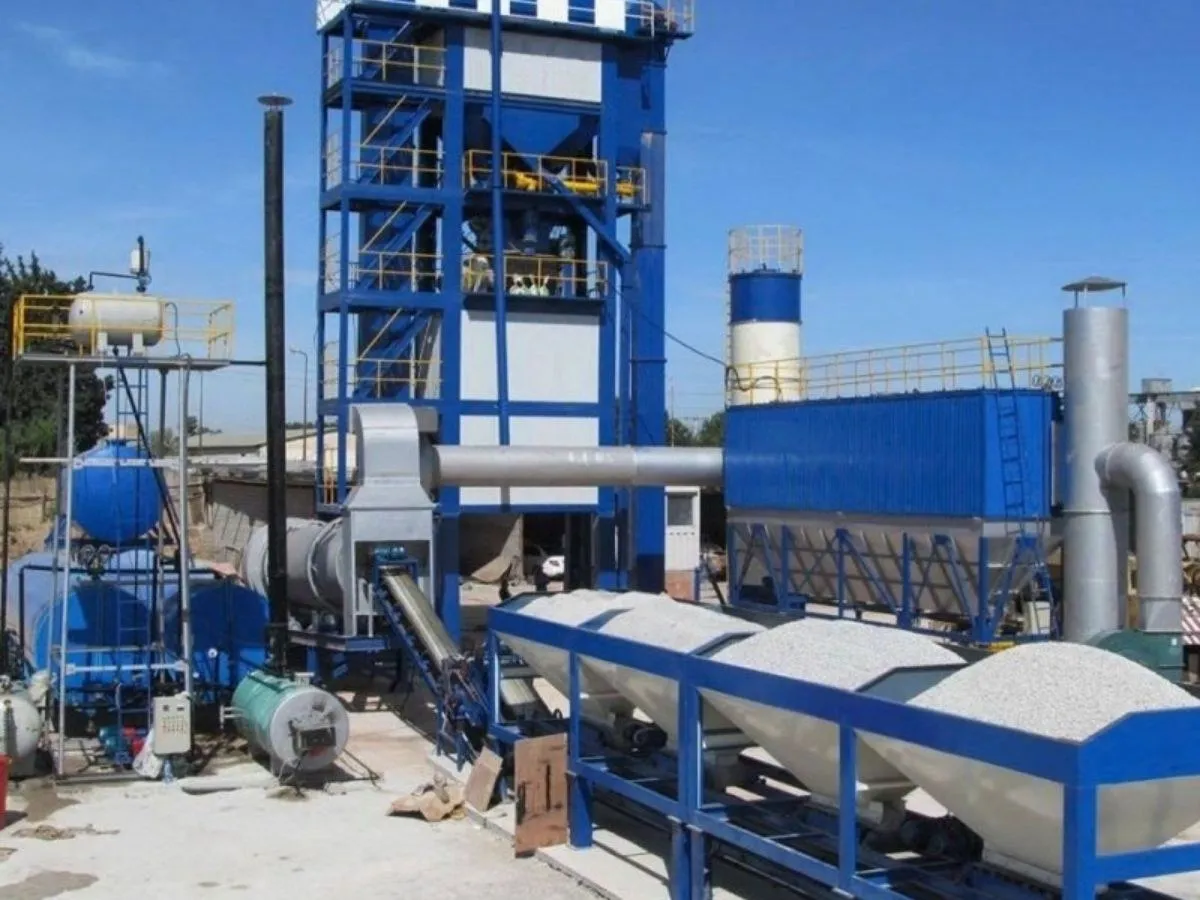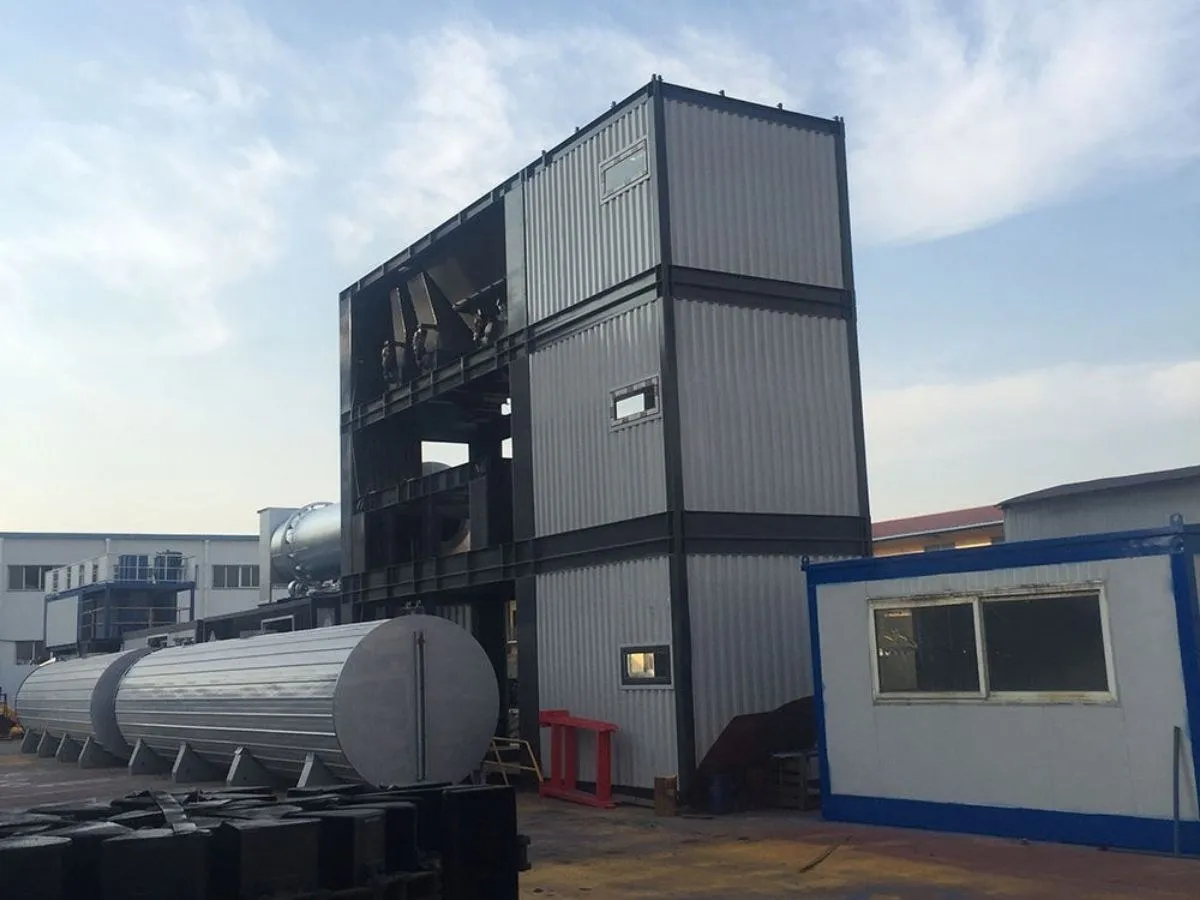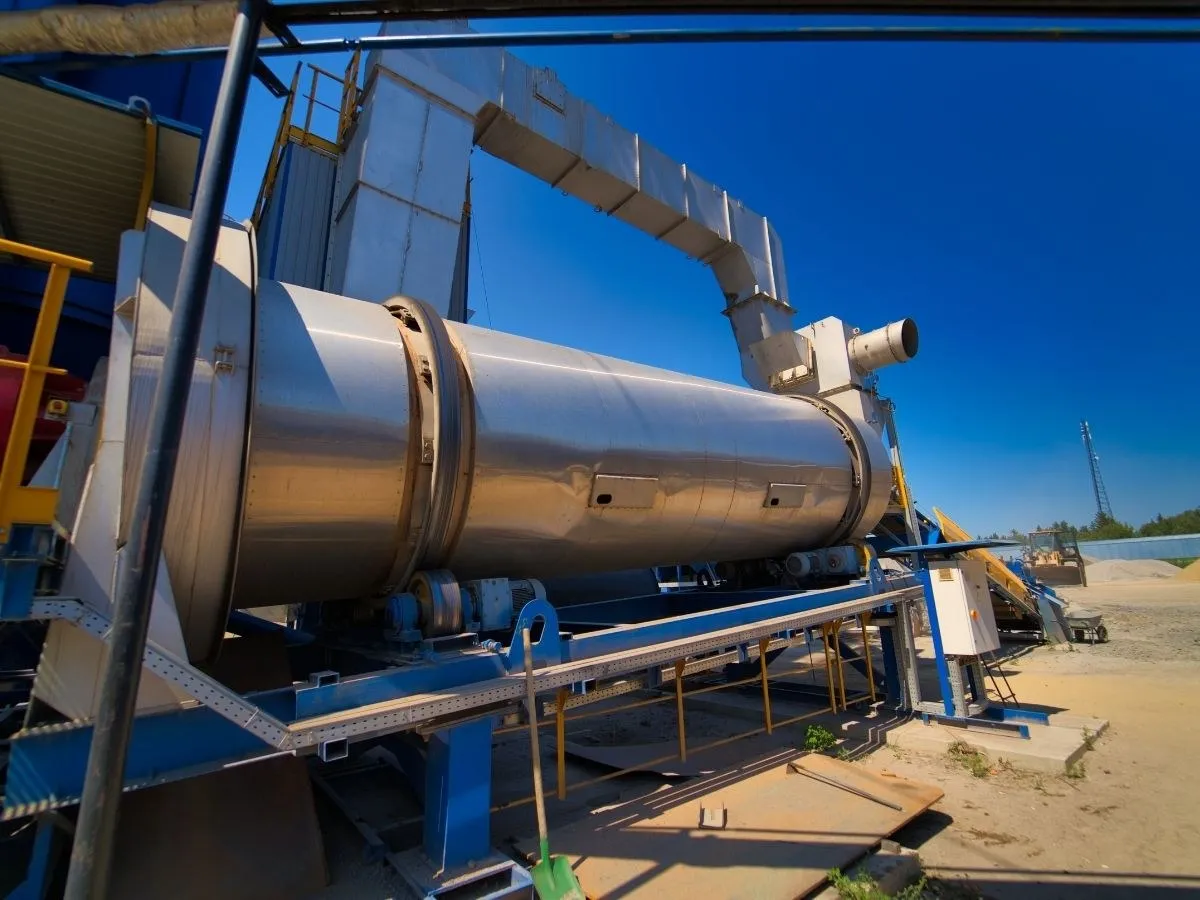
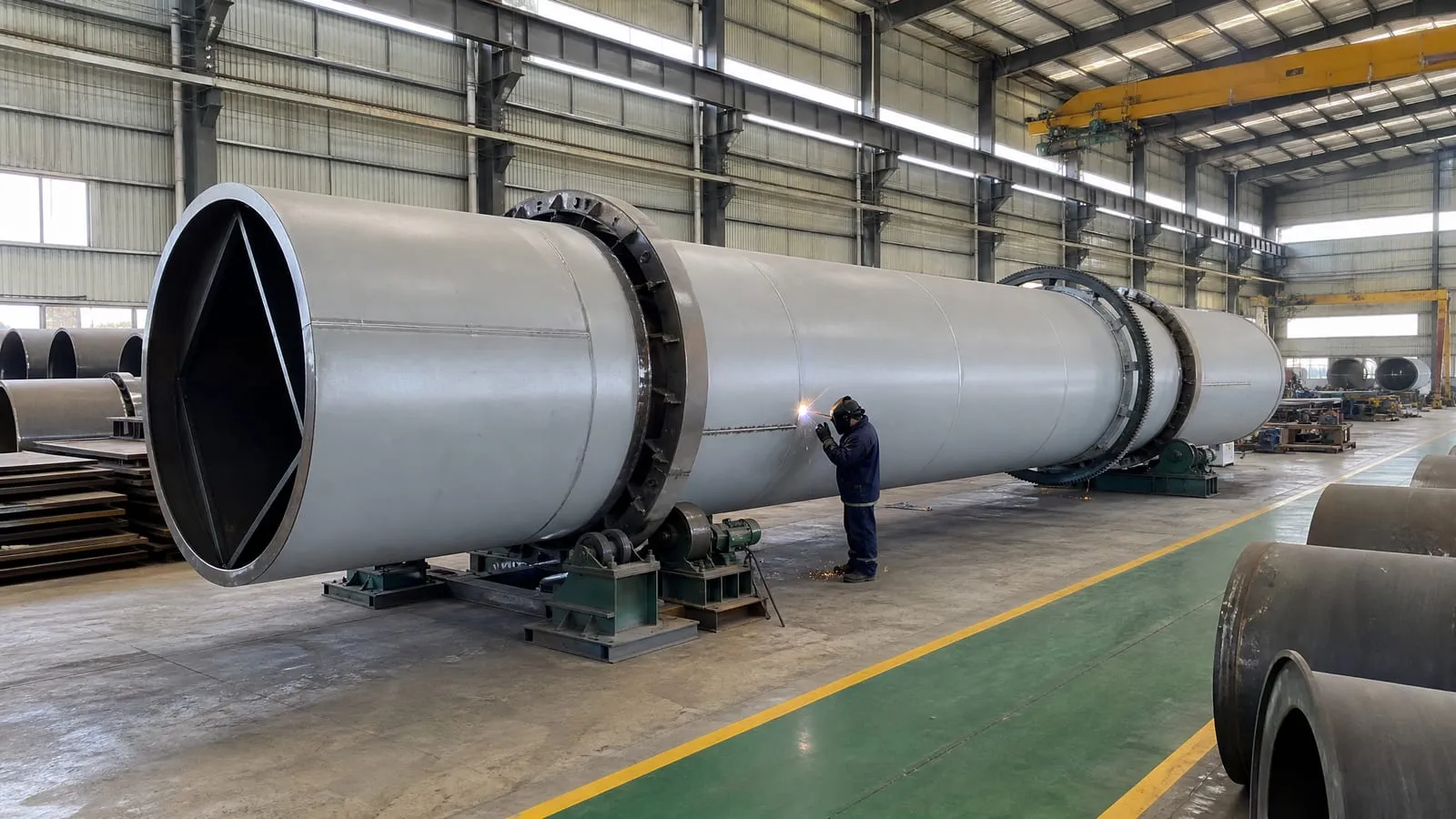
The drying drum and burner are the heart of an asphalt plant’s energy system. They take cold, often wet aggregate and turn it into dry stone at mixing temperature — every ton, every hour. Understanding how they work explains why moisture, flights and burner tuning matter so much.
The drum
| Feature | Role |
|---|---|
| Long rotating cylinder | Contains the drying process |
| Slight slope | Moves aggregate from feed end to discharge end |
| Rotation (driven by motor through rings and rollers or gear) | Tumbles the aggregate |
| Flights | Lift aggregate and drop it as a veil through the hot gas |
| Riding rings and trunnion rollers | Carry and turn the drum |
| End seals | Keep cold air out and dust in |
Our RMX-C series drums, for example, run from 6,000 × 1,500 mm on the RMX-C80 to 11,000 × 2,700 mm on the RMX-C400 — see the containerized plant parameters.
Flights and the veil
Flights are the key to heat transfer. In the drying zone, lifting flights shower the stone through the gas stream as a full, even veil. Near the burner, combustion-zone flights keep material away from the flame so it can burn completely. At the discharge end, flights move hot aggregate out smoothly. Worn or missing flights leave gaps in the veil — hot gas passes through without heating stone, and fuel is wasted. See drum maintenance.
Where the heat goes
The burner’s heat is used to:
- Evaporate water in the aggregate — usually the largest share when aggregate is wet
- Raise aggregate temperature to the mixing setpoint
- Heat the exhaust gas leaving the drum
- Losses through the shell and air leaks
This is why every extra percent of moisture costs fuel and, at the burner’s limit, output — see rated vs real output.
The burner
| Feature | Role |
|---|---|
| Fuel system | Delivers oil, gas, LPG or coal powder — see burner fuels |
| Combustion air fan | Supplies air for burning |
| Nozzle / atomizer | Breaks liquid fuel into fine droplets |
| Ignition and flame detection | Lights and monitors the flame safely |
| Modulation | Varies firing rate to hold aggregate temperature |
Good combustion needs the right air-fuel ratio and flame shape — see burner tuning.
Counterflow and parallel flow
In most modern batch plant dryers and many drum plants, aggregate travels against the gas flow (counterflow), which uses heat efficiently. Older drum mix designs often ran parallel flow. See counterflow vs parallel-flow drums.
Sizing as a system
| Component | Must match |
|---|---|
| Drum volume and flights | Tonnage and moisture to be dried |
| Burner rating | Heat needed at that tonnage and moisture |
| Exhaust fan | Gas volume from burner, evaporated water and air — more at altitude |
| Baghouse | Gas volume and dust load |
Upsizing one without the others gains little. When you compare quotes, check all four — see comparing quotations.
Back to how an asphalt plant works.