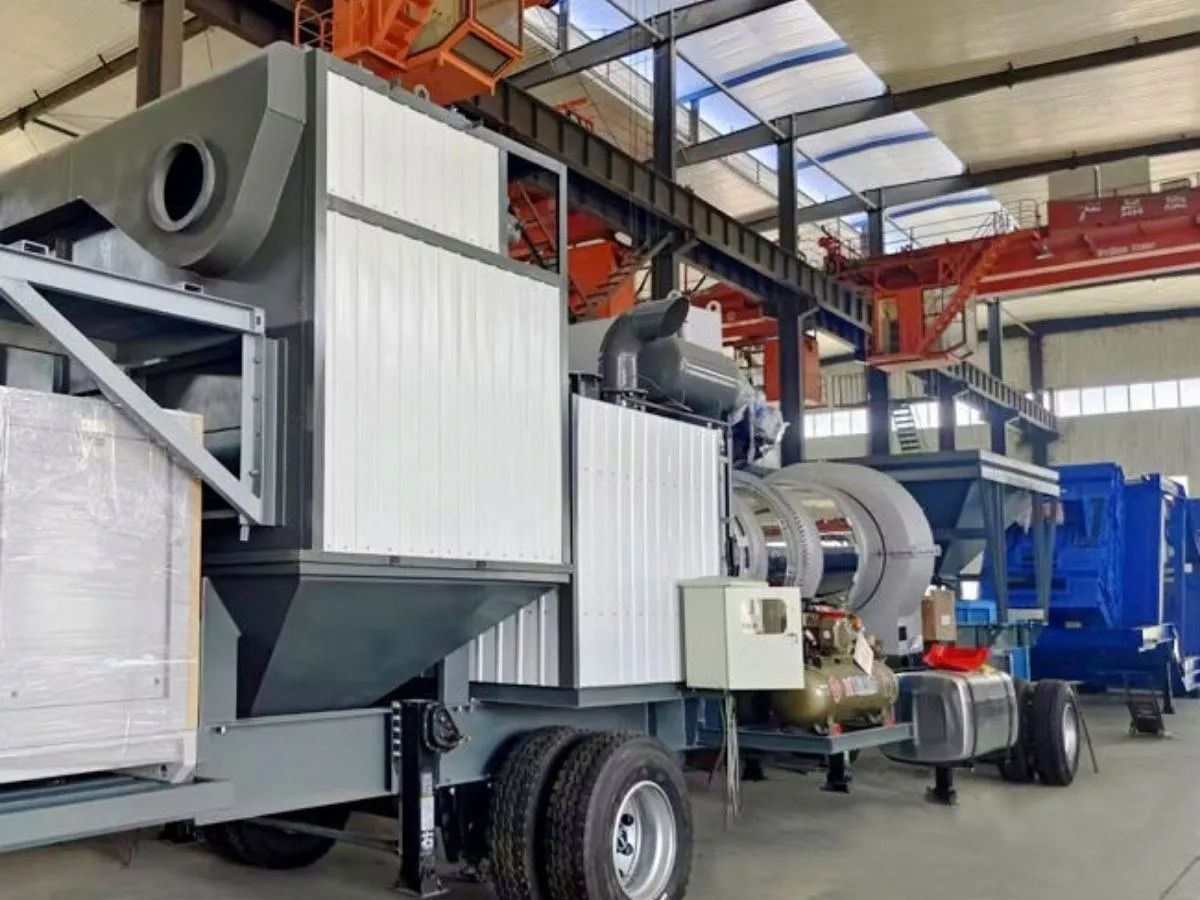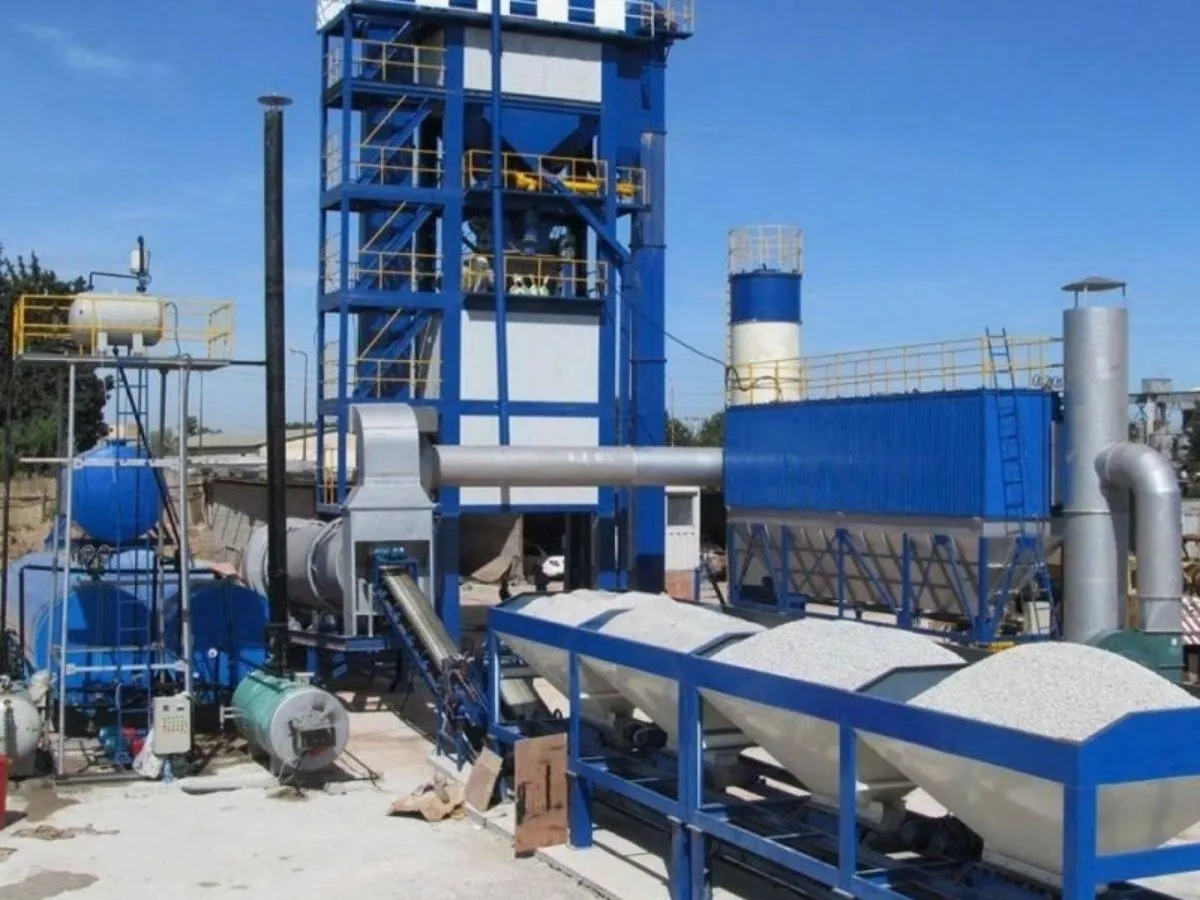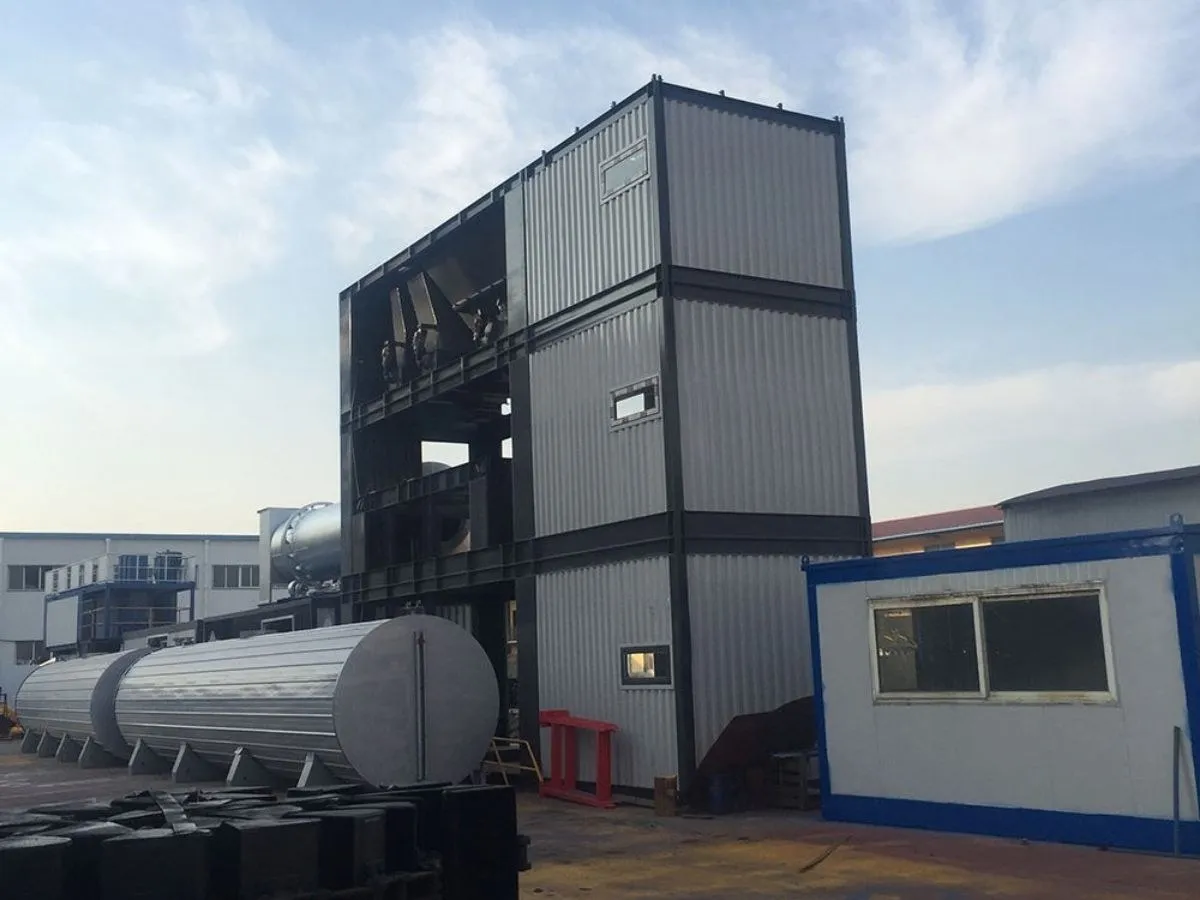
- Containerized
- Batch mixing
- 80–400 t/h
Containerized Asphalt Plant
RMX-C80 ~ RMX-C400
Contractors who move between projects or export plants overseas and still need batch-level mix accuracy.
Asphalt mixing plants and practical support for road projects worldwide

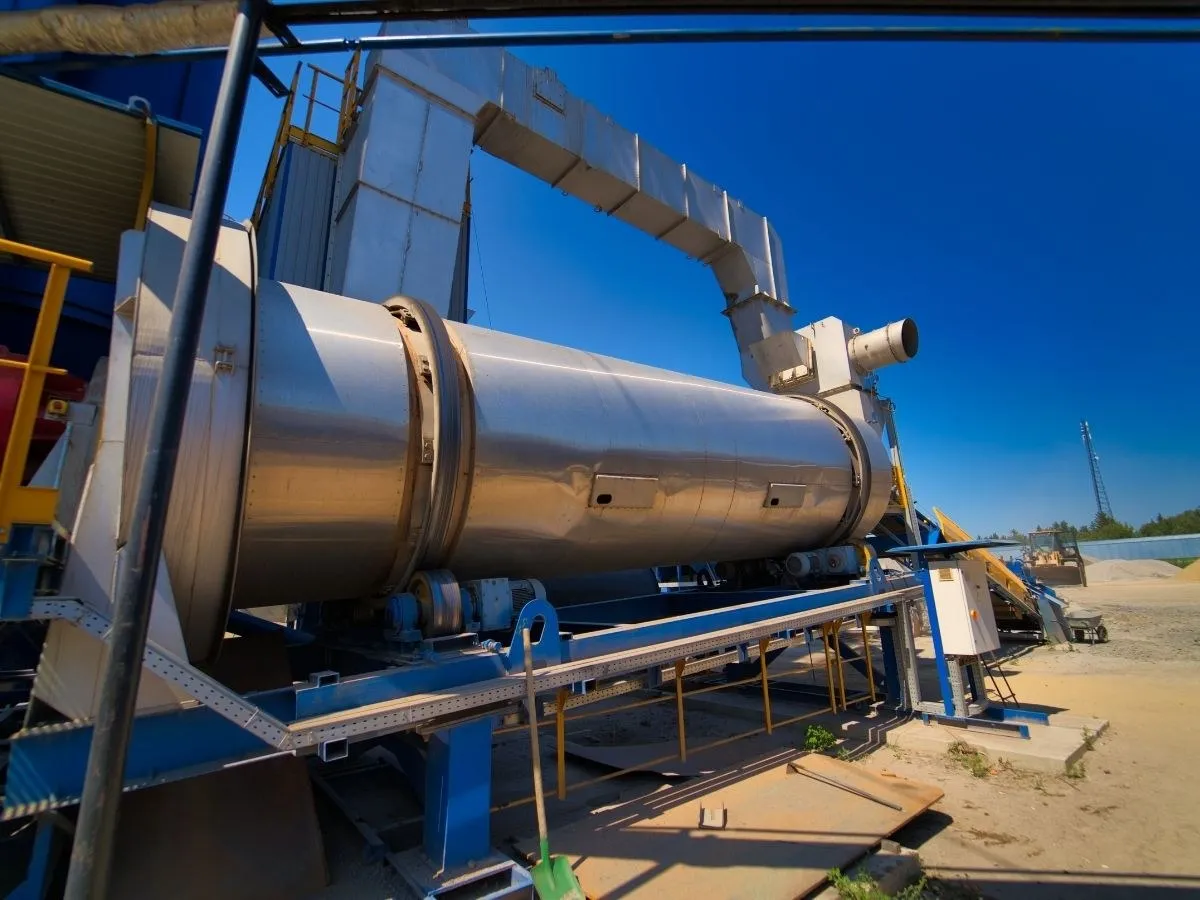
A continuous plant that dries and mixes in one drum — simpler, lighter and lower in cost, ideal for steady production of one mix.
Best for: Rural roads, base courses and county programmes that need steady output of one mix at the lowest cost per tonne.
In a drum mix plant, cold aggregate is proportioned by belt feeders and enters one rotating drum. The front section dries and heats it; further along, bitumen and filler are added and the mix leaves the drum continuously into a storage bin.
Drum plants shine on work with one main recipe and steady demand: rural and county roads, base courses, and maintenance programmes where the lowest cost per tonne matters more than recipe flexibility.
Recipe changes are slower than on a batch plant, and some specifications call for batch production. If that applies to your contracts, compare the stationary batch plant or the containerized plant.
| Model | Rated output | Daily output, 8 h at 75% | Typical work |
|---|---|---|---|
| RMX-D40 | 40 t/h | about 240 t | Village roads, small municipalities |
| RMX-D60 | 60 t/h | about 360 t | Farm-to-market and rural road programs |
| RMX-D80 / D100 | 80–100 t/h | 480–600 t | County roads, base courses |
| RMX-D120 / D160 | 120–160 t/h | 720–960 t | Larger programs with one main mix |
| If your project… | Choose |
|---|---|
| Uses one or two mixes for months at a time | Drum mix |
| Changes recipes several times a day or serves many customers | Batch |
| Has a specification that requires batch weighing | Batch |
| Needs the lowest cost per ton on rural roads | Drum mix |
| Has variable stockpiles and little room to control them | Batch |
Because there is no hot screen, the mix follows the cold feed closely. Good practice is to keep separate, well-graded stockpiles, cover fine aggregate against rain, calibrate the belt feeders and weighing belt regularly, and check gradation and binder content from production samples every shift.
Trailer-mounted layout, finished mix storage silo, baghouse or wet dust collector, burner fuel choice, extra bitumen tank, cold RAP addition at modest rates, and generator power.
Indicative FOB prices for RMX-D plants run from about $55,000 to about $360,000, depending on output and layout. See the model-by-model price page and the price guide.
Drum Mix Asphalt Plant — RMX-D40 ~ RMX-D160, 40–160 t/h.
| Model | RMX-D40 | RMX-D60 | RMX-D80 | RMX-D100 | RMX-D120 | RMX-D160 |
|---|---|---|---|---|---|---|
| Rated output (t/h) | 40 | 60 | 80 | 100 | 120 | 160 |
| Installed power (kW) | 65 | 105 | 135 | 170 | 200 | 300 |
| Cold feed bins (number × m³) | 4 × 4 | 4 × 4 | 4 × 6.5 | 4 × 6.5 | 4 × 6.5 | 4 × 6.5 |
| Finished mix bin (m³) | 2.5 | 4.5 | 5 | 7 | 7 | 10 |
| Bitumen tank (m³) | 20 | 30 | 30 | 35 | 35 | 35 |
| Mix temperature (°C) | 120–180 | 120–180 | 120–180 | 120–180 | 120–180 | 120–180 |
| Fuel consumption, oil (kg/t) | 5–7.5 | 5–7.5 | 5–7.5 | 5–7.5 | 5–7.5 | 5–7.5 |
| Dust collection | Baghouse or wet | Baghouse or wet | Baghouse or wet | Baghouse or wet | Baghouse or wet | Baghouse or wet |
Configurations can be customized. Ask for a model recommendation →
Drying and mixing happen continuously in one drum, giving steady output with a simpler structure. These are the main systems of the plant, in the order material flows through them.
Speed-controlled feeders deliver each aggregate size continuously, with a belt scale tracking the total flow.
The first part of the drum dries and heats the stone; further along, bitumen and filler are added and the mix leaves the drum without stopping.
A metering pump adds hot bitumen in step with the measured aggregate flow.
A baghouse or wet scrubber cleans the drum exhaust before it reaches the stack.
The PLC keeps feed rate, bitumen dosing and burner output in balance as production changes.
A drum plant proportions materials continuously and mixes them inside the drying drum; a batch plant weighs each ingredient per batch in a separate mixer. Drum plants cost less and run simply; batch plants handle frequent recipe changes and tight specs better.
Yes, for standard mixes with a consistent recipe. If your contract needs frequent recipe changes or strict specifications, a batch plant is the safer choice.
Yes. The drum plant can be built stationary, semi-mobile or fully trailer-mounted depending on how often you plan to move.
Usually yes for long runs of one mix: fewer moving parts, no screen or hot bins, and continuous production. The advantage shrinks when recipes change often, because each change takes longer to stabilize.
Yes, if the specification allows continuous production and the aggregate stockpiles are well controlled. Some highway and airport specifications require batch plants, so check your contract first.
Indicative FOB prices for RMX-D plants run from about $55,000 (40 t/h) to about $360,000 at the top of the range; an 80 t/h stationary drum plant is typically around $90,000. See the price guide for more detail.
A baghouse is recommended where emission limits are strict or filler should be recovered. A wet dust collector costs less and suits some remote sites, but it needs water and settling ponds.
Yes. RMX-D plants can be built stationary, semi-mobile or with the main units on trailer chassis for frequent moves.
Tell us your required capacity, project location and fuel type. Our engineers will recommend a model and send you a quotation.
Chat on WhatsAppA step-by-step checklist for importing an asphalt plant — from route survey and Incoterms to packing, documents, customs and delivery to site.
RMX-C80 ~ RMX-C400
Contractors who move between projects or export plants overseas and still need batch-level mix accuracy.
RMX-M60 ~ RMX-M160
Road maintenance and short-term contracts where the plant moves several times a year.
RMX-B60 ~ RMX-B400
Asphalt producers and contractors running one site for years, with many mix recipes and strict specifications.