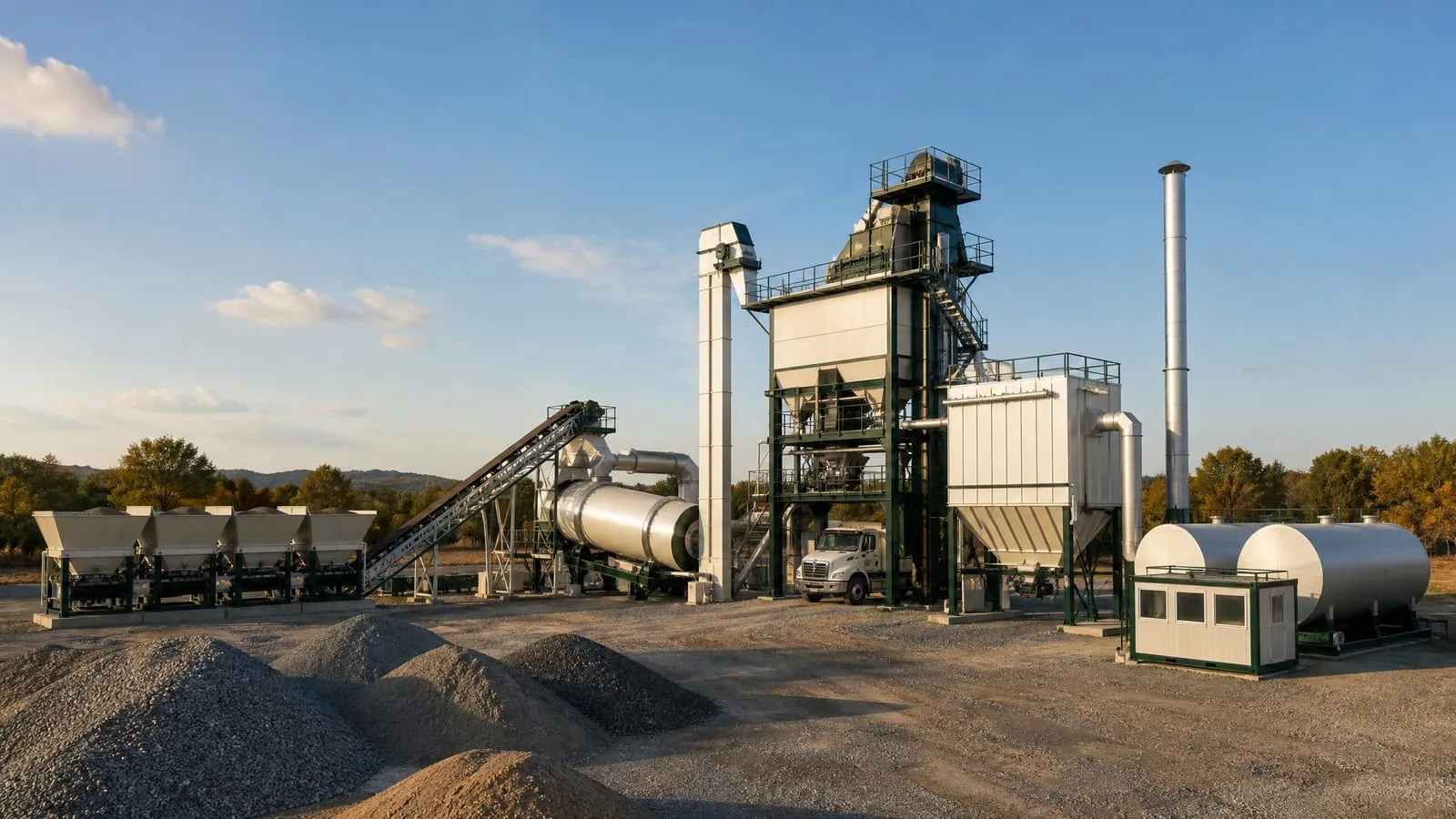
Aggregate stockpiles decide two things the burner operator cannot fix later: how wet the stone is and how consistent its gradation is. A well-run stockpile area gives steadier mix and lower fuel cost per ton.
Why stockpiles matter
| Stockpile problem | Effect at the plant |
|---|---|
| Wet aggregate | More fuel per ton; lower output when the burner is at its limit |
| Moisture swings | Unstable mix temperature |
| Mixed sizes | Gradation drift; hot bins overflow or run empty |
| Segregation in the pile | Variable gradation from load to load |
| Contamination (clay, debris) | Coating problems; quality failures |
Building the stockpile area
| Element | Good practice |
|---|---|
| Base | Hard, compacted or paved, sloped away from the loading face |
| Drainage | Drains along the low side; no ponding |
| Bays | Separate bays per size, with walls so sizes don’t mix |
| Roofs | Sand and fines first; coarse sizes too in very wet climates |
| Capacity | Several days of production for each size |
| Access | Delivery trucks on one side, loader on the other |
Building piles to limit segregation
- Build in layers with the loader or trucks rather than one tall cone from a conveyor
- Avoid letting coarse stone roll down the sides of high piles
- Keep each bay to one size and one source
Loading practice
- Load from the drier, drained face of the pile
- After rain, avoid the wet bottom of the pile for the first loads
- Keep cold feed bins topped up — empty bins cause feed interruptions and temperature swings
- Don’t overfill bins so material spills into the next bin
Measuring moisture
| Method | Use |
|---|---|
| Oven or hot-plate drying of samples | Reference method in the lab |
| Quick field tests | Daily checks after rain |
| Online moisture sensors on feeders | Continuous readings for the operator (option) |
Give the readings to the burner operator before start-up. A small change in moisture changes how hard the burner must work.
The fuel connection
Every kilogram of water in the aggregate must be heated and evaporated before the stone can reach mixing temperature. Covering fines and draining stockpiles is one of the lowest-cost ways to cut fuel per ton. For the cost side, try the cost per ton calculator; for more fuel savings, see reducing fuel consumption.
Rainy-season checklist
- Roofs over sand and fines in good condition
- Drains clear before the season
- Extra stock built up before forecast rain
- Moisture tested every morning and after rain
- Burner settings adjusted to measured moisture
See also site layout and configuring a plant for hot, humid climates.