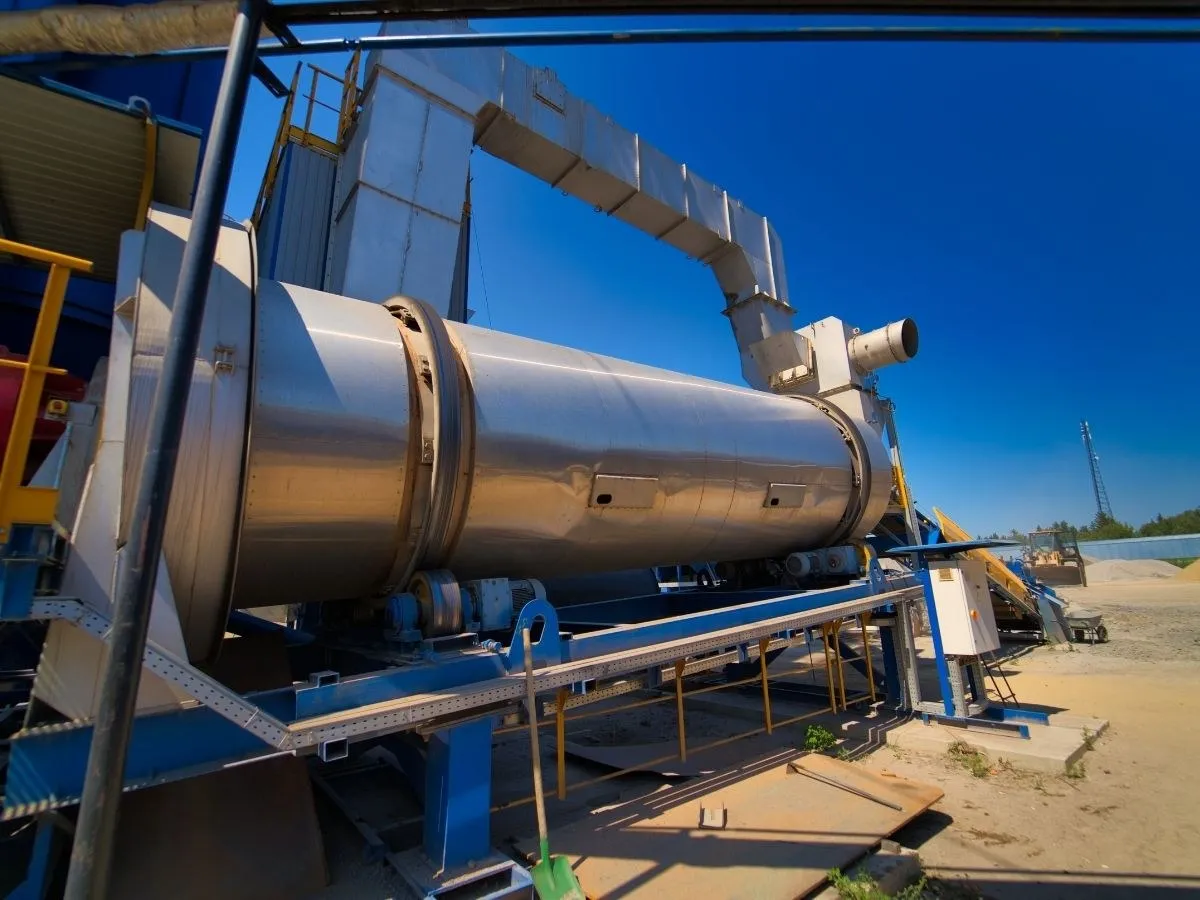
The burner is the plant’s biggest energy user. A few percent better combustion saves fuel on every ton, keeps baghouse bags clean and stabilizes mix temperature. Tuning is specialist work, but every operator should know what good combustion looks like and when to call for a check.
What tuning controls
| Setting | What it does | If wrong |
|---|---|---|
| Air-fuel ratio | Matches combustion air to fuel flow | Too little air: soot, unburned fuel. Too much: heat lost up the stack |
| Flame shape and length | Places heat where the drum needs it | Too long: flame hits the shell or flights. Too short: poor heat transfer |
| Atomization (oil) | Breaks fuel into fine droplets | Coarse droplets: soot, deposits on nozzles |
| Fuel temperature (heavy oil) | Sets viscosity for atomization | Too cold: poor spray; too hot: vapor and instability |
| Turndown | Range from low to high fire | Unstable flame at low fire; overshoot at high fire |
| Ignition and safety | Reliable lighting and flame detection | Trips and failed starts |
Signs of poor combustion
| Sign | Likely cause |
|---|---|
| Black smoke at the stack | Too little air or poor atomization |
| Soot or oily coating on baghouse bags | Unburned fuel reaching the baghouse |
| Fuel use per ton rising | Too much excess air, wet aggregate, air leaks |
| Exhaust temperature higher than normal | Excess air, worn flights, overfiring |
| Unstable or pulsing flame | Air-fuel imbalance, fuel pressure, damper fault |
| Frequent burner trips | Flame sensor, fuel supply, interlock |
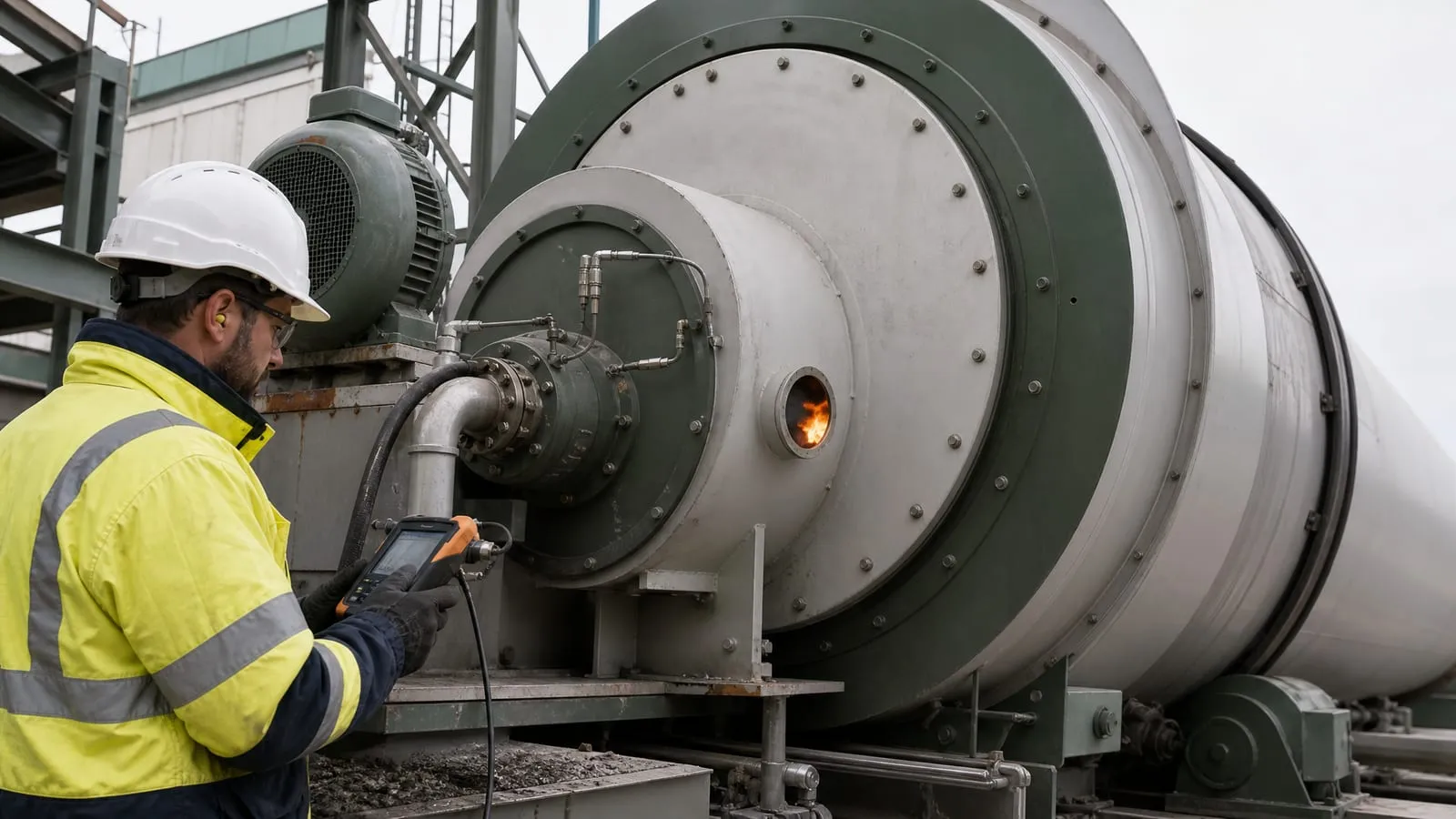
How a combustion check is done
- Plant at steady production with normal aggregate
- Flue-gas analyzer at the sampling point — measures oxygen, CO and temperature
- Compare readings with the burner manual’s targets across the firing range
- Adjust air dampers, fuel pressure or linkages as the manual describes
- Record the final settings and readings in the plant log
Heavy fuel oil specifics
- Heat to the viscosity the burner manual specifies
- Keep filters clean; check strainers daily
- Clean nozzles at the intervals in the manual
- Start and stop on lighter fuel if the burner is set up for dual fuel
See burner fuel options.
Beyond the burner
Tuning cannot fix wet aggregate or air leaks. For the full picture of fuel use:
- Stockpile management — less water to evaporate
- Drying drum maintenance — flights and seals
- 10 ways to reduce fuel consumption
Need a combustion check or burner settings for a new fuel? Contact our engineers.