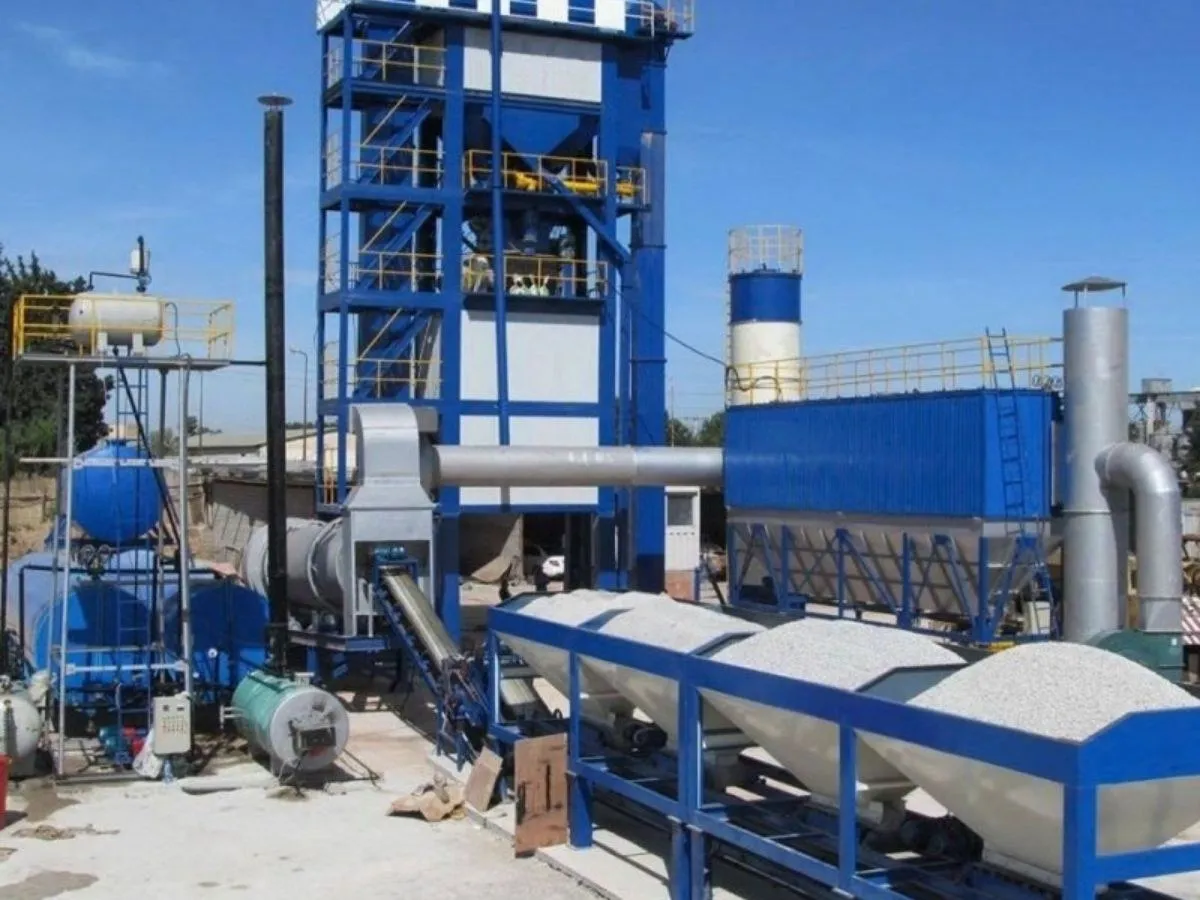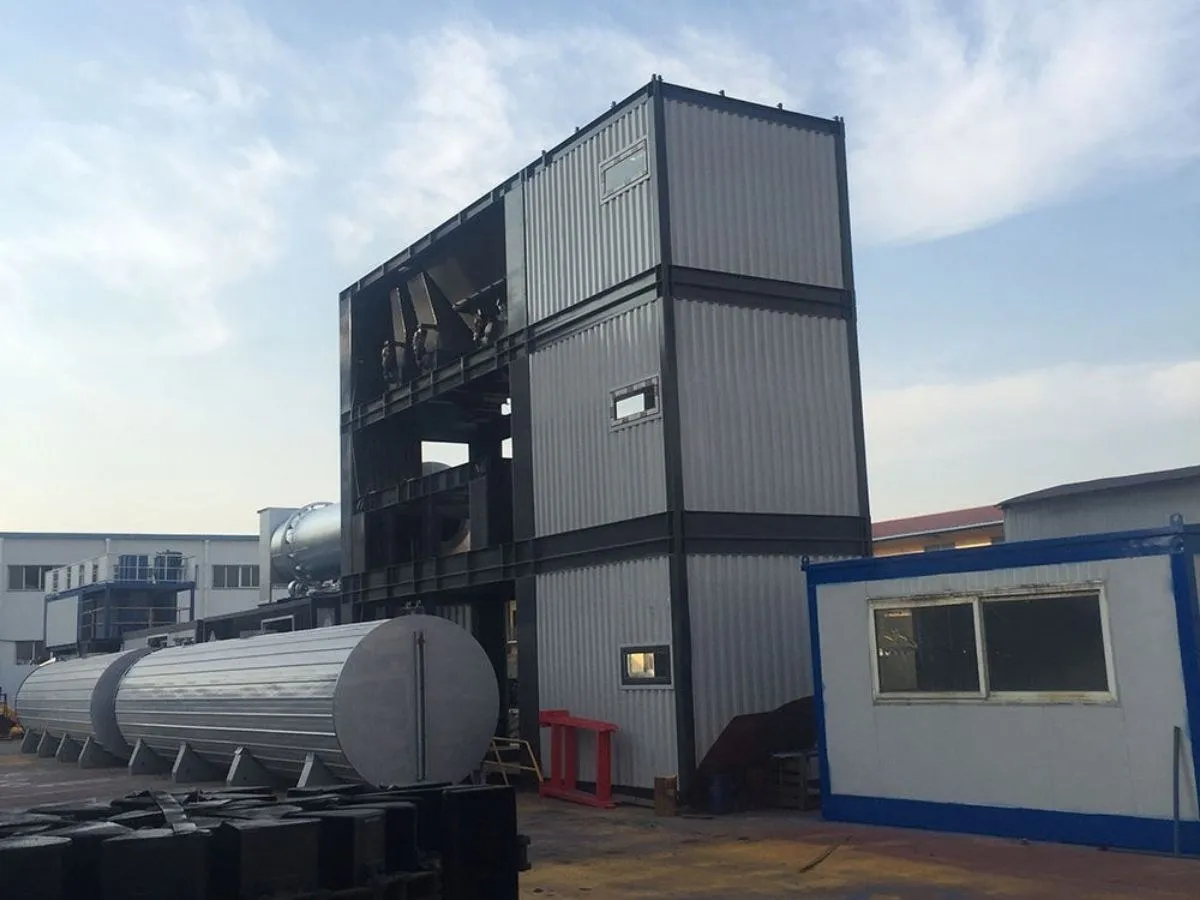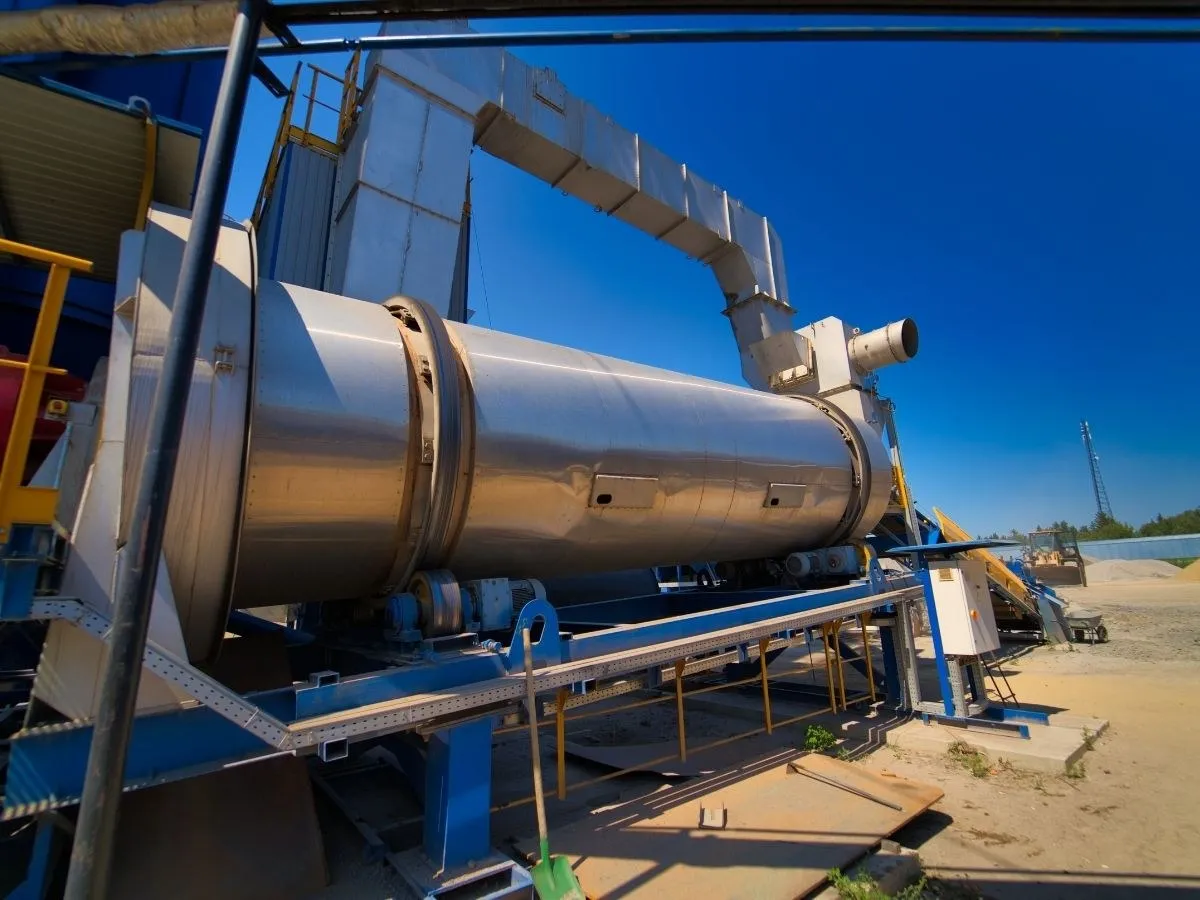
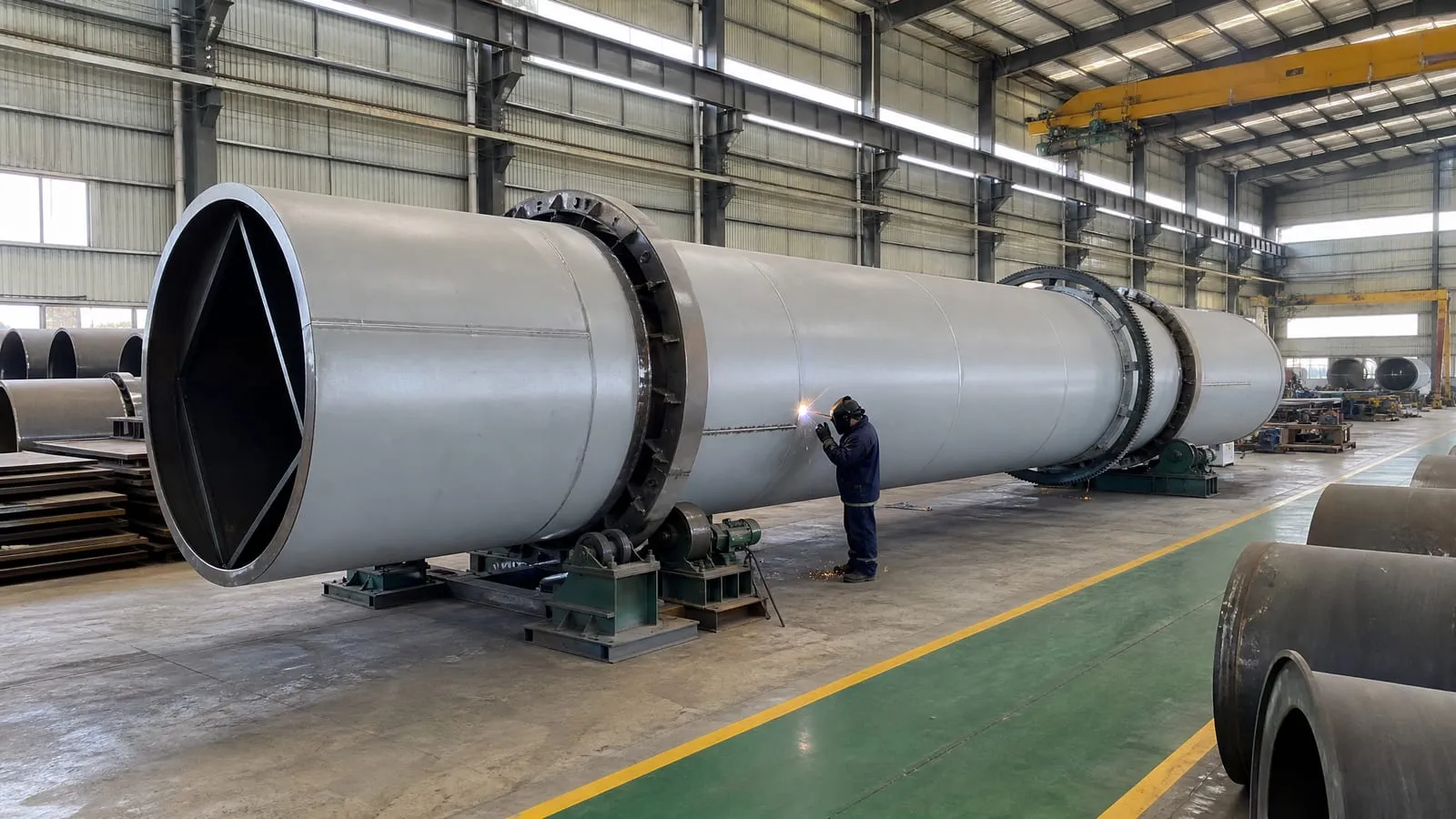
The drying drum dries and heats every ton of aggregate the plant uses. Its condition shows up directly in output and fuel use. Most of the care comes down to four things: flights, the rings and rollers that carry the drum, the drive, and the seals.
Always stop the plant, lock out power and fuel, and let the drum cool before entering it.
What wears and what to check
| Part | Job | What to check | How often |
|---|---|---|---|
| Flights | Lift and drop aggregate through the hot gas | Wear, bent or missing flights, especially at the inlet and combustion zone | At scheduled stops; full check off-season |
| Riding rings (tyres) | Carry the drum on the rollers | Surface wear, cracks, clean contact | Weekly visual |
| Trunnion rollers | Support and guide the drum | Even contact across the face, bearing temperature, lubrication | Daily–weekly |
| Thrust rollers | Limit axial movement | Constant contact means misalignment | Daily |
| Drive (chain, sprocket or gear; motor and reducer) | Turns the drum | Wear, tension, oil level, noise | Weekly |
| End seals | Keep cold air out, dust in | Gaps, wear, damaged segments | Weekly |
| Shell | Contains the process | Hot spots, cracks, distortion | Monthly; off-season |
| Burner mounting and combustion zone | Flame and heat | Refractory or shield condition, flame not touching the shell | Monthly |
Flights: why they matter
Flights lift aggregate and drop it through the hot gas as a curtain. A full, even curtain transfers heat efficiently. Worn, bent or missing flights leave gaps — gas passes through without heating the stone, exhaust temperature rises and fuel is wasted. Replace worn flights in sets in the off-season, following the original layout.
Rings and rollers: alignment
- Keep contact surfaces clean — build-up causes uneven wear and noise
- Watch thrust rollers: if the drum always presses one way, rollers need adjusting
- Check bearing temperatures by hand-held thermometer
- Roller adjustment changes how the drum floats — leave it to trained staff with the manual’s procedure
Seals and air leaks
Air leaking in at the drum ends cools the gas and loads the exhaust fan. Replace worn seal segments and keep seal surfaces clean. Leaks often show as dust at the ends or a drop in drum temperature for the same burner setting.
Operating habits that save the drum
- Don’t run the drum hot and empty for long — the shell and flights overheat
- At shutdown, let the drum keep turning while it cools
- Keep aggregate feed steady — surges and gaps stress the drive and burner control
Off-season checklist
- Replace worn flights; check flight mountings
- Inspect shell for cracks and distortion
- Inspect rings, rollers and bearings; realign if needed
- Service drive: chain or gear, reducer oil
- Replace seal segments
- Check burner mounting and combustion zone
For how the drum and burner work, see drying drum and burner explained. Back to the maintenance checklist.