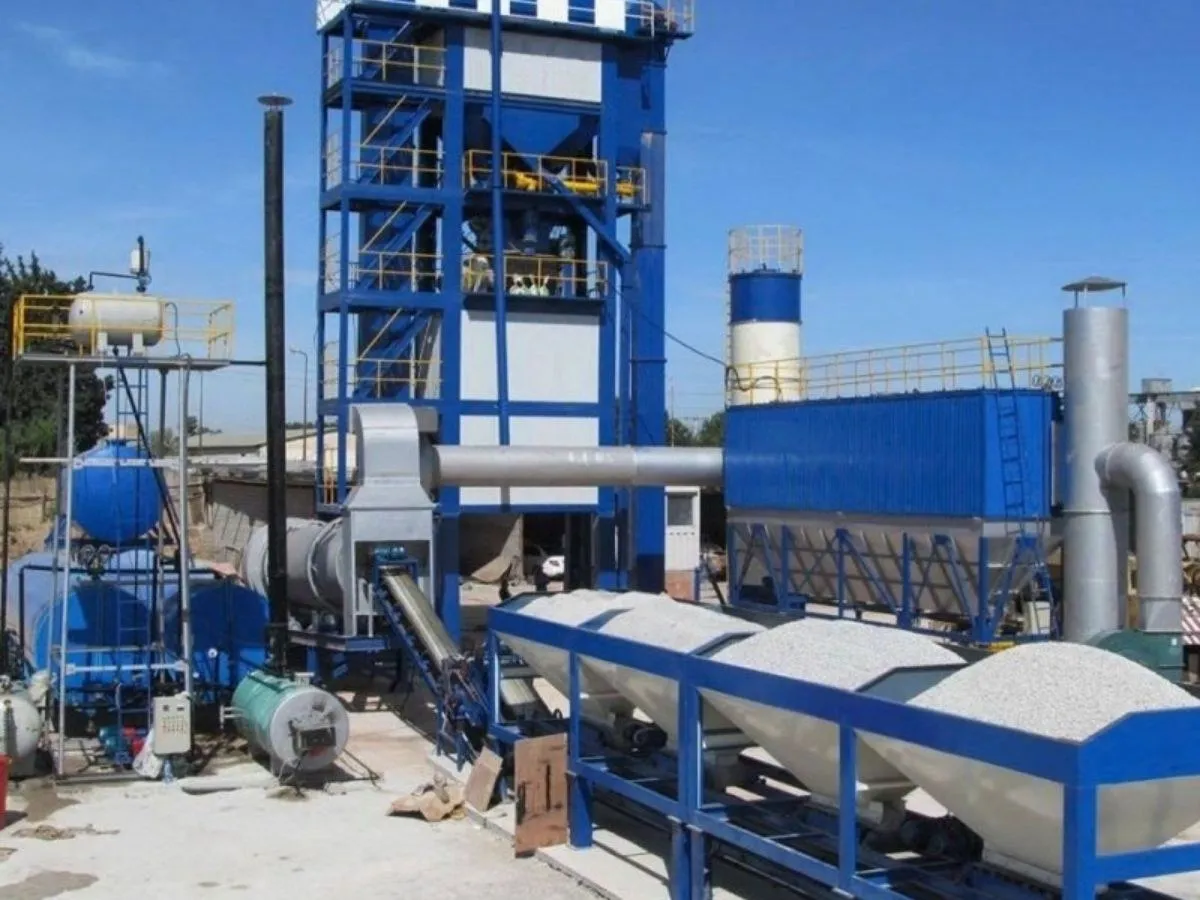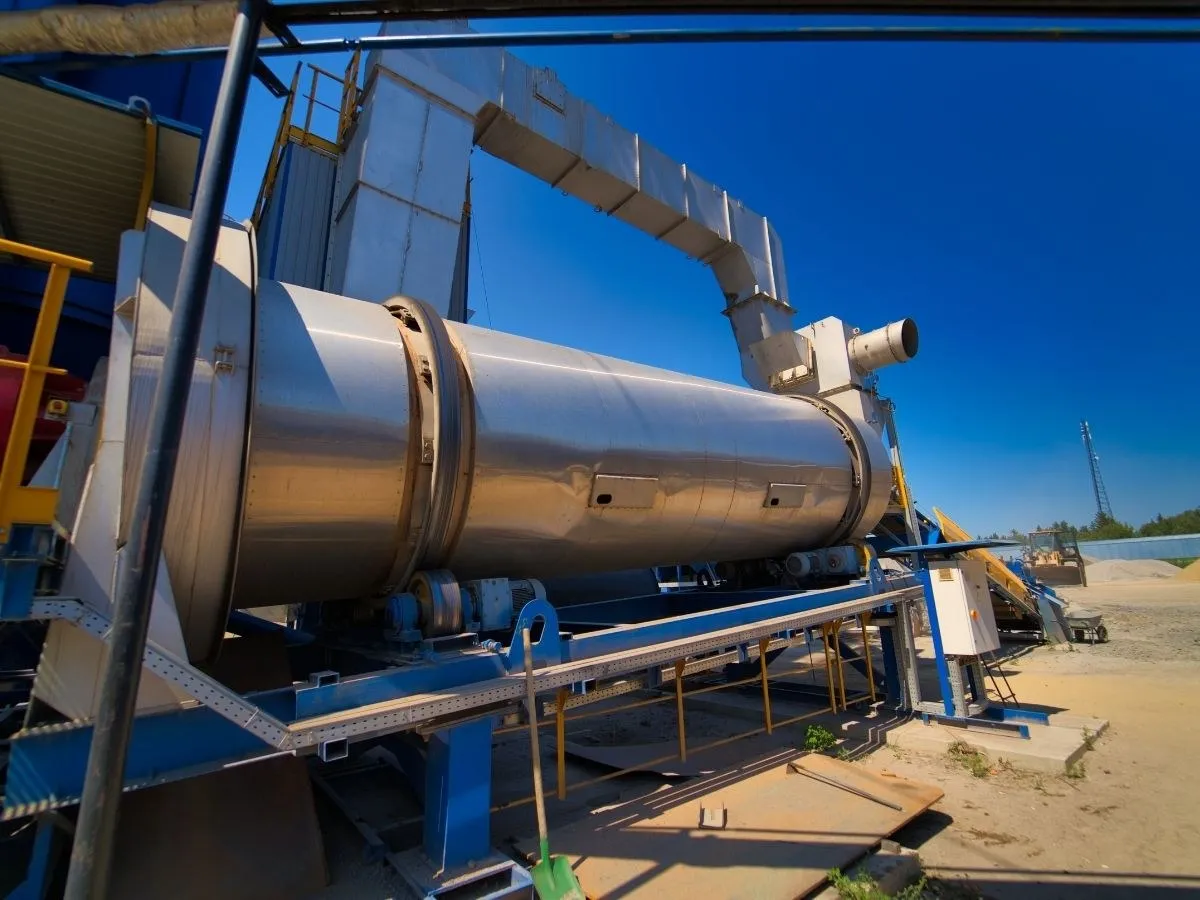
Every drying drum produces exhaust gas laden with fine dust. The dust collector cleans it before it reaches the stack. The choice affects emissions, filler supply, water use and running cost.
The options compared
| Baghouse (fabric filter) | Wet scrubber | Cyclone / knock-out box | |
|---|---|---|---|
| How it works | Gas passes through filter bags; dust cake collects; pulse-jet cleaning | Water sprays capture dust; sludge to ponds | Gas spins or slows; coarse dust drops out |
| Stack emissions | Lowest | Higher | Not a final filter |
| Filler recovery | Yes — dry fines return to the mix | No — fines go to sludge | Coarse fraction can return |
| Water use | None | High | None |
| Ponds and sludge | None | Required | None |
| Purchase cost | Higher | Lower | Low |
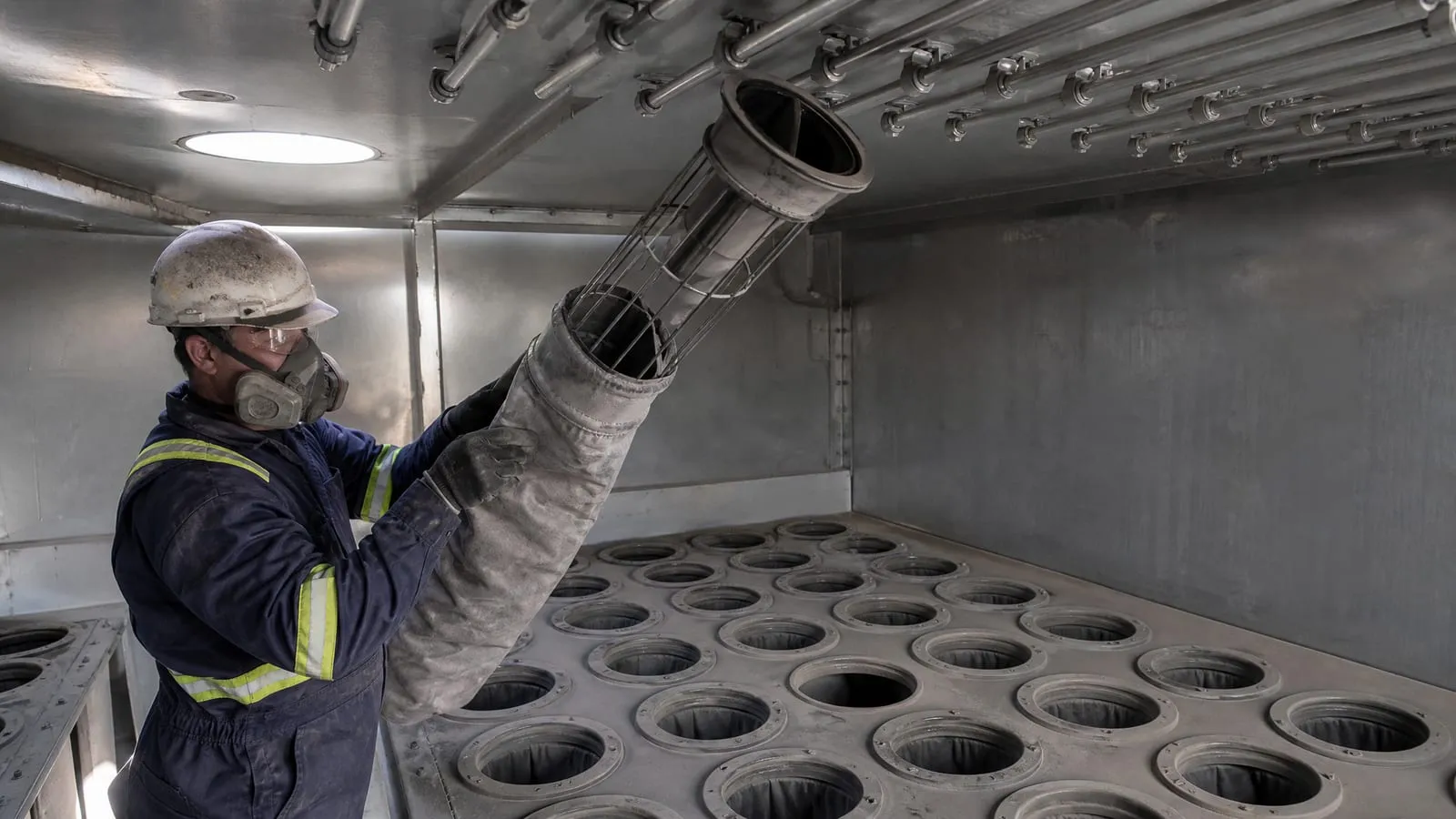
| Maintenance | Bags, cages, pulse valves | Pumps, nozzles, ponds | Low |
| Best for | Most plants, strict limits | Small remote plants with loose limits and water | Pre-separation before a baghouse |
Why most plants choose a baghouse
- Meets strict emission limits — our stationary batch plant parameters list stack dust of 20 mg/Nm³ or less
- Returns fines to the mix as filler, reducing imported filler
- No water or ponds, an advantage in dry regions and on small sites
- Neighbors see a clear stack — see dust and noise control
The trade-offs are higher purchase cost and bag maintenance — see baghouse care.
When a wet scrubber makes sense
- Small drum plant on a remote site
- Emission limit allows it
- Reliable water supply and space for ponds
- Imported filler is available and cheap
Sizing matters
Whatever the type, the collector must handle the exhaust volume — which grows with burner rating, evaporated water and altitude. Compare baghouse filter area and fan capacity when you compare quotes; our RMX-C series runs from 400 m² on the RMX-C80 to 1,132 m² on the RMX-C400. See comparing quotations.
Back to how an asphalt plant works.