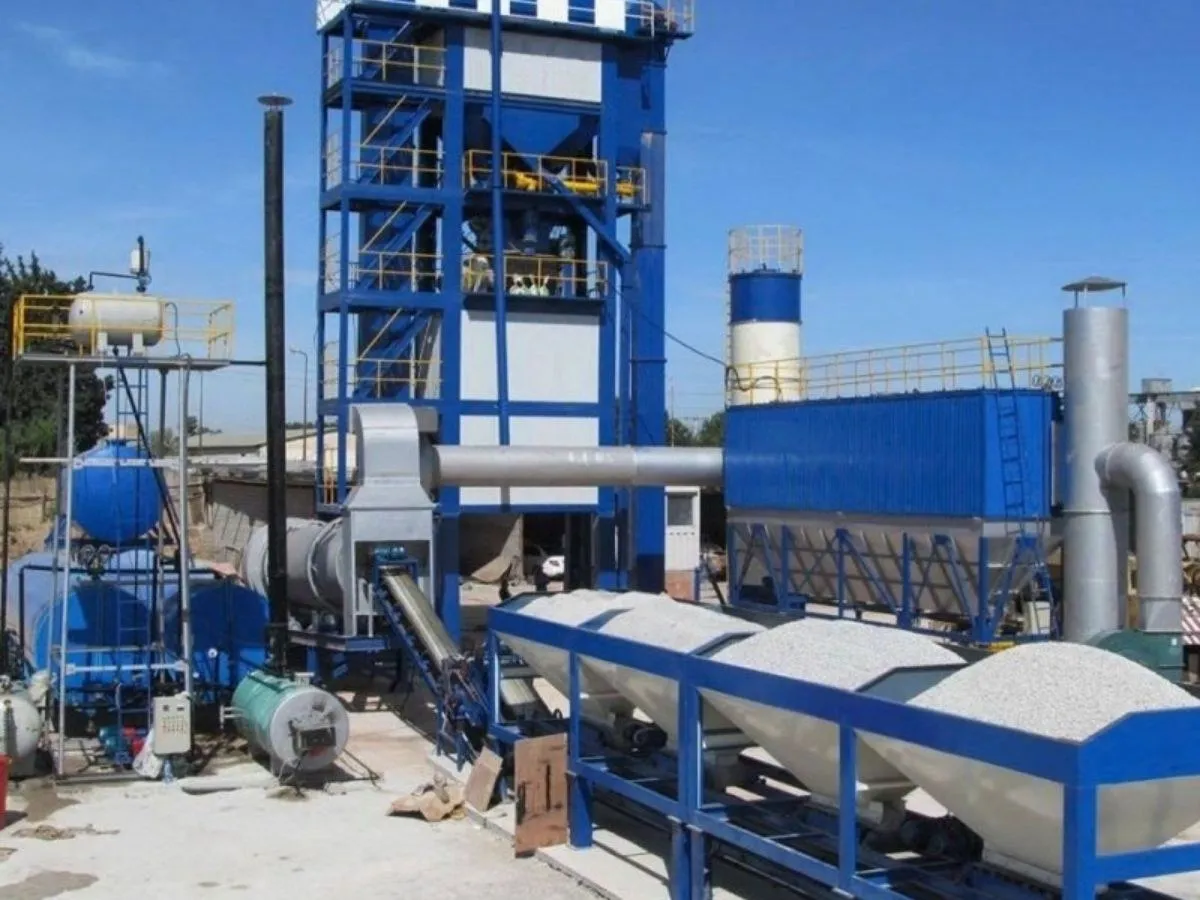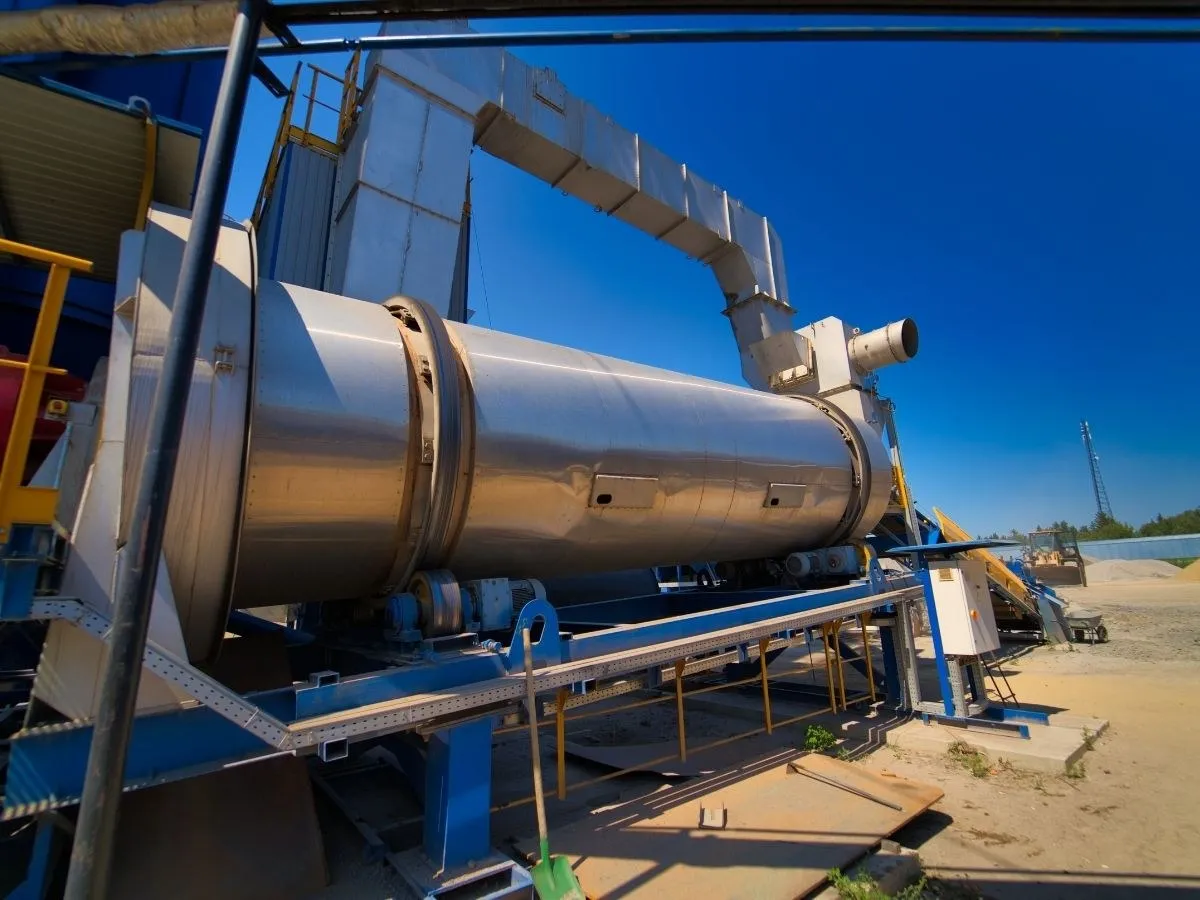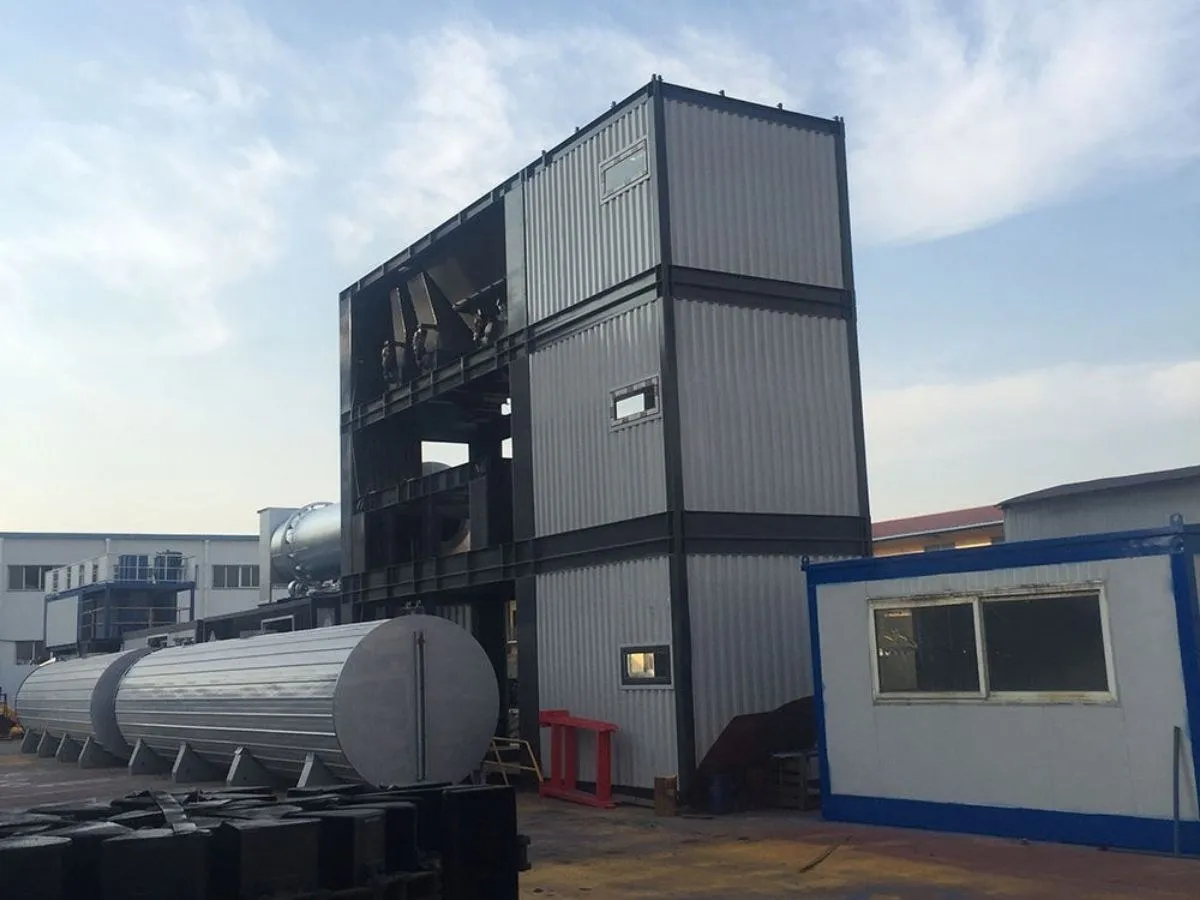
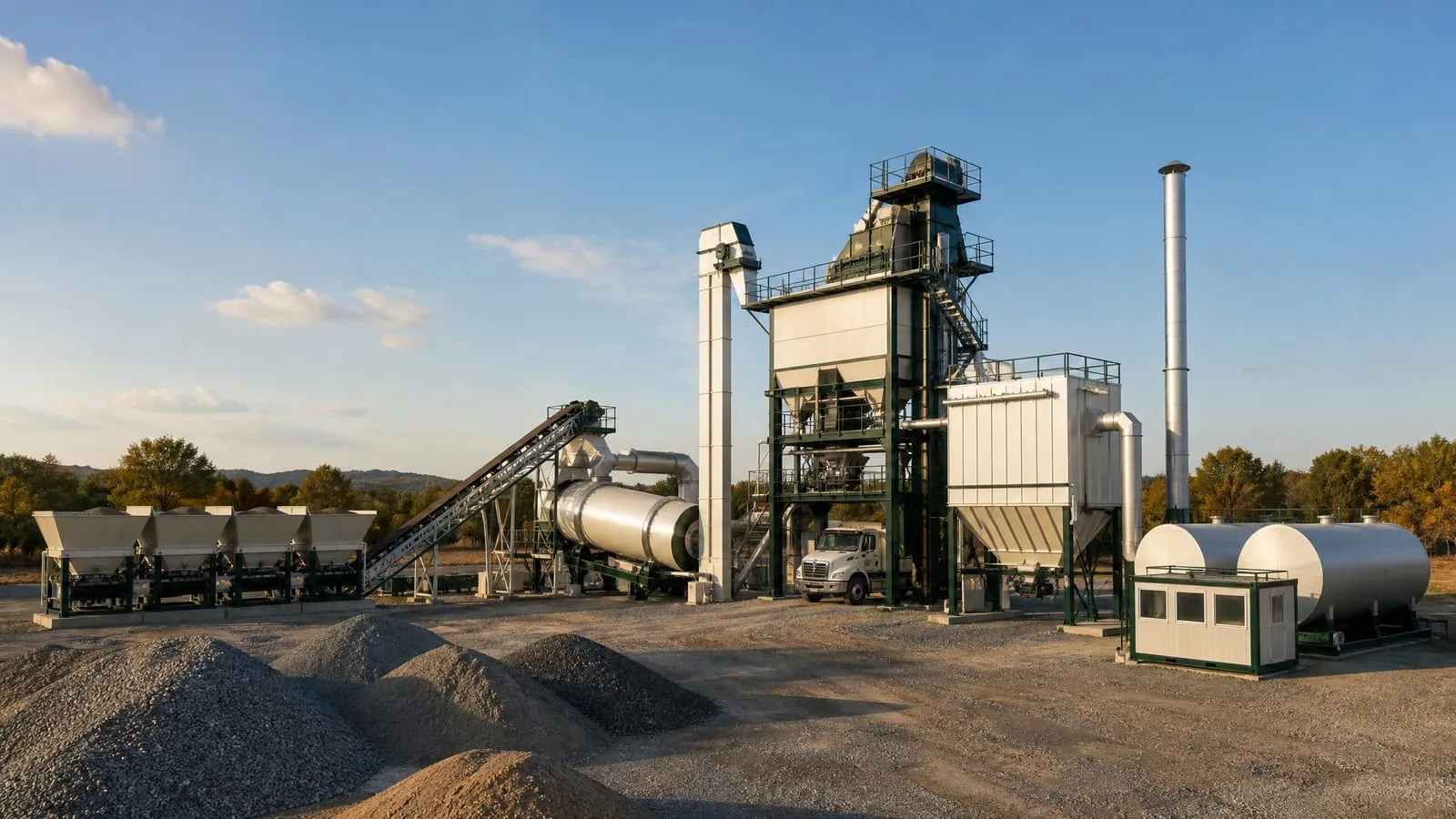
An asphalt plant makes hot mix asphalt by drying and heating aggregate, then coating it with hot bitumen and filler. There are two main designs: the batch plant, which mixes in weighed batches, and the drum mix plant, which mixes continuously. This guide walks through both, stage by stage.
The batch plant, stage by stage
| Stage | Equipment | What happens |
|---|---|---|
| 1. Cold feed | Cold aggregate bins with belt feeders | Each aggregate size is metered onto a collecting belt in the right proportion |
| 2. Transport to drum | Collecting and inclined belt conveyors | Combined cold aggregate goes to the drum |
| 3. Drying and heating | Rotating drying drum with burner | Flights lift the stone through hot gas; water evaporates and aggregate heats up |
| 4. Hot elevator | Bucket elevator | Lifts hot aggregate to the top of the mixing tower |
| 5. Screening | Vibrating screen | Splits hot aggregate into size fractions |
| 6. Hot storage | Hot bins | Hold each size fraction ready for weighing |
| 7. Weighing | Aggregate, filler and bitumen scales | Each ingredient weighed for one batch |
| 8. Mixing | Twin-shaft mixer (pugmill) | Dry mixing, then bitumen added and wet mixing |
| 9. Discharge | Mixer gate to truck or silo | Batch drops into a truck or a hot mix silo |
| Alongside | Baghouse, exhaust fan, stack | Cleans exhaust gas; returns fines as filler |
| Alongside | Bitumen tanks and heating | Keep binder at pumping temperature |
| Alongside | Control room | PLC runs the sequence; records every batch |
Because each batch is weighed after screening, a batch plant can change recipe from one batch to the next and hold tight tolerances. Output depends on batch size and cycle time — see batch cycle time.
The drum mix plant, stage by stage
| Stage | Equipment | What happens |
|---|---|---|
| 1. Cold feed | Cold bins with variable-speed belt feeders | Sizes proportioned by feeder speed |
| 2. Weighing belt | Belt scale | Measures tons per hour entering the drum |
| 3. Drying zone | Front of the drum, near the burner | Aggregate dried and heated |
| 4. Mixing zone | Rear part of the drum | Bitumen sprayed in proportion to the measured flow; filler added; material mixed as it travels |
| 5. Discharge | Slat conveyor to a mix bin or silo | Continuous flow of finished mix |
| Alongside | Baghouse or wet collector | Cleans exhaust |
A drum plant has fewer units and lower cost, but its mix follows the cold feed directly, so stockpile control and feeder calibration are critical. For the choice between them, see when a drum mix plant is enough.
The supporting systems
| System | Role |
|---|---|
| Burner and fuel system | Heat for drying — see burner fuel |
| Dust collection | Baghouse or wet collector — see baghouse vs wet scrubber |
| Filler system | Silo and screws for imported filler and recovered fines |
| Bitumen system | Storage, heating (thermal oil or direct), pumps — see bitumen tank heating |
| Control system | Sequence, recipes, burner control, records — see control systems |
| Storage | Hot mix silos — see do you need a silo |
| RAP line (option) | Separate drum or collar to add reclaimed asphalt — see the RAP plant |
Where plant types differ only in packaging
Stationary, containerized and mobile batch plants use the same process. What changes is how the units are built and moved: on concrete foundations, in container-sized modules, or on trailer chassis.
Deeper guides on each part
- Cold aggregate feeders
- Drying drum and burner
- Vibrating screen and hot bins
- The twin-shaft mixer
- Counterflow vs parallel-flow drums
- Asphalt plant glossary