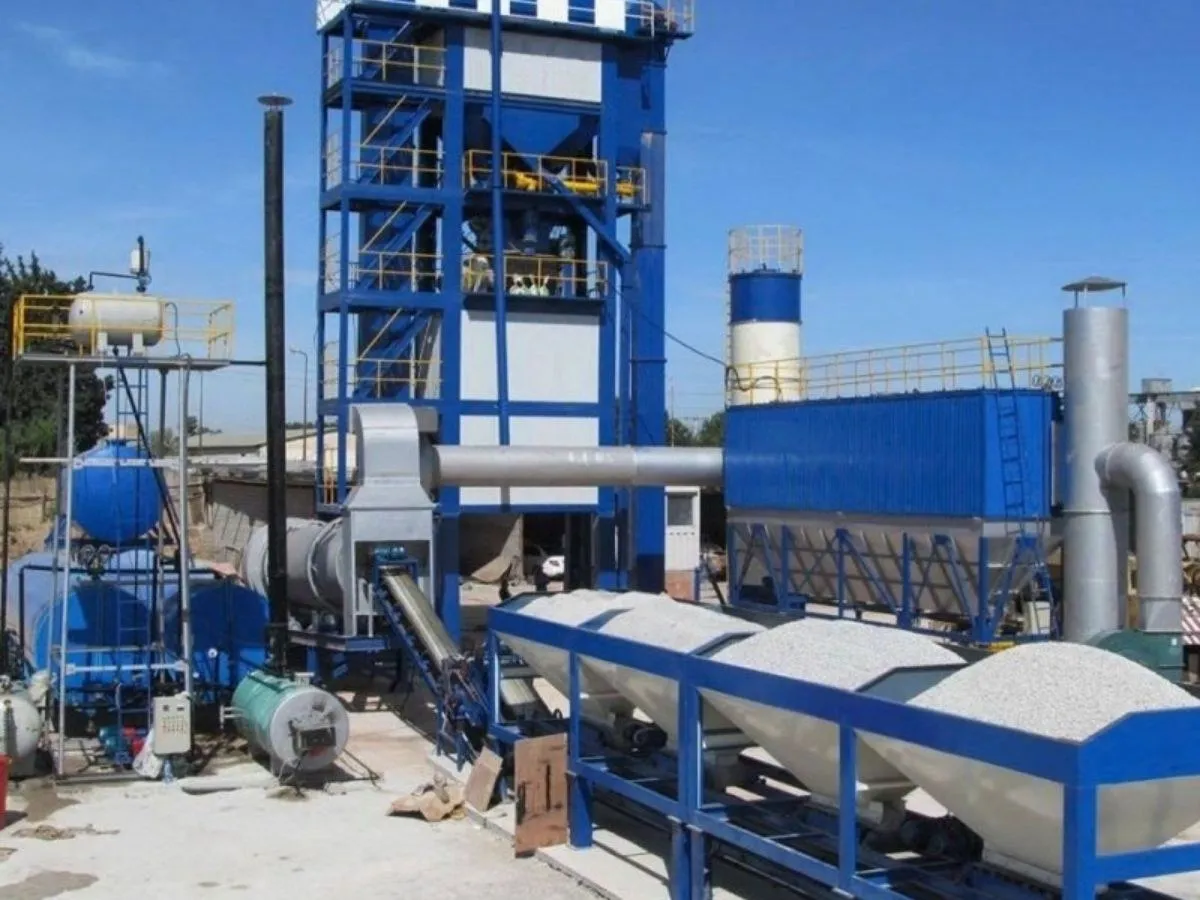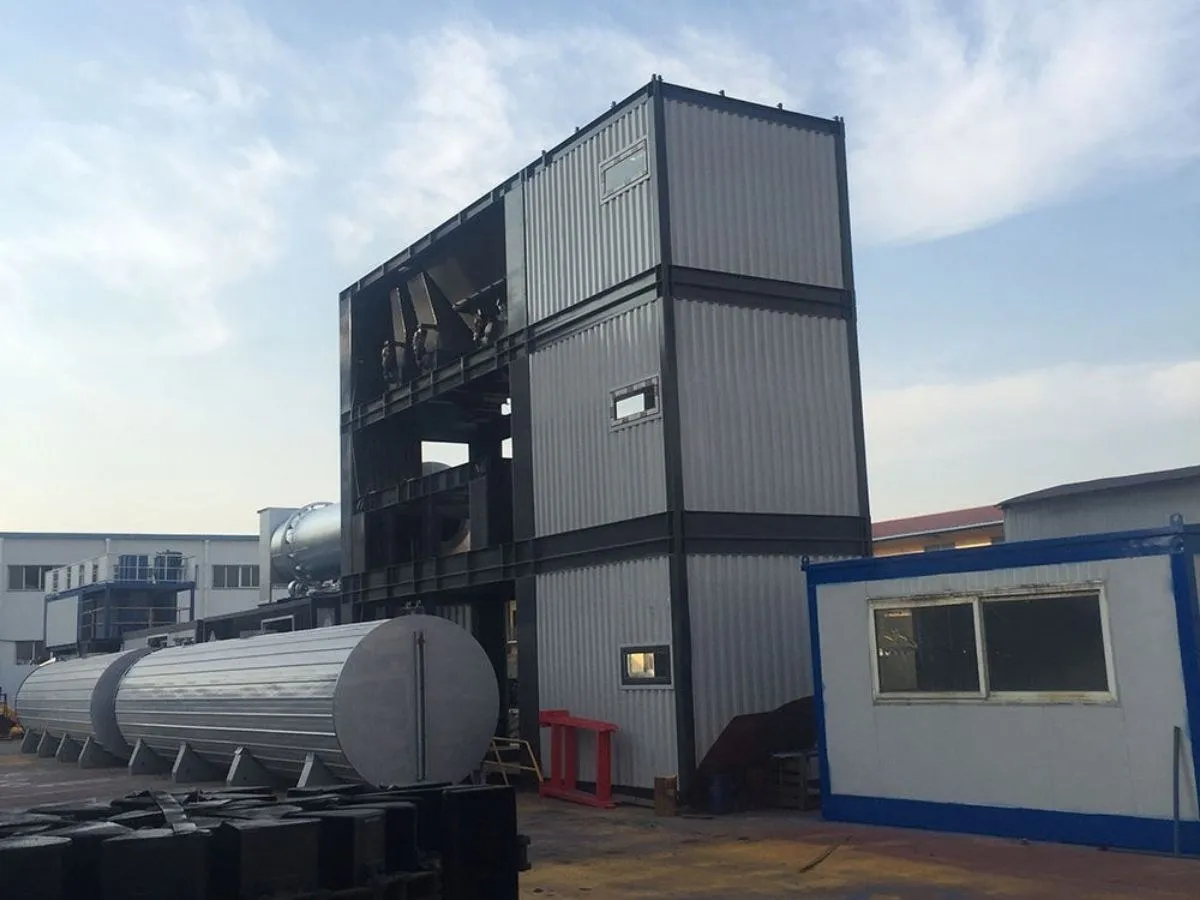
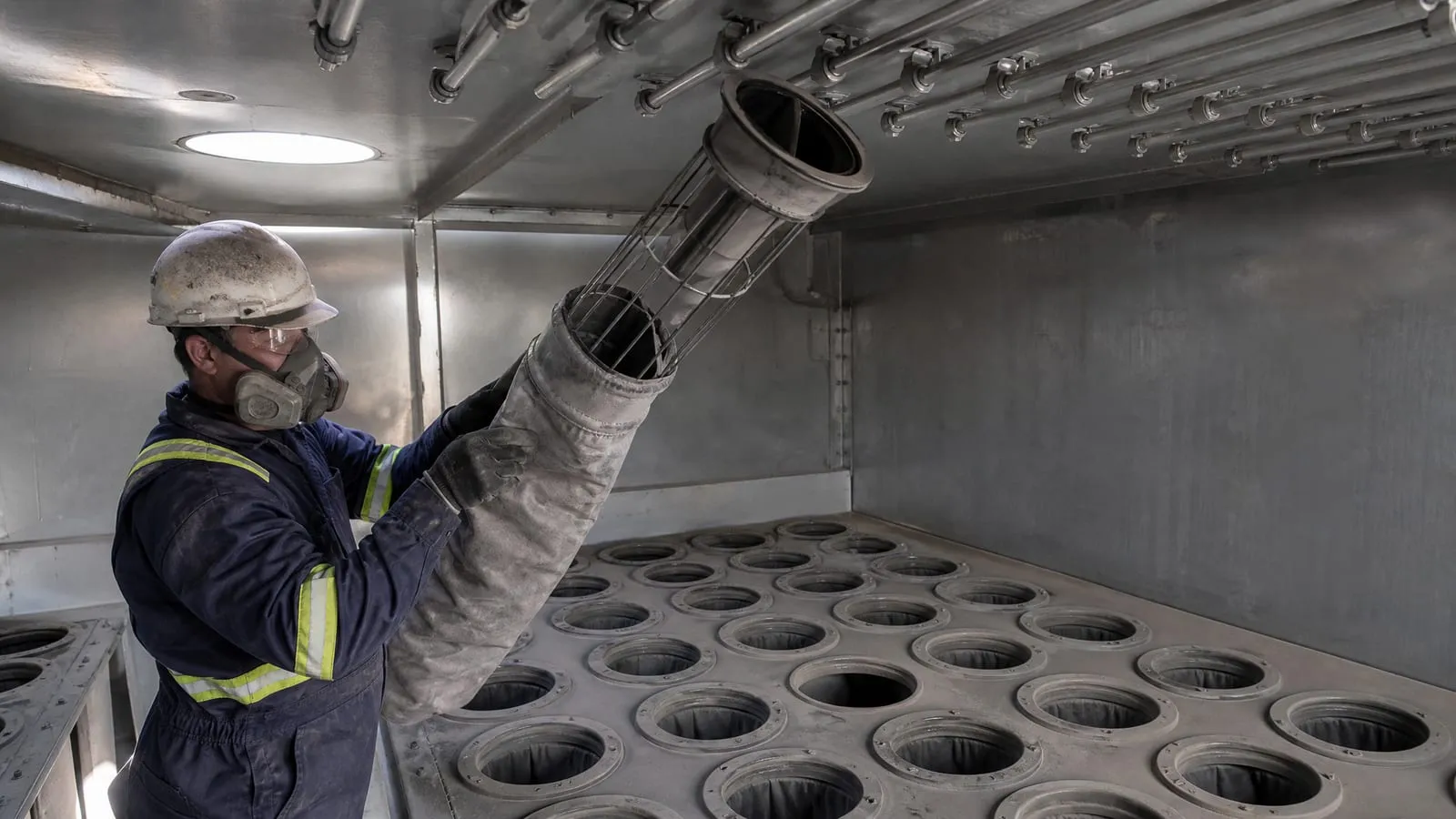
The baghouse cleans the exhaust from the drying drum and returns fine dust to the mix as filler. When it works, the stack is clear and the filler balance is steady. When it doesn’t, you get visible dust, blinded bags, lost production — or a fire. Two readings tell you most of what you need: pressure drop and temperature.
The two readings to watch
| Reading | Normal | Warning sign | Likely cause |
|---|---|---|---|
| Pressure drop | Steady, within the manual’s range | Rising steadily | Bags blinding, weak pulse cleaning, condensation |
| Pressure drop | Steady | Sudden fall | Torn or loose bag, leak in tube sheet |
| Inlet temperature | Within bag rating, above dew point | Too low | Condensation, mud on bags |
| Inlet temperature | Within bag rating | Too high | Bag damage; fire risk |
Log both readings every shift. Trends matter more than single values.
Daily care
- Check compressed air pressure and drain water from receivers — wet air ruins pulse cleaning
- Watch the stack for visible emissions
- Note pressure drop and temperature at start, mid-shift and end
- Check filler screw conveyors and hopper discharge are running
Weekly and monthly care
| Task | Why |
|---|---|
| Listen to pulse valves firing in sequence | A failed valve leaves a row of bags uncleaned |
| Inspect a sample of bags from different rows | Find wear before it spreads |
| Check cages for corrosion and sharp edges | Damaged cages tear bags |
| Inspect inlet baffles and ducts | Abrasion and leaks near the inlet |
| Check door seals and tube sheet | Leaks bypass the bags |
| Test dampers and the exhaust fan | Correct airflow through the drum and baghouse |
What damages bags — and how to avoid it
| Cause | Prevention |
|---|---|
| Condensation at start-up | Preheat with dry heat before wet aggregate; avoid long cold running |
| Wet aggregate | Dry stockpiles — see stockpile management |
| Excess fuel, poor combustion | Unburned fuel coats bags; tune the burner — see burner tuning |
| Overheating | Temperature alarms and interlocks; correct burner control |
| Abrasion | Inlet baffles; check high-velocity zones |
| Wet compressed air | Drain receivers; air dryer |
Fire risk
Unburned fuel and fine dust on bags can ignite. Keep combustion clean, never bypass temperature interlocks, follow the plant’s fire procedure, and keep inspection doors closed during operation.
Replacing bags
- Replace torn bags quickly — dust from one bag erodes neighbors
- Use the bag material and size specified for your plant
- Check the cage before fitting a new bag
- After a large replacement, expect a short period of higher emissions until a dust cake builds
Wet scrubber or baghouse?
Some small plants use wet dust collectors. They cost less but need water and settling ponds, and return no dry filler. For the differences, see baghouse vs wet scrubber.
Return to the full maintenance checklist, or order filter bags and pulse valve kits.