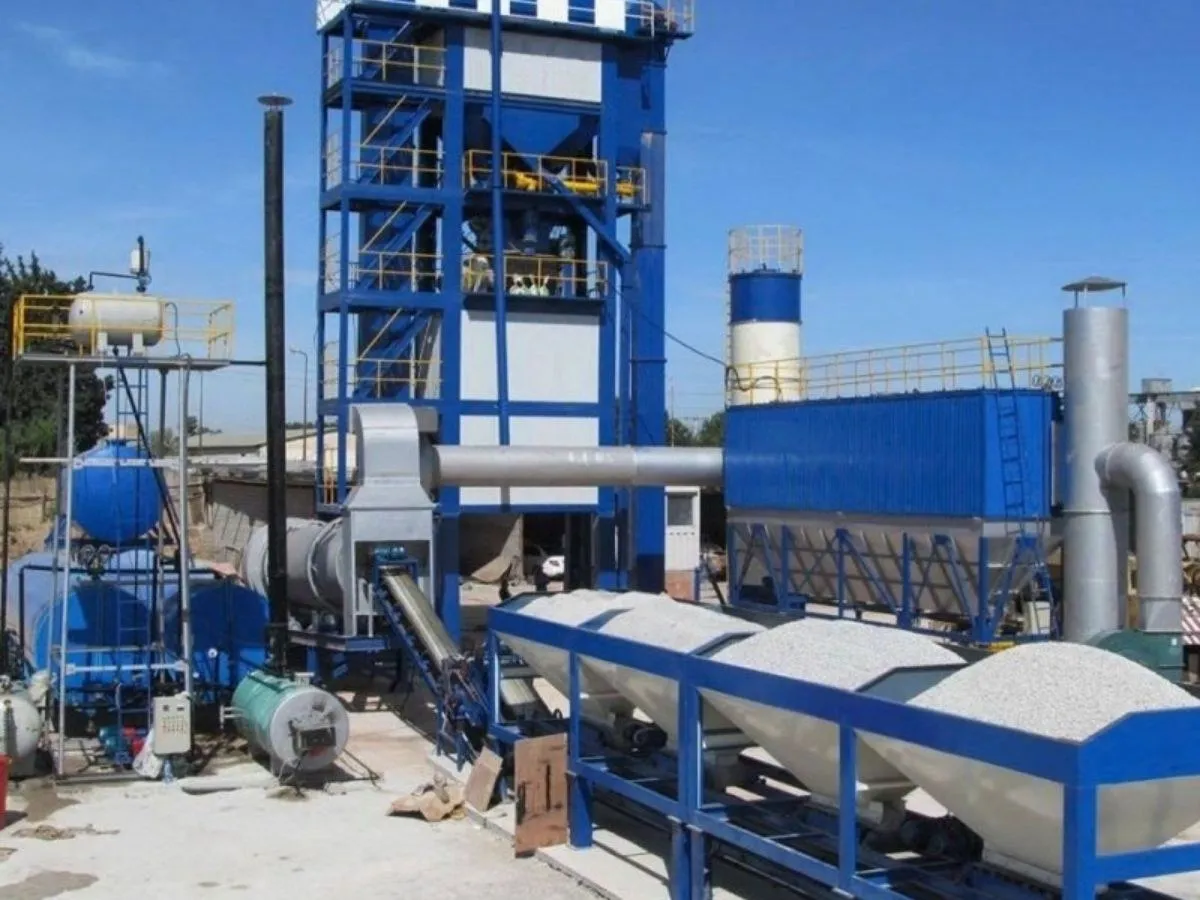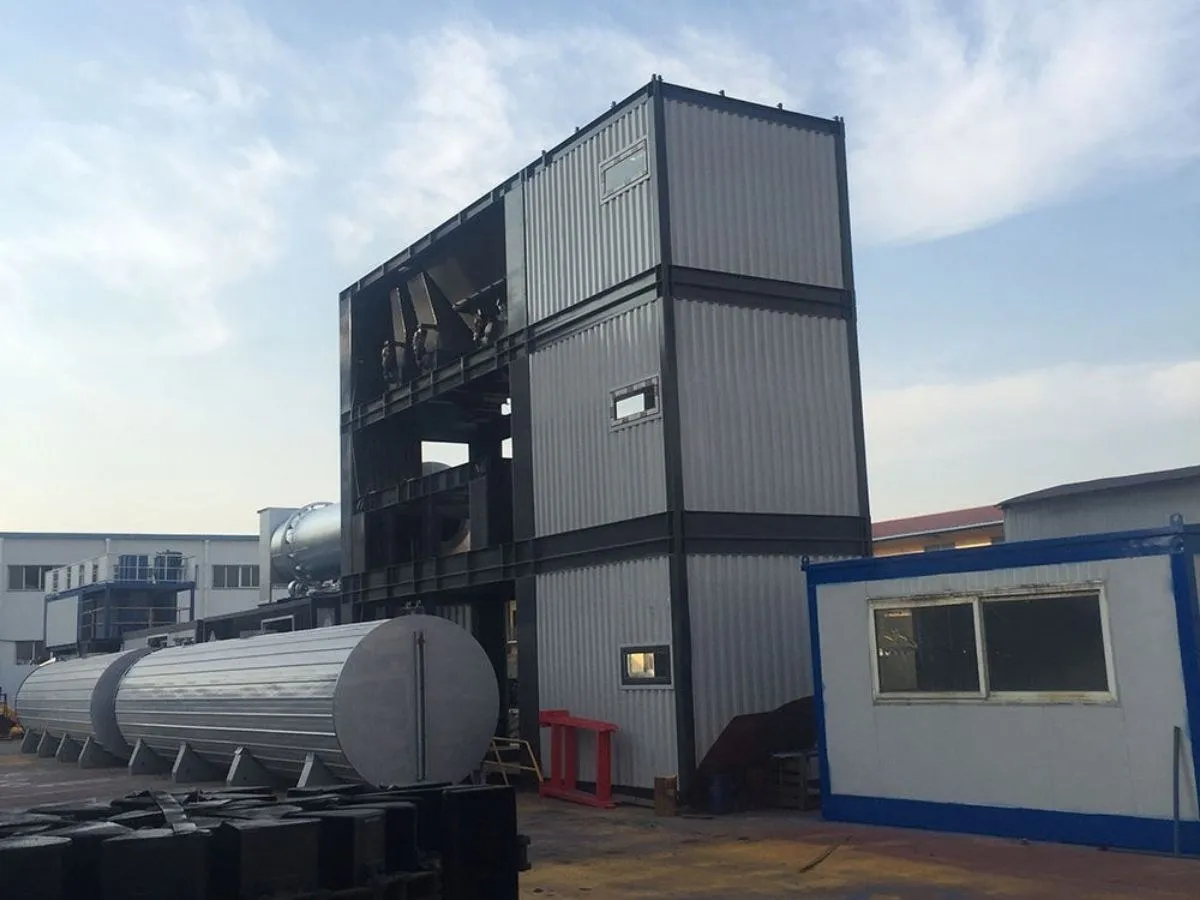
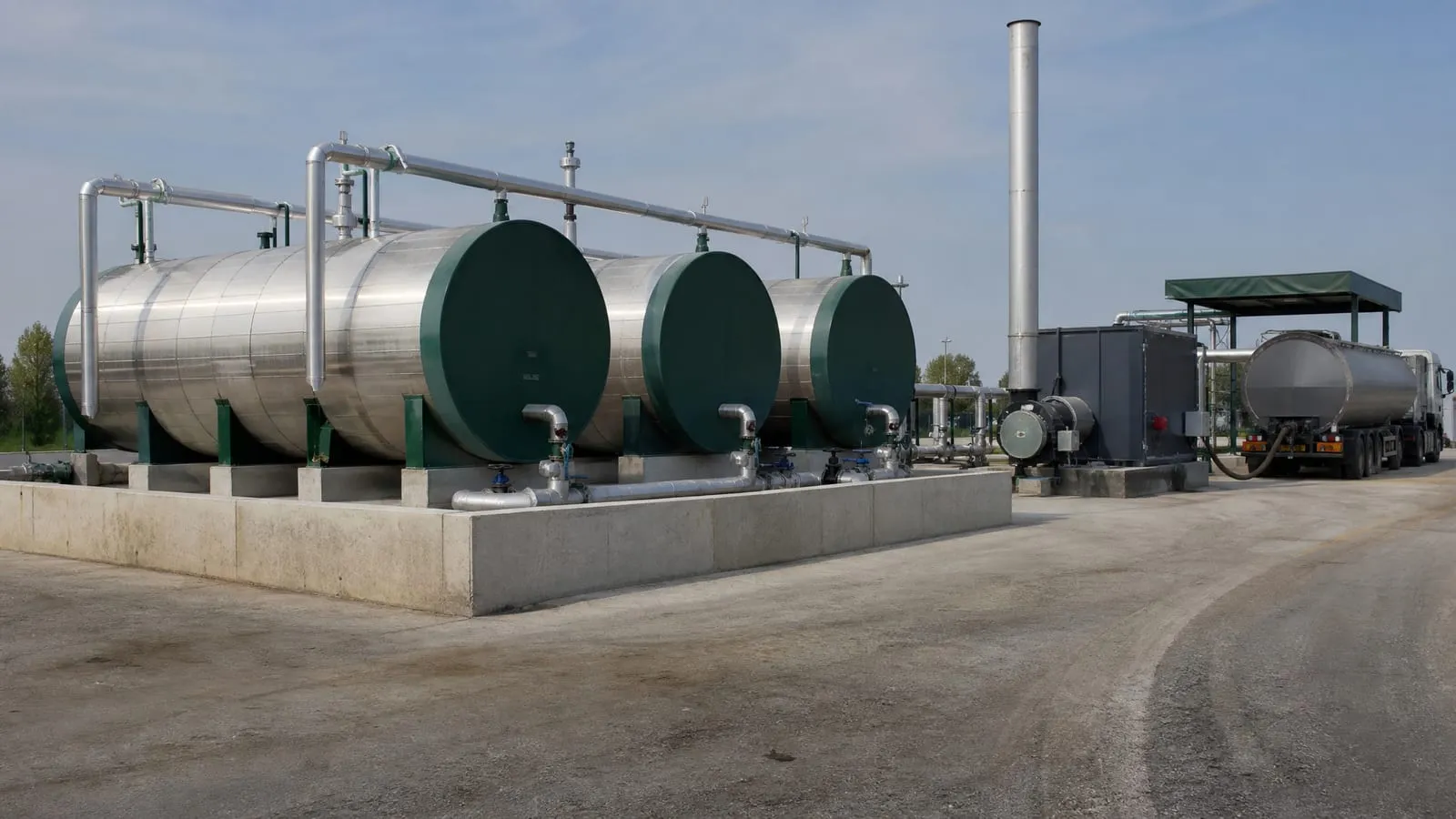
Bitumen arrives hot, must stay hot enough to pump and weigh accurately, and should not sit too hot for too long. The heating system decides how well a plant manages that balance — and how much fuel it uses doing it.
Heating methods compared
| Method | How it works | Strengths | Watch out for |
|---|---|---|---|
| Thermal oil | Heater warms oil that circulates through tank coils and pipe jackets | Even heating; heats several tanks and long lines; good temperature control | Extra equipment; thermal oil needs maintenance |
| Direct-fired tank | Burner fires into a tube inside the tank | Simple; fast heat-up | Local overheating near the fire tube; careful control needed |
| Electric | Heating elements in tank and trace heating on lines | Clean; good for small or temporary systems | High power demand |
Sizing storage
| Daily mix | Binder content | Bitumen per day | Several days’ storage |
|---|---|---|---|
| 400 t | 5% | about 20 t | 60–100 t |
| 700 t | 5% | about 35 t | 100–175 t |
| 1,000 t | 5% | about 50 t | 150–250 t |
Irregular deliveries, long supply routes or several binder grades call for more storage. Drummed bitumen needs a decanter — see bulk or drummed bitumen.
Insulation and pipes
- Insulate tanks, valves and pipes; heat loss through bare pipes is a common hidden cost
- Heat-trace every line that bitumen stands in, so it never hardens between runs
- Slope lines to drain back where possible
- Keep pumps and meters heated before start-up
Temperature control
| Too cold | Too hot |
|---|---|
| Pumps struggle; weighing inaccurate; poor coating | Binder ages faster; fumes; fire risk; wasted fuel |
Follow the binder supplier’s temperature data. Modified binders may need agitation or specific storage temperatures — see polymer-modified bitumen requirements.
Safety
- Bund tanks to contain spills
- Never allow water into hot bitumen — it can foam violently
- Keep thermal-oil systems in good order: leaks, oil condition, expansion tank
- Train staff in bitumen burns first aid — see the safety checklist
Back to how an asphalt plant works.