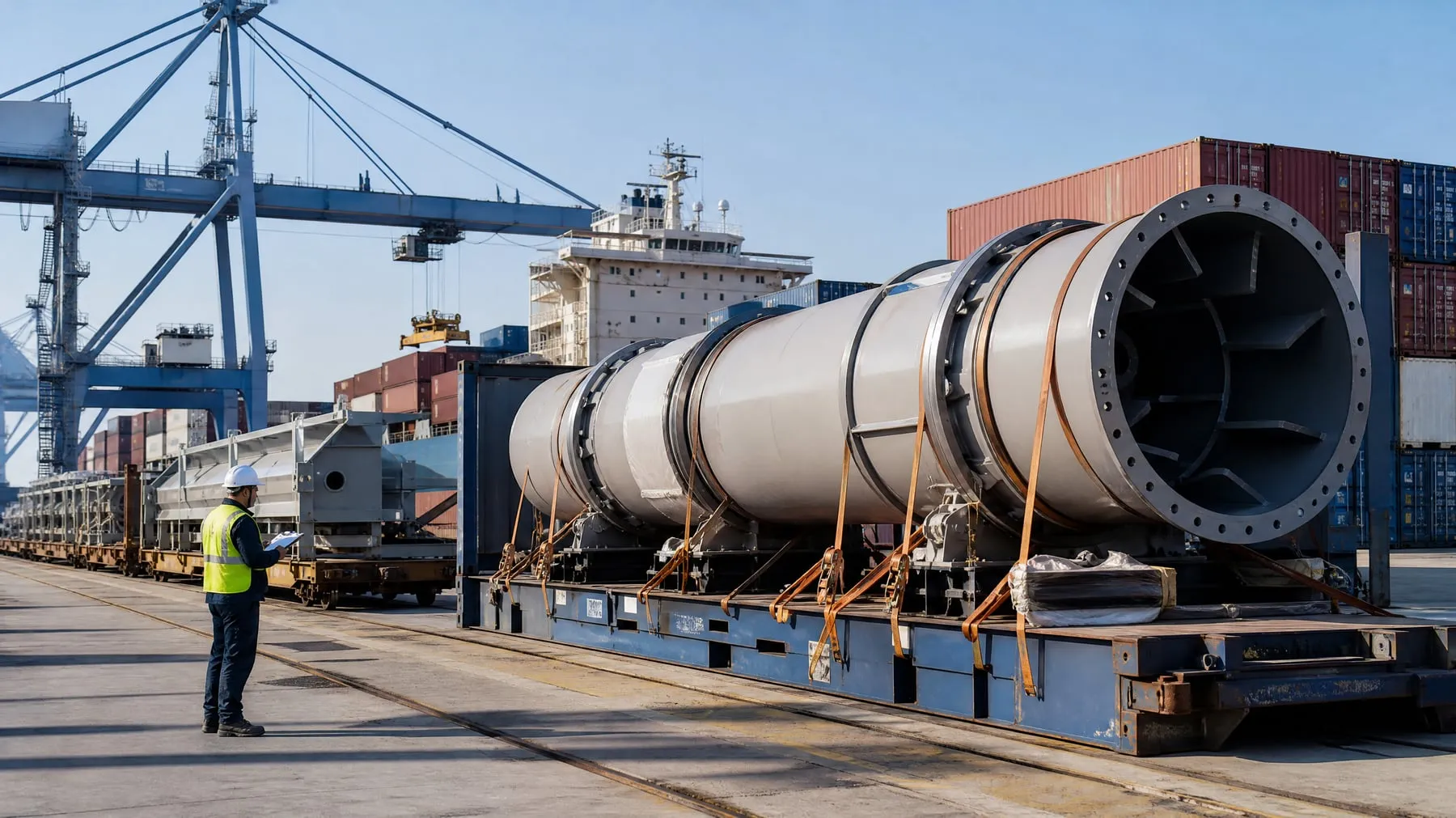
Incoterms are the three-letter terms — FOB, CIF, DAP and others — that say who pays for each part of the journey and where risk passes from seller to buyer. For a plant shipped from China in dozens of containers and flat racks, choosing the right term avoids disputes over freight, insurance and damage.
Incoterms 2020 at a glance
| Term | Seller delivers / risk passes | Seller pays main transport? | Insurance by seller | Mode |
|---|---|---|---|---|
| EXW — Ex Works | At seller’s premises | No | No | Any |
| FCA — Free Carrier | To buyer’s carrier at named place | No | No | Any |
| FOB — Free On Board | On board vessel at port of shipment | No | No | Sea |
| CFR — Cost and Freight | On board vessel at port of shipment | Yes, to destination port | No | Sea |
| CIF — Cost, Insurance, Freight | On board vessel at port of shipment | Yes, to destination port | Yes, minimum cover | Sea |
| CPT — Carriage Paid To | To first carrier | Yes, to named place | No | Any |
| CIP — Carriage and Insurance Paid To | To first carrier | Yes, to named place | Yes, broad cover | Any |
| DAP — Delivered at Place | At named place, ready for unloading | Yes | Seller’s own risk | Any |
| DPU — Delivered at Place Unloaded | At named place, unloaded | Yes | Seller’s own risk | Any |
| DDP — Delivered Duty Paid | At named place, import cleared, duties paid | Yes | Seller’s own risk | Any |
The point most buyers miss
Under CFR and CIF, the seller pays freight to your port — but risk passes when the goods are loaded on board in China, just as under FOB. If cargo is damaged at sea, you claim on the insurance, not from the seller. That is why the insurance terms matter.
Insurance under CIF and CIP
| Term | Minimum insurance required (Incoterms 2020) |
|---|---|
| CIF | Institute Cargo Clauses (C) — limited cover |
| CIP | Institute Cargo Clauses (A) — all-risks cover |
For an asphalt plant, ask the seller to insure on all-risks terms for at least the invoice value plus 10%, or buy your own policy.
Which term fits which situation
| Your situation | Usually best |
|---|---|
| You have a good forwarder and want control of freight | FOB (named Chinese port) |
| You want the seller to book the ship | CFR or CIF — check insurance |
| Rail or road to Central Asia | FCA, CPT or CIP (named place) |
| You want delivery to site without handling transport | DAP to your site or nearest town — you still clear customs |
| You want everything handled, including duties | DDP — rarely offered for heavy machinery; check legal and tax implications |
Container shipments and FOB
Officially, FOB, CFR and CIF are meant for sea cargo handed over at the ship’s rail. Containers are often handed to the carrier at a terminal before loading; the ICC suggests FCA, CPT or CIP in those cases. In practice FOB is still widely used for containerized machinery — just make sure the contract is clear about where and when risk passes.
Write it correctly in the contract
- Term + named place + version: “FOB Qingdao, Incoterms 2020”, “CIF Mombasa, Incoterms 2020”
- Who pays terminal handling at each end
- Insurance level and beneficiary (for CIF/CIP)
- Documents to be provided: commercial invoice, packing list, bill of lading, certificate of origin, and any import certificates for your country
Our prices are quoted FOB a Chinese port by default; we also quote CFR, CIF or DAP on request. See the price guide and the shipping checklist.
Source
International Chamber of Commerce, Incoterms® 2020 rules. Always refer to the official ICC text for definitions.