The twin-shaft mixer — often called the pugmill — is where a batch plant turns weighed aggregate, filler and bitumen into uniform hot mix. Its design is the reason batch plants can deliver consistent mix batch after batch.
How it is built
| Part | Role |
|---|---|
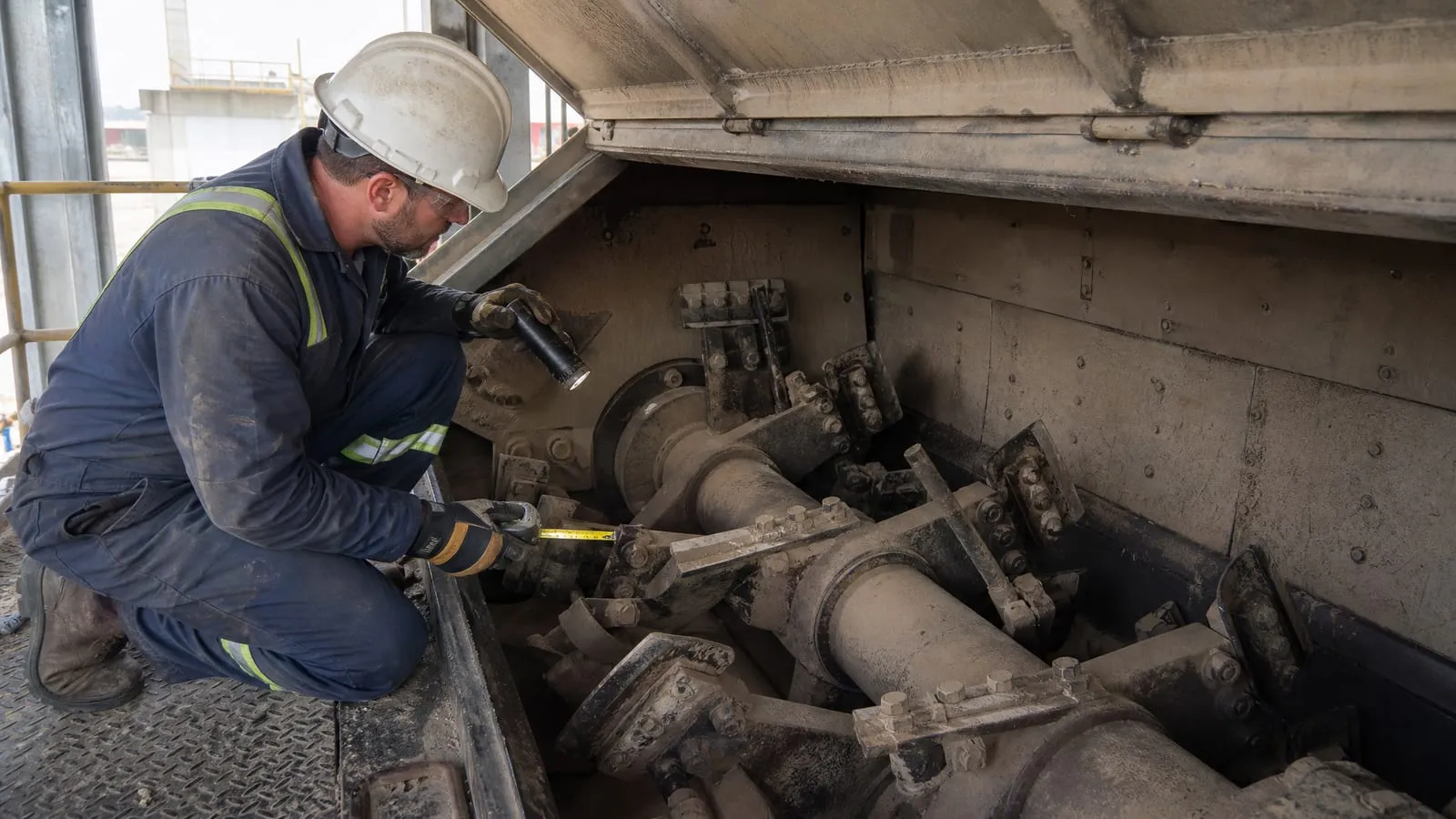
| Trough (mixer body) | Holds the batch; lined with replaceable wear plates |
| Two parallel shafts | Turn in opposite directions, driven by motors and gearboxes |
| Arms and paddle tips | Angled to push material along and across the trough |
| Liners | Protect the body from wear |
| Discharge gate(s) | Open at the bottom to drop the batch into a truck or silo skip |
| Bitumen spray bar | Delivers weighed bitumen evenly into the mixer |
One batch, step by step
- Aggregate and filler drop in from the scales
- Dry mixing — aggregate and filler blend for a few seconds
- Bitumen sprayed in from the weighed bucket
- Wet mixing — the longest phase, until every particle is coated
- Discharge — gates open; the batch drops out in seconds
- Next batch, already weighed, drops in
Cycle time and batch size set the output — see batch cycle time.
Why the figure-of-eight matters
The paddles on each shaft are angled so one shaft pushes material toward one end and the other pushes it back. Material circulates around and between the shafts, with intense shearing in the middle zone. This mixes fine filler and binder through the coarse stone quickly and evenly — something a single-shaft or drum mixing zone does more slowly.
Mixer sizes in our range
| Model | Mixer capacity | Rated output |
|---|---|---|
| RMX-B60 | 750 kg | 60 t/h |
| RMX-B120 | 1,500 kg | 120 t/h |
| RMX-B160 | 2,000 kg | 160 t/h |
| RMX-B240 | 3,000 kg | 240 t/h |
| RMX-B400 | 5,000 kg | 400 t/h |
See the stationary batch plant parameters.
Adding additives
Fibers for SMA, polymer or warm mix additives and rejuvenators for RAP mixes are dosed into the mixer by dedicated feeders at the point in the cycle the mix design requires. Some need longer mixing — plan output accordingly.
Keeping it working
Paddles and liners wear with every batch; worn parts lengthen mixing time and cause build-up. See mixer maintenance.
Back to how an asphalt plant works.