Short answer: Bitumen is graded by penetration, viscosity or performance grade (PG), and which system applies depends on your country and specification. Hot climates and heavy traffic usually need a stiffer binder to resist rutting, and stiffer or modified binders need higher mixing and storage temperatures. Tell the supplier the grades you will use so tanks, heating and pumps are set up for them.
Bitumen grades tell you how hard or soft the binder is. The sections below cover the three grading systems and what each means for the plant.
Three grading systems
| System | Example | Measures |
|---|---|---|
| Penetration grade | 60/70, 80/100 | How far a needle sinks into the binder |
| Viscosity grade | VG-30, VG-40 | Viscosity at a standard temperature |
| Performance grade (PG) | PG 64-22 | High and low temperature performance |
Which one applies depends on the country and the project. Follow your specification.
Why climate matters
- Hot climate or heavy traffic: a stiffer binder resists rutting.
- Cold climate: a softer binder resists cracking.
- Wide temperature range: modified binders can help.
What the plant must handle
| Binder | Plant impact |
|---|---|
| Standard grades | Normal tank heating and pumps |
| Stiffer grades | Higher storage and mixing temperature |
| Polymer-modified | Special tank, agitation, pumps; see polymer-modified bitumen |
Temperatures and tanks
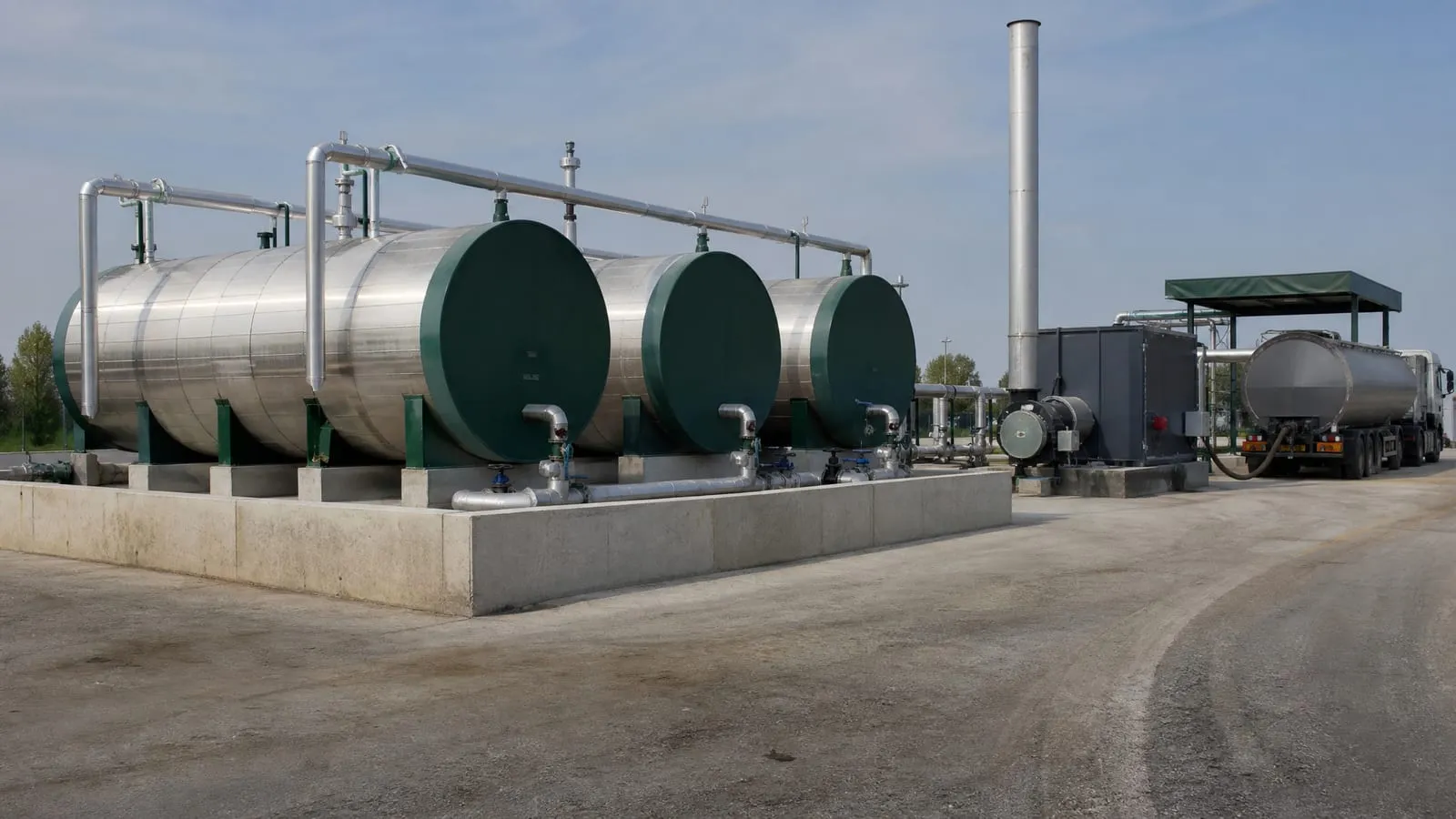
Heating must keep the binder pumpable without overheating it. See bitumen tank heating and hot mix temperature control. Use separate tanks if you run different grades.
Hot, humid regions
In hot, humid regions the binder is only part of the picture; aggregate moisture and storms matter too — see hot and humid climate. Tell us the grades you use and we will check tanks, heating and pumps.