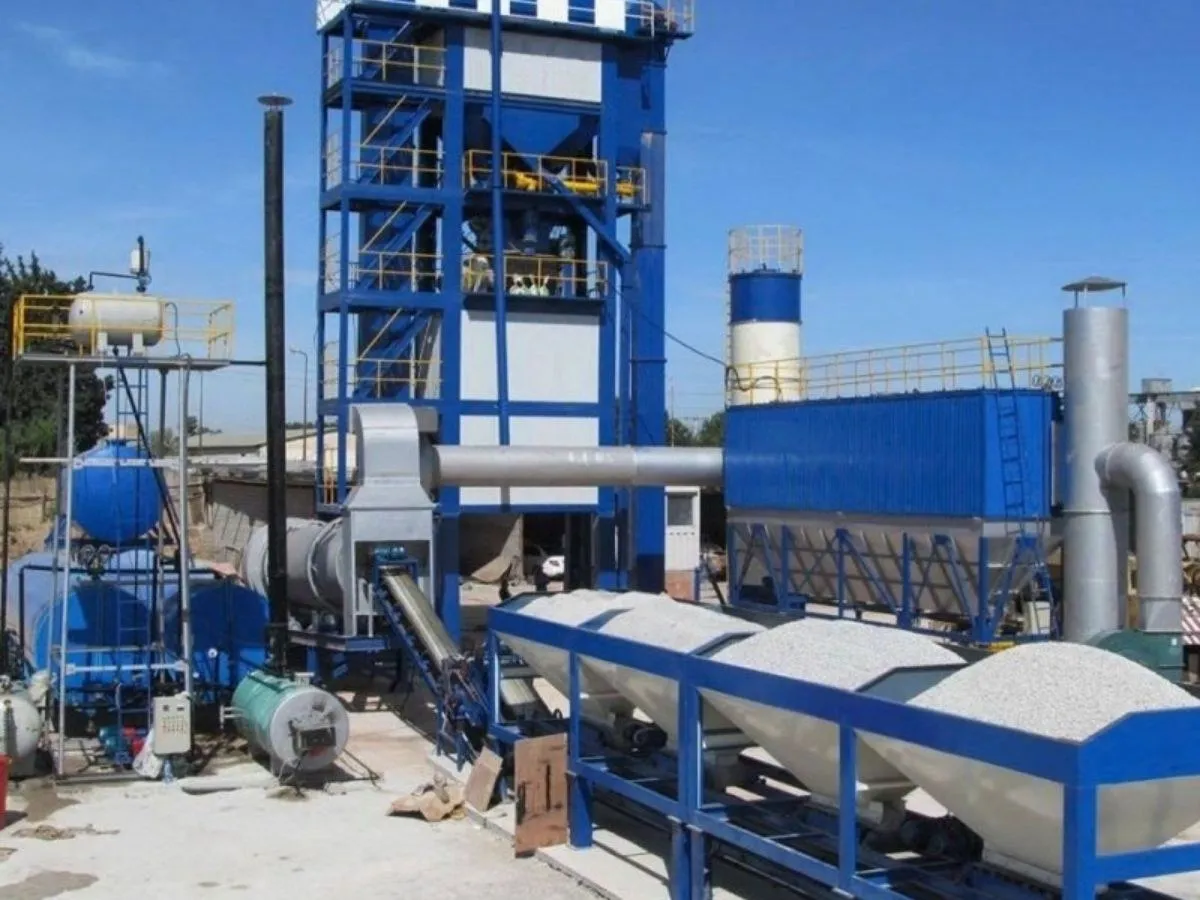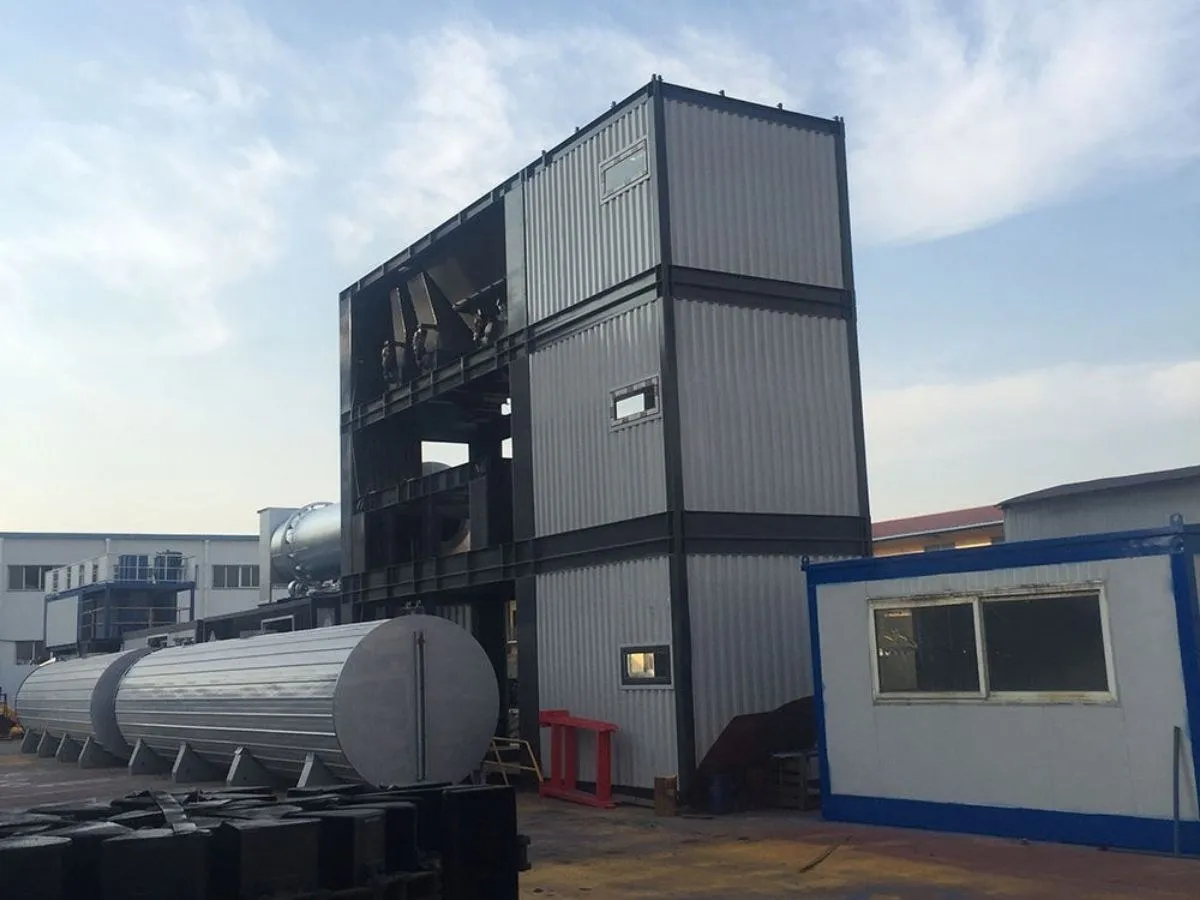
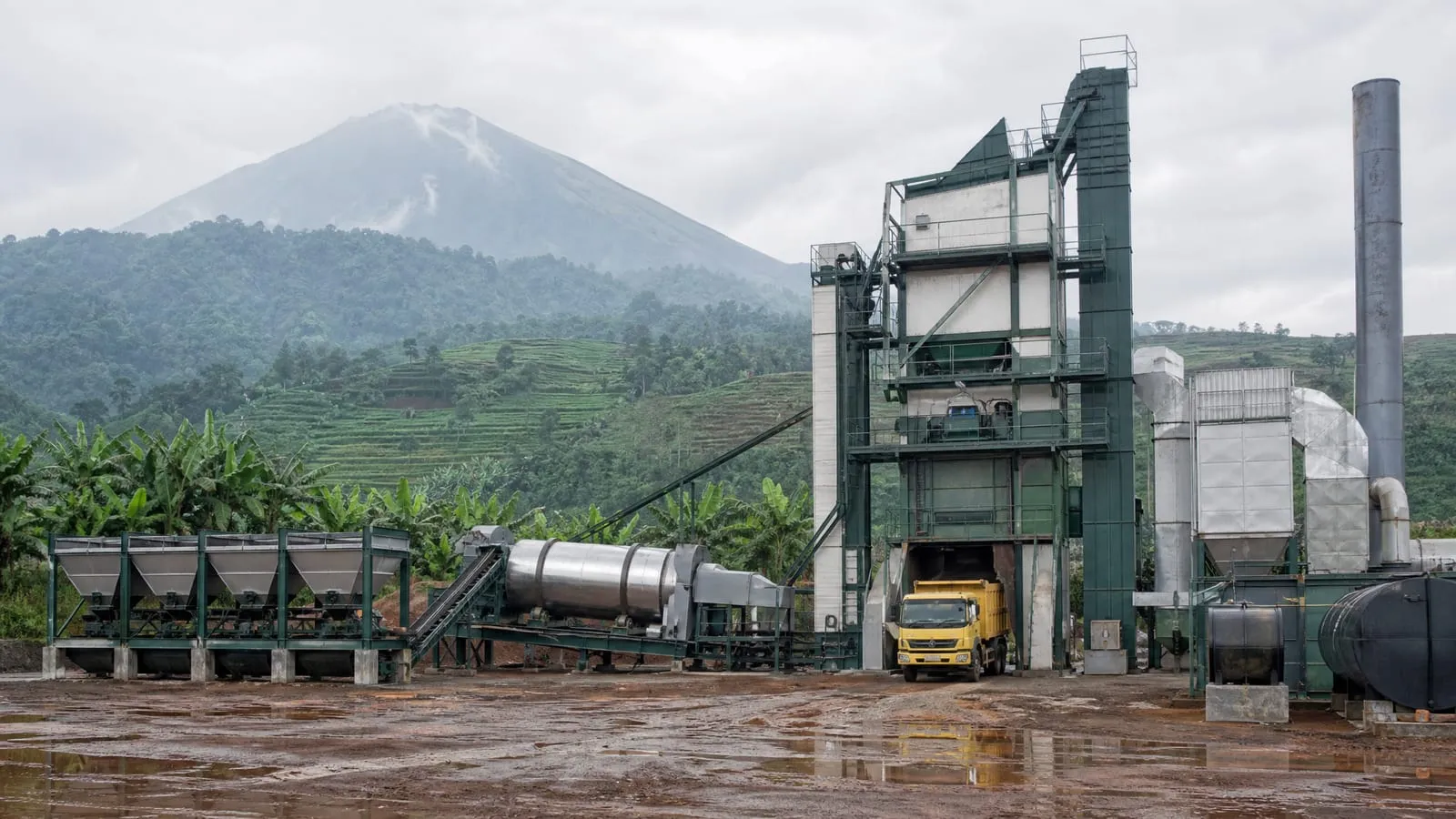
Hot mix temperature is mostly decided before the mixer — by how hot the aggregate leaves the drying drum. If aggregate temperature is steady, mix temperature is steady. Most problems come from moisture changes, uneven feed or burner control.
Too hot vs too cold
| Too hot | Too cold | |
|---|---|---|
| Effects | Binder ages faster; blue smoke; wasted fuel; drain-down in some mixes | Hard to compact; low density; loads may be rejected |
| Common causes | Feed lower than burner setting; control overshoot; sensor fault | Wet aggregate; feed higher than drum capacity; burner under-firing |
The right range comes from your mix design and specification.
Where temperature is controlled
| Point | What happens |
|---|---|
| Stockpiles | Moisture decides how much heat is needed |
| Cold feed | Steady flow keeps the burner load steady |
| Drying drum and burner | Heats aggregate; burner output follows the setpoint |
| Discharge sensor | Measures aggregate temperature for the burner control loop |
| Hot bins | Aggregate cools slightly while stored |
| Mixer | Binder and filler added; final mix temperature |
| Silo and truck | Heat loss during storage and haul |
Causes of temperature swings — and fixes
| Cause | Fix |
|---|---|
| Moisture varying between loads | Load from drained face; cover fines — see stockpile management |
| Cold feed stopping and starting | Keep bins full; check feeders |
| Burner control too aggressive or too slow | Tune the control loop; check burner response — see burner tuning |
| Sensor dirty or faulty | Clean and check against a reference thermometer |
| Recipe changes | Allow temperatures to settle; plan recipe order |
| Long waits in hot bins | Match feed to production |
Haul and silo
Mix cools in the silo and on the road. Insulated silos, tarped or insulated truck bodies, and short hauls protect temperature — see hot mix storage silos.
Daily routine
- Check temperature sensors against a handheld reference
- Record aggregate and mix temperatures every hour
- Note moisture readings and burner settings at start-up
- Check truck temperatures at loading
Temperature problems often show up first in the troubleshooting table. Ask our engineers if swings persist.