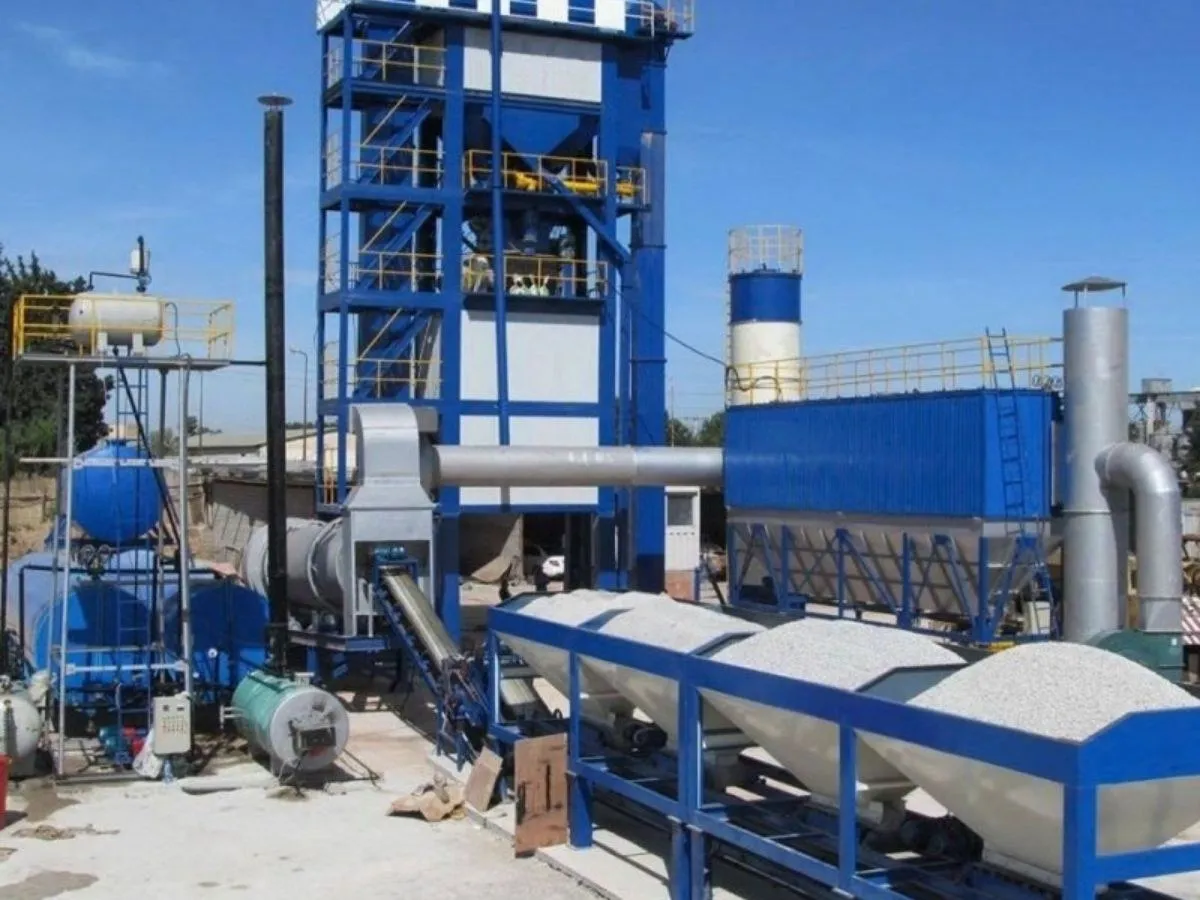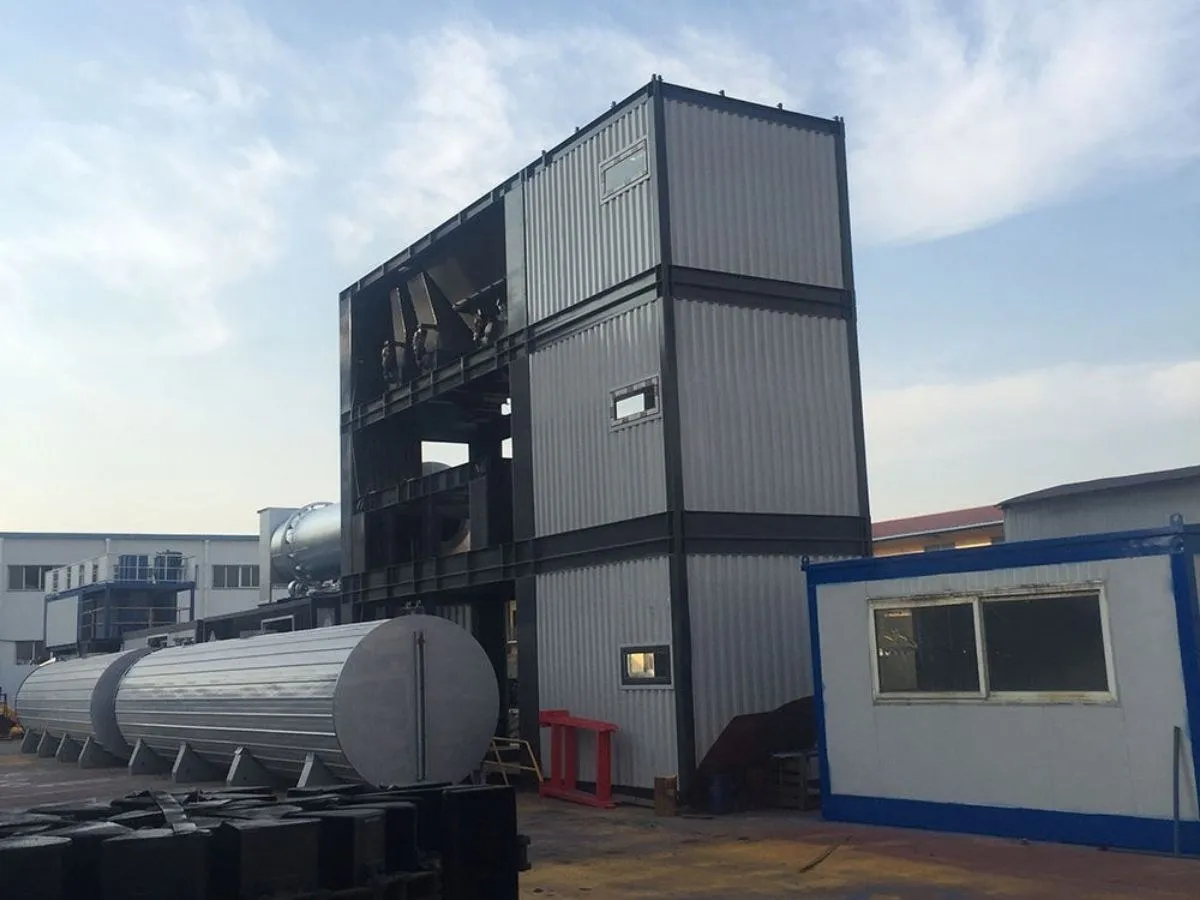
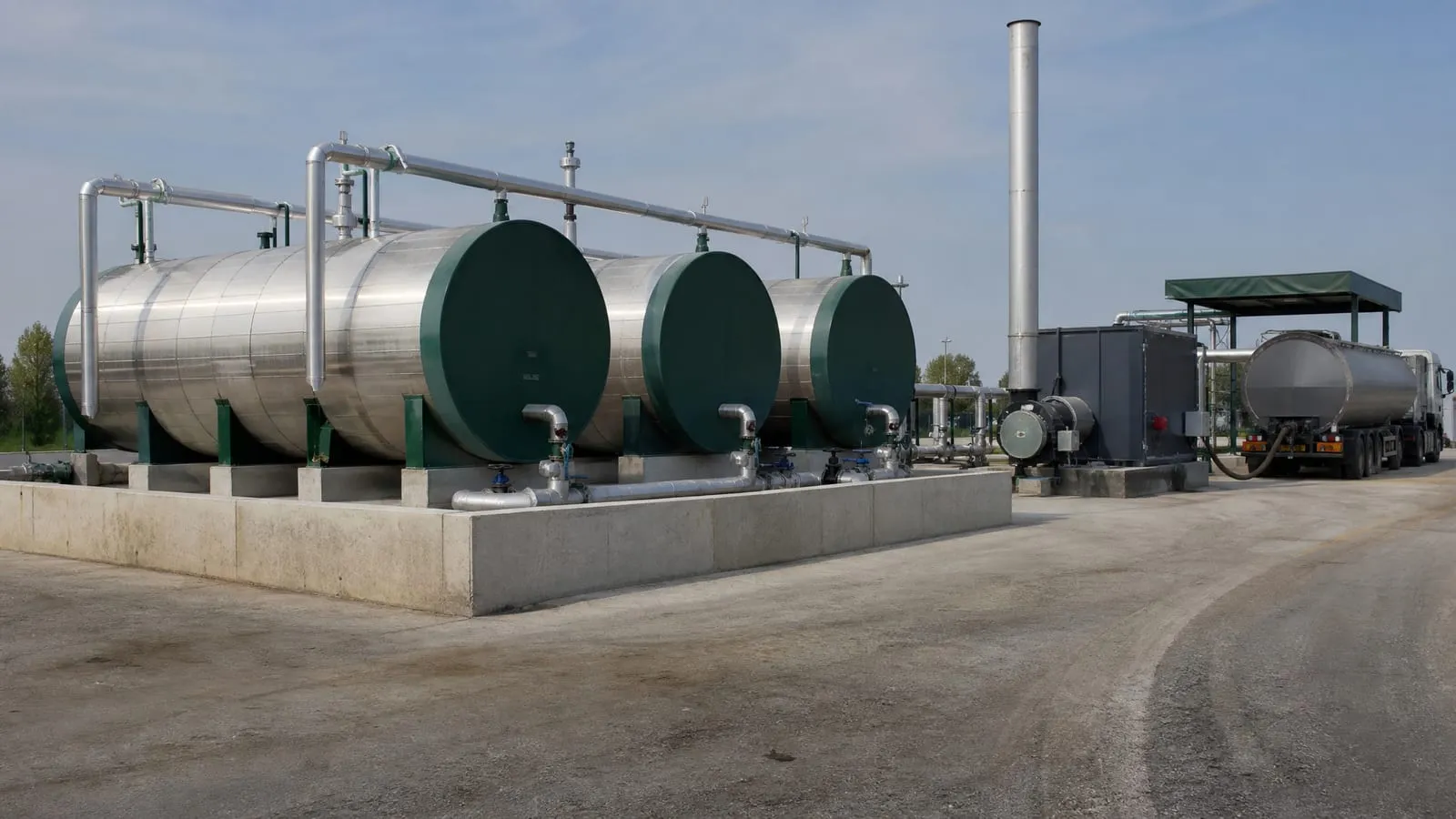
Short answer: Most plants buy ready-made polymer-modified bitumen and need a dedicated heated tank, often with agitation, plus pumps and lines that handle the higher viscosity. Expect higher mixing temperatures and sometimes longer wet mixing, which lowers batches per hour, so size the plant for it if PMB mixes will be a large share. Follow the binder supplier’s temperature data.
Polymer-modified bitumen (PMB) makes asphalt more resistant to rutting in heat and cracking in cold. It is common on highways, heavy-traffic urban roads, airports and in hot climates. Producing PMB mixes needs a few changes at the plant.
Ready-made PMB or in-plant modification?
| Ready-made PMB | In-plant modification | |
|---|---|---|
| How | Delivered pre-blended by a supplier | Polymer blended with bitumen in a high-shear unit at the plant |
| Plant equipment | Dedicated heated tank, often with agitation | Blending mill, polymer handling, curing tanks |
| Best for | Most plants | Large plants with high, steady PMB demand |
Most plants buy ready-made PMB.
What the plant needs
| Area | Requirement |
|---|---|
| Storage | Separate tank for PMB; heating to the supplier’s range; agitation or circulation if specified |
| Pumps and lines | Sized for higher viscosity; well insulated and heat-traced |
| Weighing | Bitumen scale or meter suited to PMB; check accuracy at viscosity |
| Temperatures | Usually higher aggregate and mix temperatures — burner capacity must allow it |
| Mixing | Longer wet mixing time may be needed |
| Storage of mix | Insulated silo; limit storage time as specified |
| Cleaning | Flush lines when switching between PMB and conventional binder |
See bitumen tank heating.
Output impact
Longer wet mixing and higher temperatures reduce batches per hour and increase fuel use per ton. If PMB mixes will be a large share of production, size the plant for them — see cycle time.
SMA and PMB
Stone mastic asphalt often combines PMB with fibers. A fiber feeder and accurate filler weighing are needed too — see mix types.
Quality control
- Follow the binder supplier’s temperature data at every stage
- Sample binder from the tank regularly if storage stability is a concern
- Record mix temperatures for each batch
- Check compaction temperatures on site — PMB mixes can be harder to compact when cool
Tell us your PMB needs and we will configure tanks, pumps and heating.