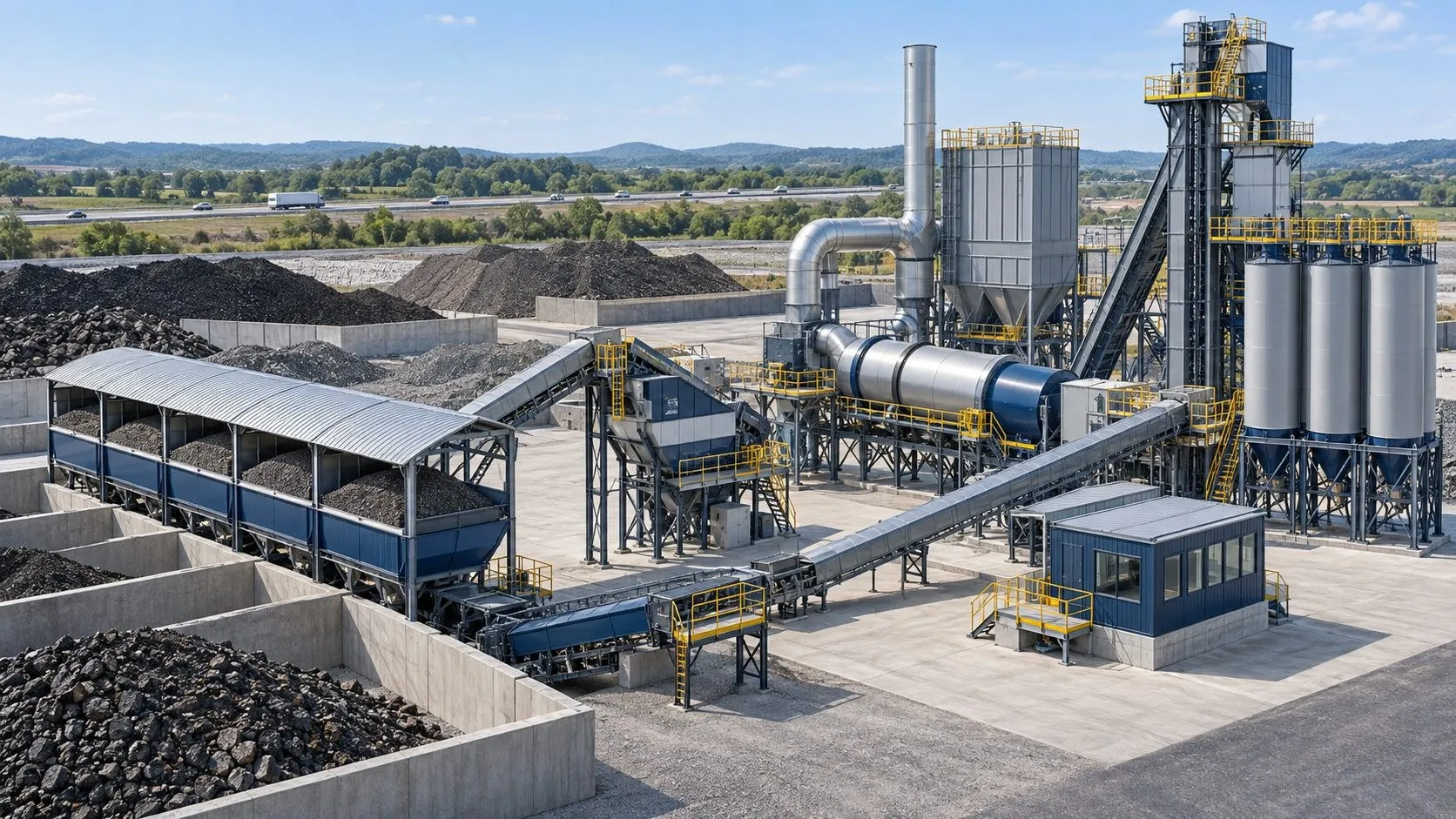
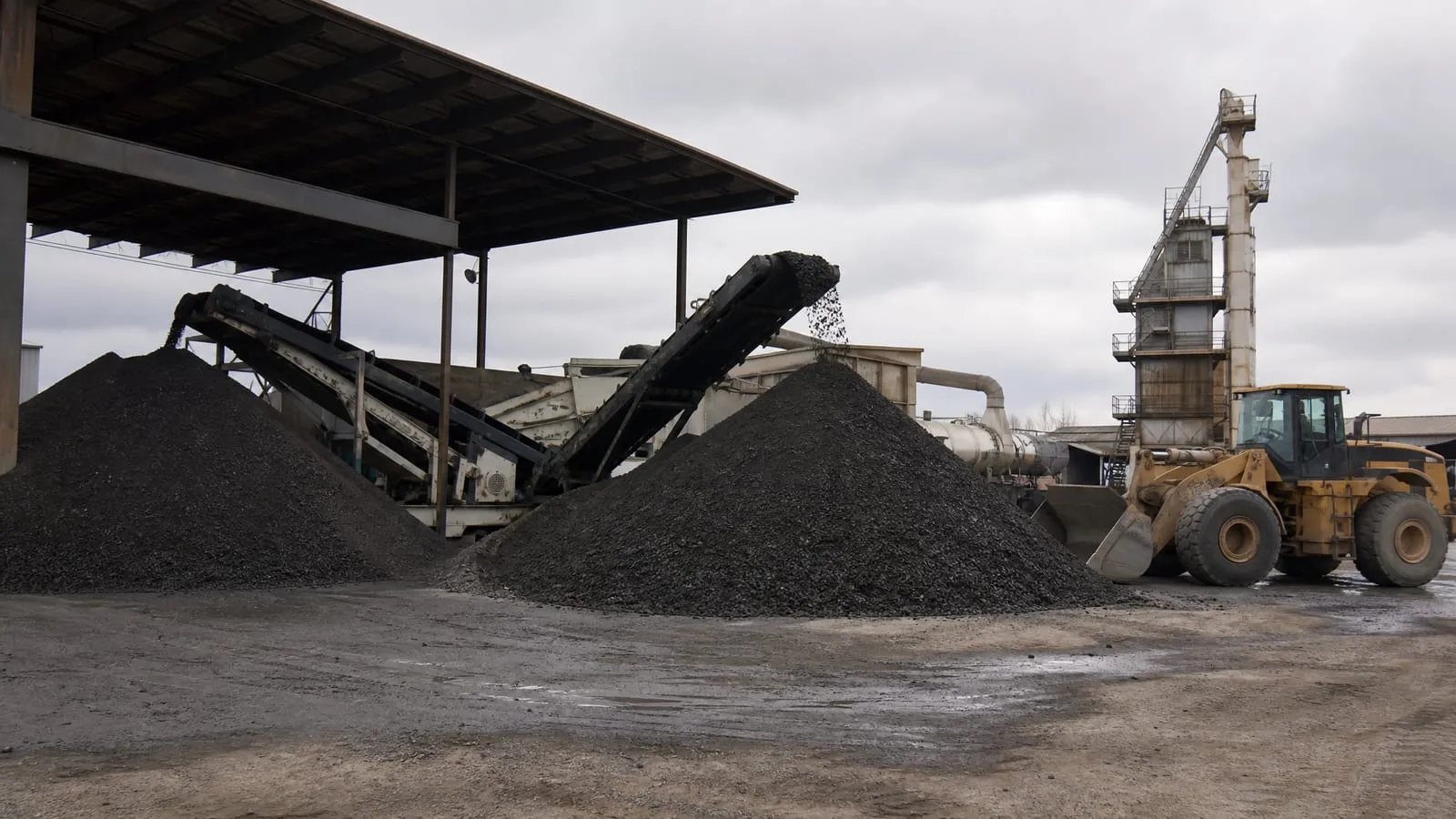
Short answer: Hot recycling plants commonly run 30–50% RAP because of four limits: aged, stiff RAP binder; the need to heat RAP gently instead of in the flame; variable and wet RAP; and specifications that often allow less in wearing courses. Good processing, testing, rejuvenators and suitable plant design can raise the practical limit.
The ceiling is not about whether recycling is worthwhile. The table below sets out why each of the four limits applies.
The four limits
| Limit | Why it matters |
|---|---|
| Aged binder | RAP binder has oxidized and stiffened; too much makes mix brittle unless the design compensates |
| Heat transfer | RAP must be heated gently — direct flame ages binder and creates smoke — so new aggregate is superheated to warm RAP in the mixer; there is a practical limit |
| RAP variability and moisture | Variable gradation, binder content and moisture make high percentages hard to control |
| Specification | Agencies limit RAP by layer and traffic, often lower in wearing courses |
How plants handle RAP heat
| Method | RAP content (typical) |
|---|---|
| Cold RAP added to the mixer or hot elevator | Low to moderate — limited by how much superheat new aggregate can carry |
| Separate RAP drum (parallel drum) | 30–50% — RAP warmed gently before the mixer |
| Specialized high-RAP plants | Higher, with extensive controls |
Our RMX-R recycling plants use a separate RAP drum and heated RAP weighing for 30–50% RAP.
What allows higher RAP
- Good processing — fractionated, covered, tested RAP — see RAP processing
- Mix design that accounts for the aged binder, sometimes with a softer new binder
- Rejuvenators where the design requires them
- Plant design that heats RAP without exposing it to the flame
- Specifications that allow it, often after trial sections
What it means for your project
- Find the RAP limits in your specification for each layer
- Check the RAP supply and quality
- Choose a plant approach that matches — see when RAP pays off
- Budget using the recycling price page