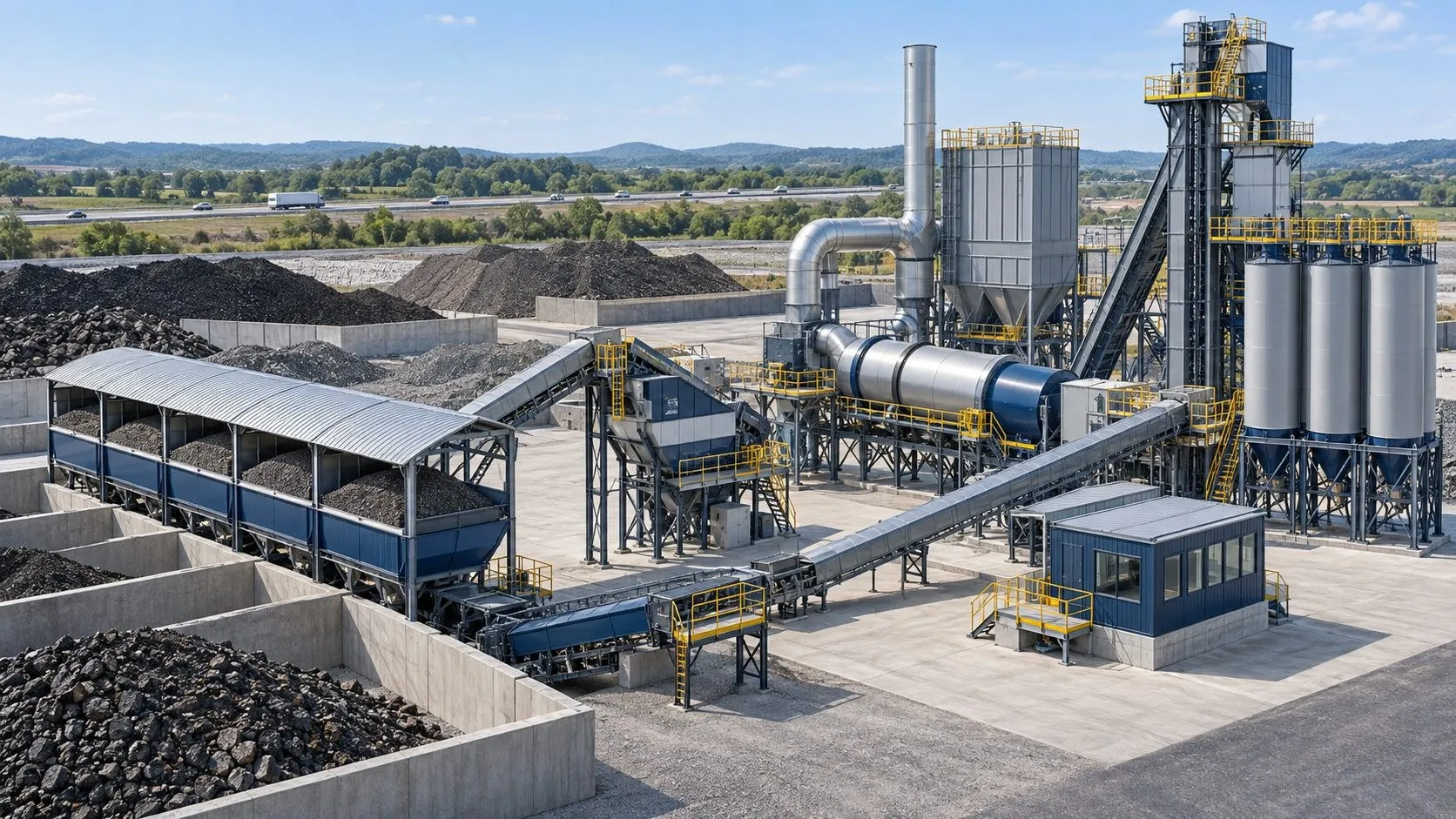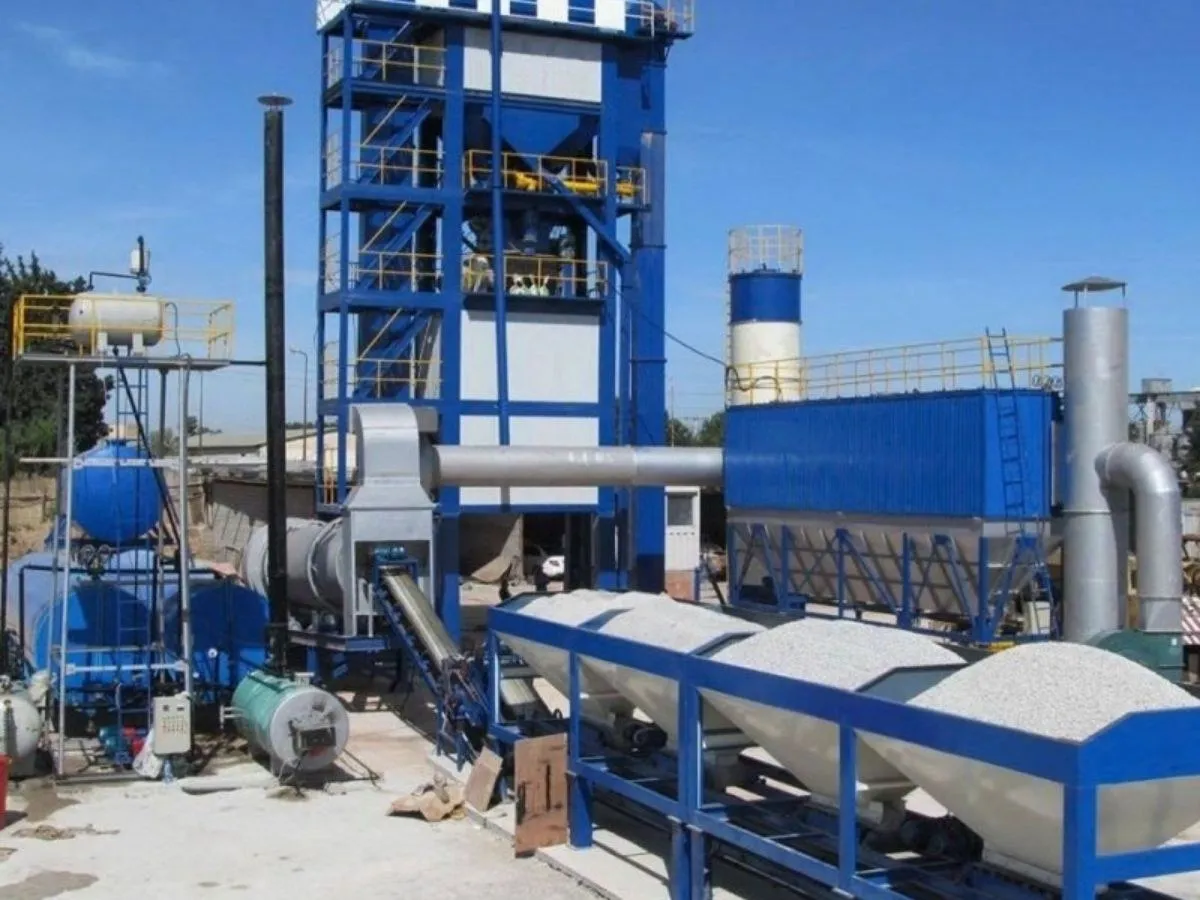
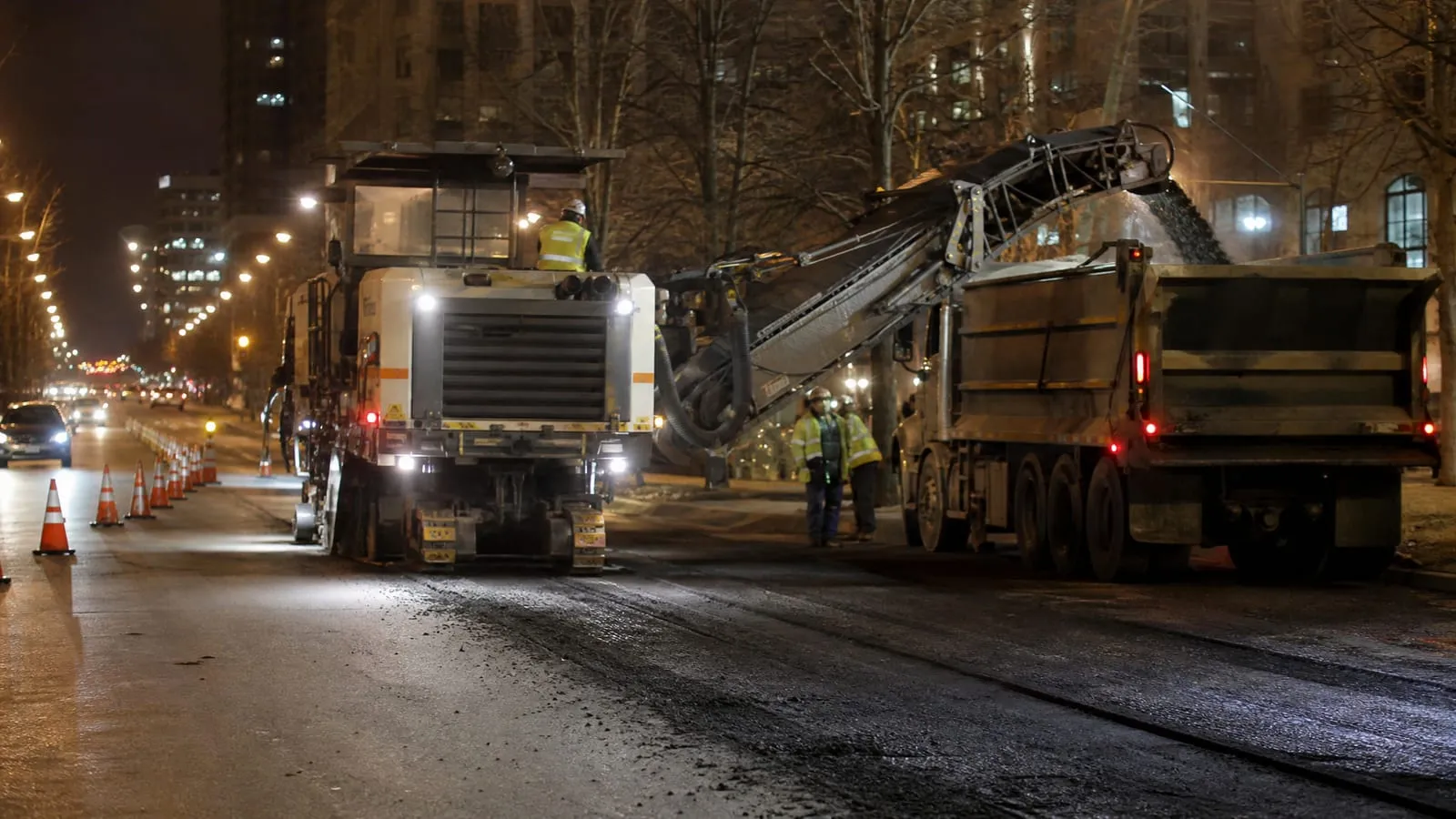
Short answer: A RAP plant pays off when old asphalt is a steady, nearby supply, your specification allows meaningful RAP content, and new bitumen and aggregate are expensive. Without regular milling work, a cold RAP feed on a standard plant may be enough. RAP must be crushed, screened, stored under cover and tested, so check the seven conditions below, then run the payback numbers.
Use these seven conditions to judge your case before looking at prices. Then run the numbers with the step-by-step method on our recycling plant price page.
The seven conditions
| # | Condition | Good sign | Warning sign |
|---|---|---|---|
| 1 | RAP supply | Regular milling every year near the plant | Occasional millings from scattered sites |
| 2 | Specification | Agency allows useful RAP percentages in your layers | RAP not accepted, or only in minor layers |
| 3 | Material prices | Bitumen and quarry aggregate expensive or far away | Cheap local materials |
| 4 | Processing | Space and equipment for crushing, screening, covered storage | No room; RAP stored wet and mixed |
| 5 | Mix design capability | Lab and designer who can account for aged binder | No testing of RAP |
| 6 | Plant fit | New plant, or existing plant with room for a RAP line | No space beside the tower |
| 7 | Scale | Enough annual tonnage to use the RAP line often | Small or irregular production |
If most answers fall in the “good sign” column, a RAP plant is worth pricing in detail.
Three ways to recycle
| Option | RAP content (typical) | Investment | Best for |
|---|---|---|---|
| Cold RAP feed into a standard plant | Low to moderate | Lowest | Starting out; occasional RAP |
| Batch plant with separate RAP drum | 30–50% | Higher | Regular milling; city and highway maintenance |
| Dedicated recycling plant | Highest | Highest | Large, steady RAP supply |
See RAP percentage limits for why content usually stops at 30–50%.
What makes RAP savings real
- Each ton of RAP replaces roughly a ton of new aggregate and part of the new binder
- Processing costs — crushing, screening, testing — reduce the saving
- Extra plant costs — RAP drum fuel and maintenance — reduce it further
- Volume — savings multiply by tons used each year
Put your own numbers into the payback method on the recycling price page.
Next steps
- Estimate RAP tons per year from your milling program
- Check your specification’s RAP limits by layer
- Test a sample of your millings — see RAP processing
- Compare a cold feed option with a full RMX-R recycling plant
See a typical city maintenance setup with RAP, or send us your RAP figures.