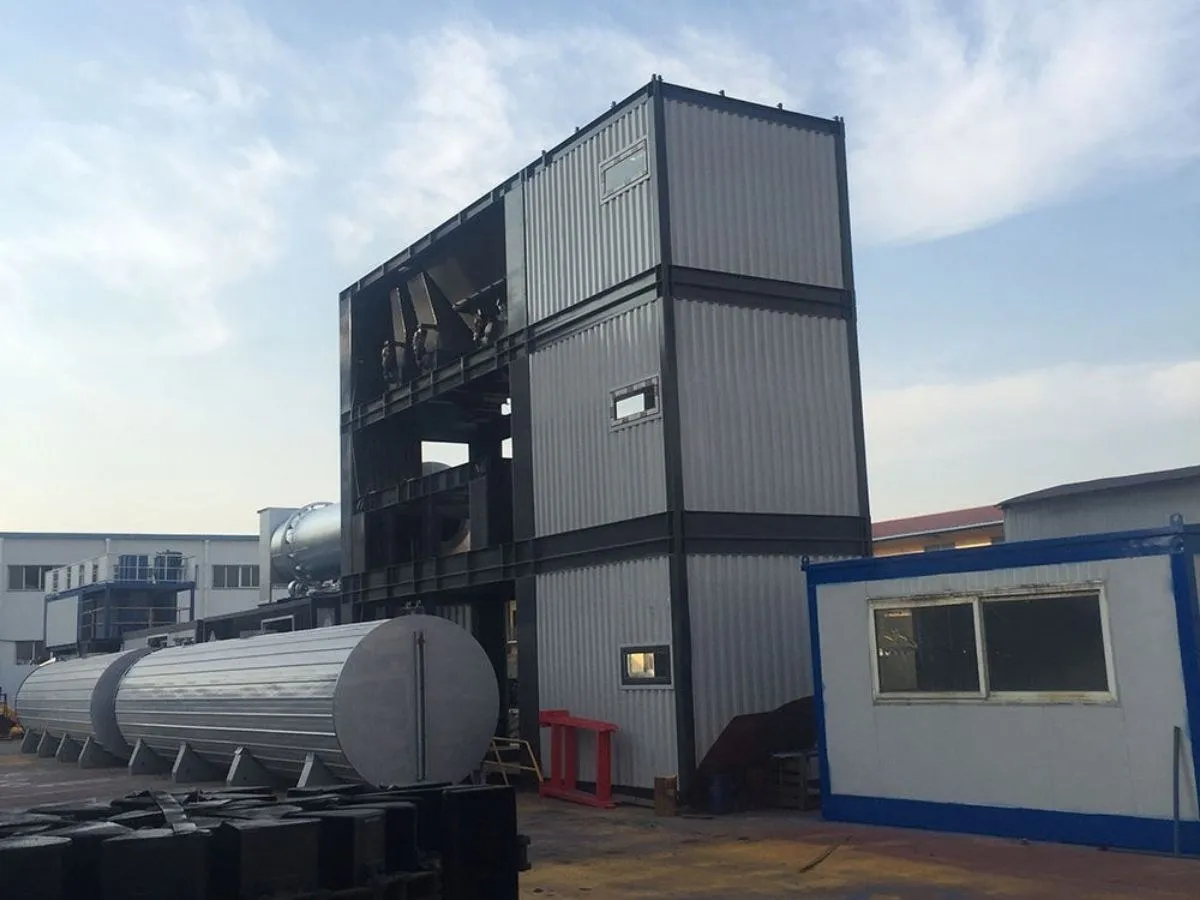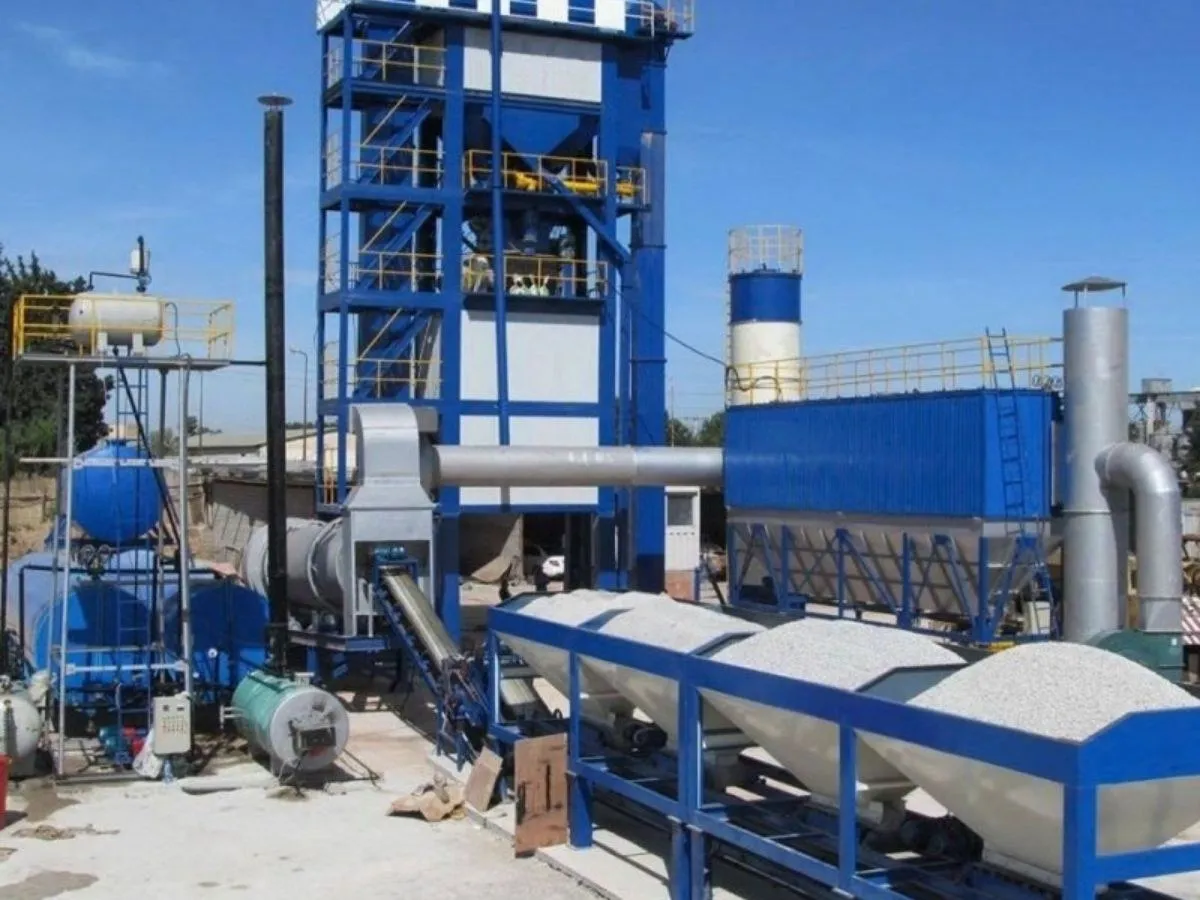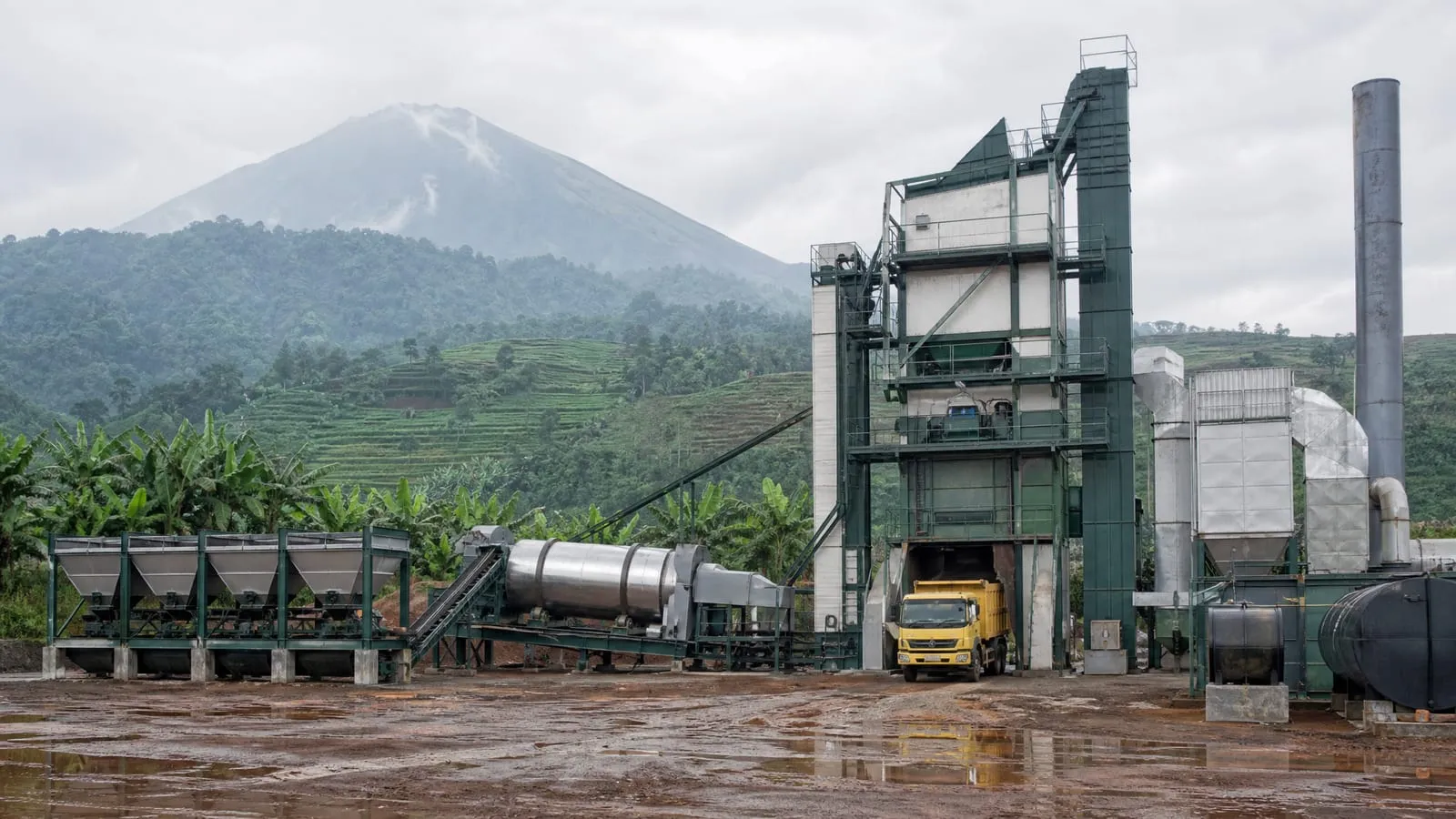
A plant’s rated output — say 120 t/h — is what it can make under reference conditions, not what it averages over a working day. Over a real shift, plants commonly deliver about 65–85% of rated output. Knowing why lets you size the plant correctly and plan trucks and paving to match.
Rated vs real: where the tons go
| Factor | Why it reduces output | How much it matters |
|---|---|---|
| Aggregate moisture | The drum must evaporate the water before heating the stone | Often the largest factor in rainy seasons |
| Start-up and warm-up | Drum, mixer and bitumen lines must reach temperature | Every morning and after stops |
| Recipe changes | Hot bins rebalance; temperatures adjust | Grows with the number of changes |
| Truck gaps | No truck under the tower = no discharge | Large when the fleet is short |
| Paver and site stops | Plant waits for the paving crew | Large on urban and night work |
| Mix type | Fine and high-binder mixes may need longer mixing cycles | Moderate |
| Altitude | Thin air reduces burner and fan performance | Large at high altitude if not sized for it |
| Cold weather | Colder aggregate needs more heat | Moderate |
| Maintenance stops | Belts, screens, baghouse, burner | Small with good maintenance |
Moisture: the biggest factor
A drying drum and burner are sized to dry and heat a certain mass of stone per hour at a stated moisture. When moisture rises, more of the burner’s heat goes into evaporating water, so less stone can be dried and heated in the same hour.
What to do:
- Tell the supplier your wet-season moisture, not the dry-season figure
- Cover sand and fines — they hold the most water
- Build stockpiles on a sloped, drained base and load from the drier face
- Consider a larger drum and burner for the same mixer if your season is long and wet
Altitude: thinner air, smaller fire
At high altitude, each cubic meter of air holds less oxygen. The burner needs more air volume to release the same heat, and the exhaust fan moves less mass. Plants at high-altitude sites need a burner and fan sized for the elevation. See our Peru buyer’s guide for an example.
Trucks and paving: the plant waits too
A batch plant discharges every batch into a truck or a silo. If there is no truck and no silo space, the plant stops. A hot mix storage silo decouples production from truck arrivals; enough trucks for the haul distance keep it running. The capacity calculator estimates trucks from round-trip time.
Mixing cycle time
In a batch plant, output = batch size × batches per hour. A longer mixing time — for some fine, polymer-modified or fiber mixes — means fewer batches per hour. See batch mixing cycle time for the details.
How to size for real output
- Start from the daily tonnage you need and the effective hours per day
- Divide to get average t/h, then add 20–30% headroom
- Check the result against your wet-season moisture and altitude with the supplier
- Make sure trucks and paving can take that output
| Planning figure | Example |
|---|---|
| Daily need | 700 t |
| Effective hours | 8 |
| Average | 87.5 t/h |
| With 25% headroom | about 110 t/h → a 120 t/h plant |
Questions to ask your supplier
- What output does this plant deliver at my wet-season moisture?
- What is the drying drum size and burner rating — and what moisture is the rated output based on?
- What is the mixer size per batch and the standard cycle time?
- Is the burner and fan sized for my altitude?
Send us your moisture, altitude and daily tonnage and we will state the expected output in the quotation.