The short answer
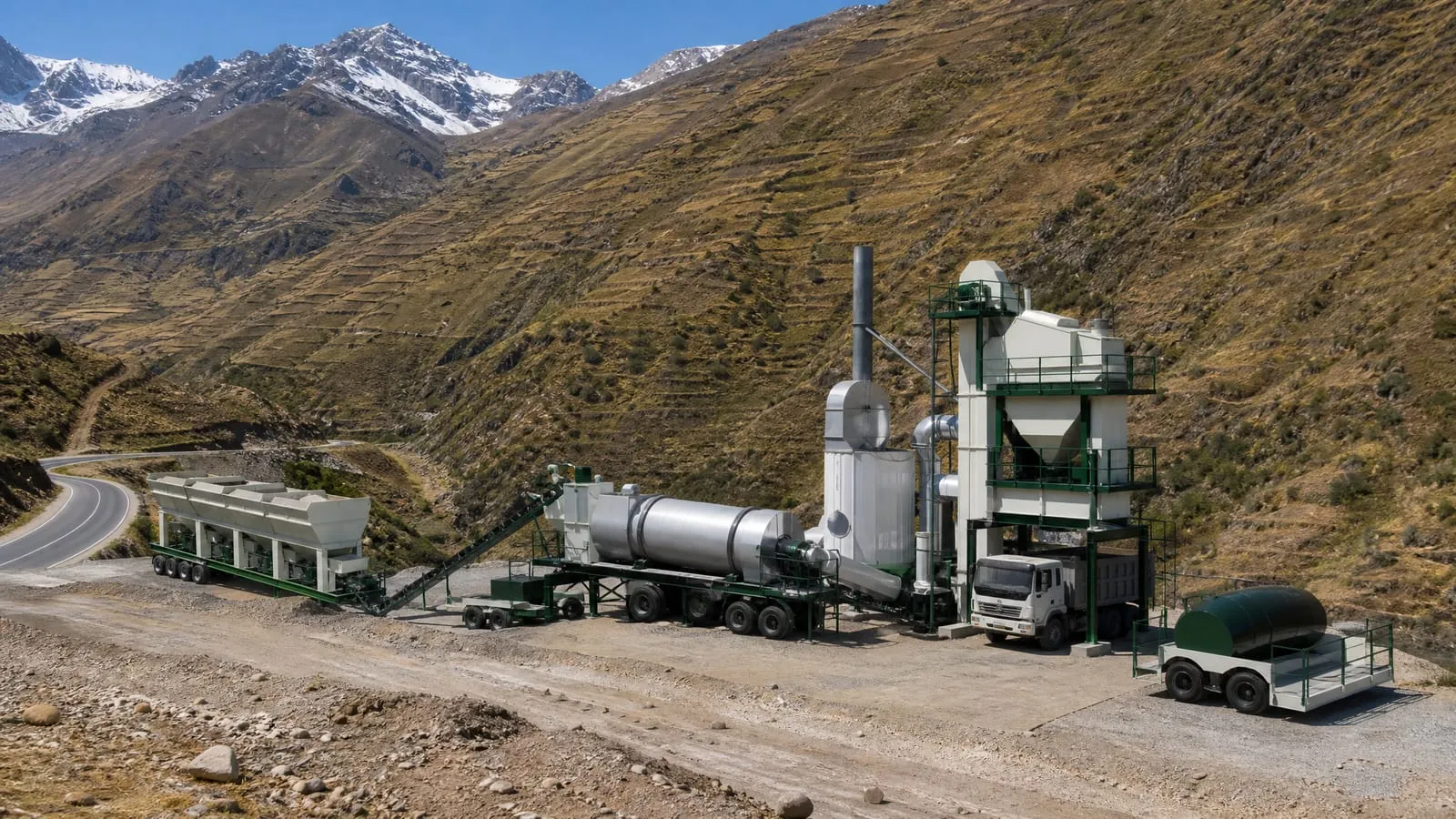
For Peru, the plant must be configured for altitude first: a burner and exhaust fan sized for the site’s elevation, 60 Hz electrics, and a layout that can climb Andean roads. A mobile plant suits maintenance and regional programs moving along highways; a containerized plant suits highway contracts in the sierra; a stationary batch plant suits a commercial plant near Lima, Arequipa or Trujillo.
Peru at a glance for plant buyers
| Topic | What to know | What it means for the plant |
|---|---|---|
| Altitude | Many sierra projects above 3,000 m | Upsized burner and exhaust fan; generator derating |
| Specification | MTC EG-2013, Section 423 for hot asphalt concrete | Batch plant for tight gradation and binder control |
| Power | 60 Hz | 60 Hz motors and controls |
| Climate | Coast mostly dry; sierra rainy season roughly December–March, cold nights | Cold-weather insulation; plan paving windows |
| Ports | Callao main port; Paita and Matarani for north and south | Mountain haul: check heaviest piece and curves |
| Trade | Peru–China free trade agreement | Certificate of origin for preferential duty |
| Language | Spanish | Interpreter; Spanish interface where available |
Altitude: the defining design factor
At 3,500 m each cubic meter of air holds about 30% less oxygen than at sea level. For an asphalt plant that means:
- Burner: needs more combustion air volume to release the same heat; sized and set up for the site elevation
- Exhaust fan and baghouse: must move a larger volume of thinner gas; the fan is sized for altitude
- Drying capacity: without upsizing, the drum dries less aggregate per hour and output falls
- Generators and engines: lose power with altitude; derate the generator accordingly
- People: crews and visiting engineers need time to acclimatize
Tell us the exact site elevation in your inquiry. We size burner and fan for it and adjust combustion on commissioning. Our article on high-altitude and cold-weather configuration explains the details.
EG-2013 Section 423
The Ministry of Transport and Communications (MTC) publishes the General Technical Specifications for Construction, EG-2013. Section 423 — Pavimento de concreto asfáltico en caliente covers hot asphalt concrete: materials, mix design, plant and placement requirements and quality control. Combined with the project’s special specifications, it sets the gradation and binder tolerances the plant must hold.
A batch plant screens hot aggregate and weighs each component per batch, which makes those tolerances easier to meet — especially when switching between binder and wearing courses.
Getting the plant into the Andes
Most plants arrive at Callao and travel inland on the Central Highway or other Andean routes; northern projects may use Paita, southern ones Matarani. Mountain roads bring steep grades, tight curves and bridge limits. Before ordering:
- Check the packing list’s heaviest, longest and widest pieces against the route
- Prefer container-sized modules or trailer-mounted units over long loose sections
- Plan escorts and permits for oversize trailers
Climate and season
The coast is mostly dry; the sierra has a rainy season roughly from December to March and cold nights all year. Configure:
- Insulated bitumen tanks and pipes, and heat tracing for cold mornings
- Covered stockpiles for fines in the rainy months
- Cabinet heaters against condensation at night
Which plant type for which Peruvian project
| Project | Suggested plant |
|---|---|
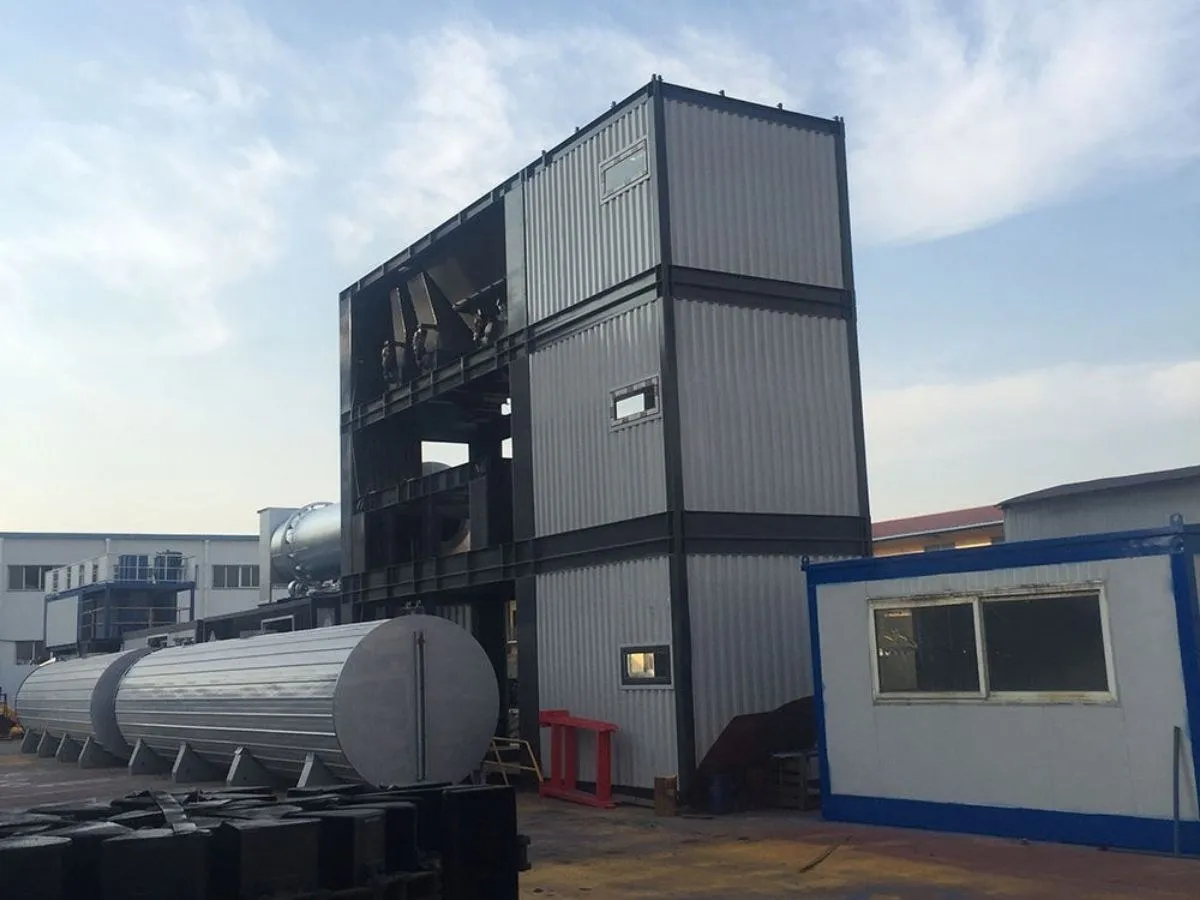
| Sierra highway contract, 2–3 years | RMX-C120 containerized, altitude-rated burner and fan |
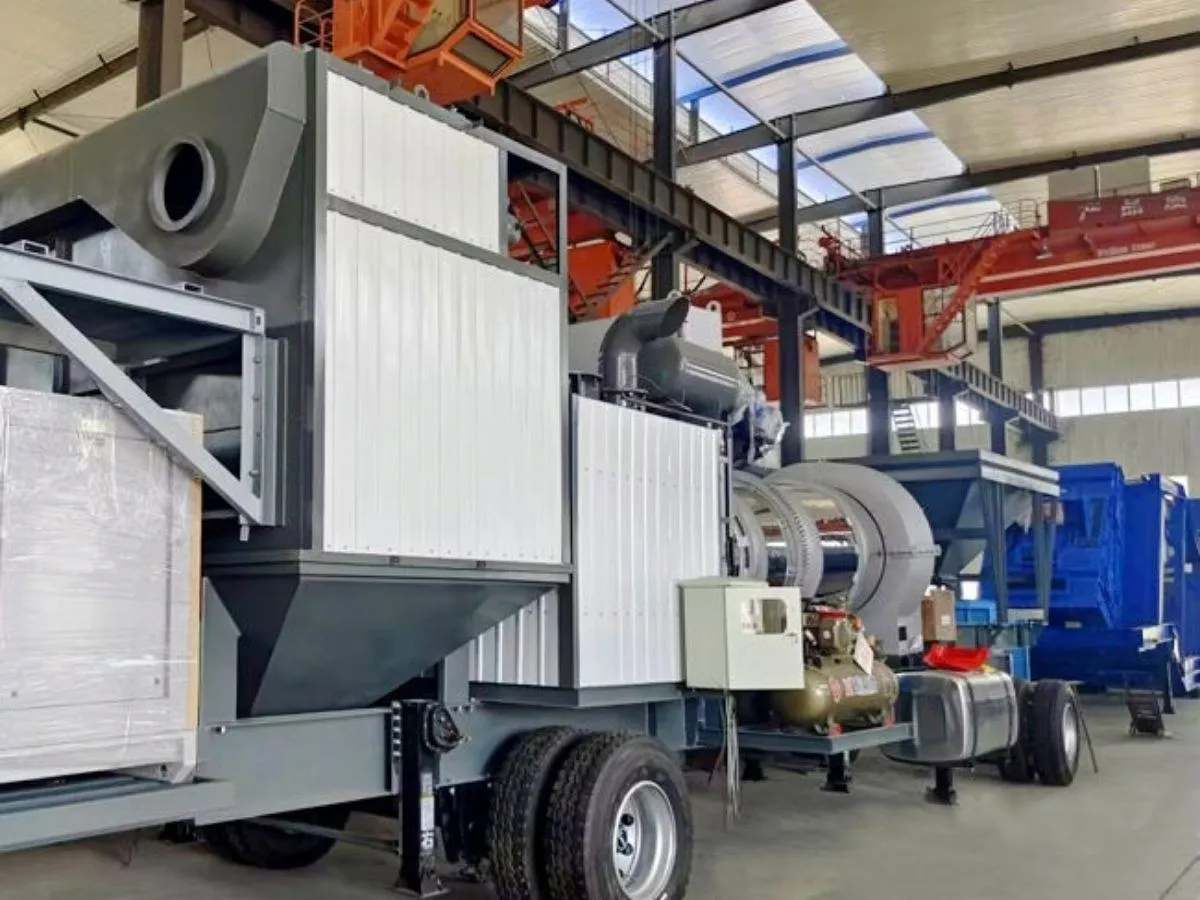
| Regional maintenance moving along a corridor | RMX-M80 or RMX-M120 mobile, altitude-rated |
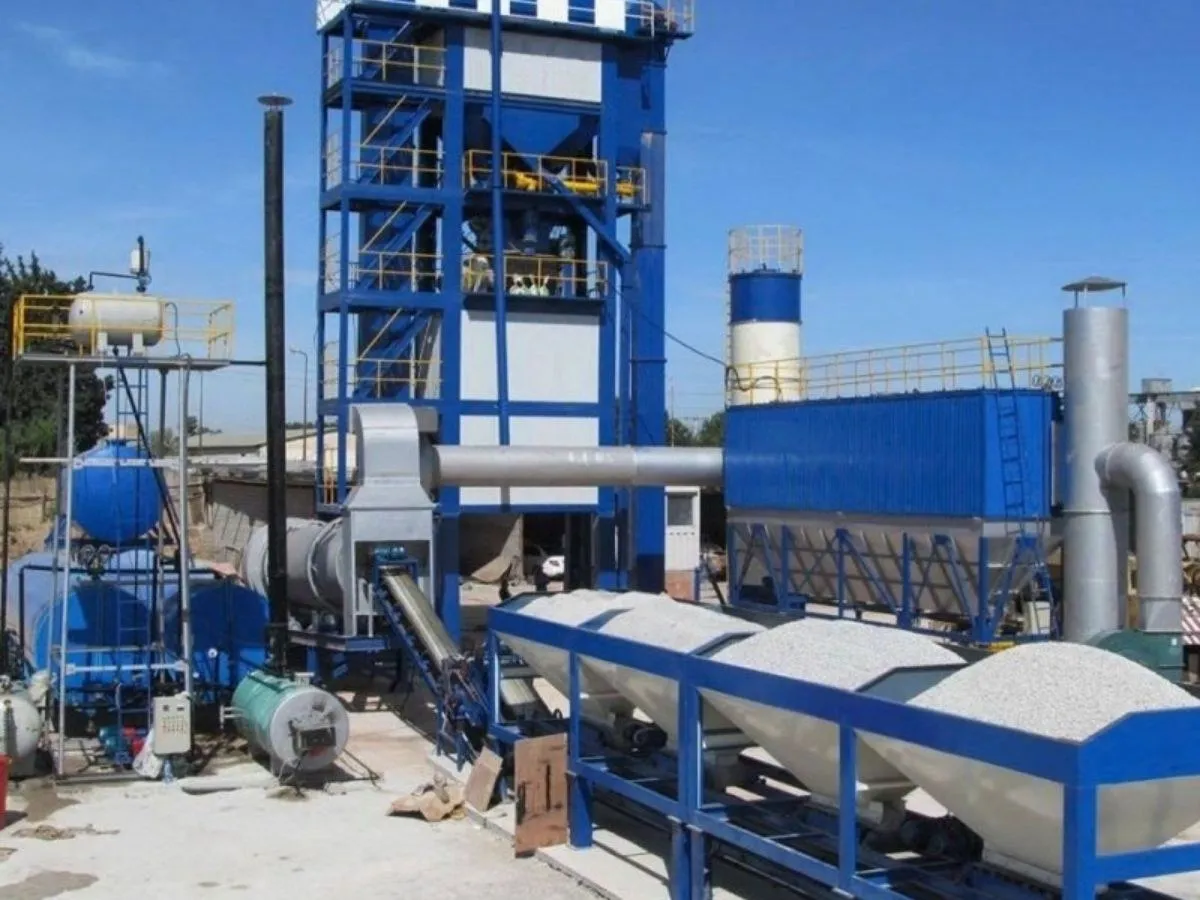
| Commercial plant near Lima or Arequipa | RMX-B160–B240 stationary batch with hot mix silo |
| Local roads with one standard mix | RMX-D60 or RMX-D80 drum mix |
Indicative prices are in the price guide; altitude upgrades are quoted per project.
Power and fuel
Peru runs at 60 Hz. Grid supply near cities is usually adequate with a transformer; remote sierra sites often run on generators, derated for altitude. Diesel is available nationwide; natural gas is used in some coastal areas; residual fuel oil is available near industrial zones. A dual-fuel burner gives flexibility.
How Roadmixa supports Peruvian projects
We support Peruvian customers from China: configuration review with altitude sizing, engineers on site for installation supervision, commissioning and training (with your interpreter), and remote help by phone, WhatsApp and video afterwards. Spare parts ship by sea or by air for urgent items. We do not have an office in Peru.
What to include in your inquiry
- Output per hour and per day; mixes and specification (EG-2013 / special specs)
- Site location and exact elevation
- Route from port to site, and how long the plant stays at each site
- Power (grid or generator) and fuel available
- Rainy-season dates for your region
- Language needs for documents and training
Sources
MTC — Manual de Carreteras: Especificaciones Técnicas Generales para Construcción EG-2013; mains electricity by country. Requirements change — confirm with the MTC, your customs broker and the project’s engineer.