A drum mix plant is enough when your work is steady: one or two mixes, long runs, a specification that allows continuous plants, and well-managed stockpiles. When recipes change often or the specification is tight, the extra cost of a batch plant pays back. The five questions below make the decision.
The five questions
| # | Question | If yes → |
|---|---|---|
| 1 | Do you change mixes several times a day? | Batch |
| 2 | Do you sell to several customers with different mixes? | Batch |
| 3 | Does the specification require batch weighing or very tight tolerances on the wearing course? | Batch |
| 4 | Are your aggregate stockpiles variable or hard to control? | Batch |
| 5 | Is the lowest purchase and running cost the top priority for one steady mix? | Drum |
Why the difference matters
| Drum mix plant | Batch plant | |
|---|---|---|
| Proportioning | Cold feeders + weighing belt; bitumen metered to flow | Hot aggregate screened and weighed per batch, plus filler and bitumen |
| Gradation correction | None after the cold feed | Hot screen and bins absorb part of stockpile variation |
| Recipe change | Gradual; takes time to stabilize | Next batch |
| Purchase price | Lowest — see the drum mix price page | Higher — see the batch plant price page |
| Running cost | Fewer wear parts and motors | More wear parts (screen, mixer, elevator) |
| Installed power | Lower | Higher |
Projects where a drum plant is enough
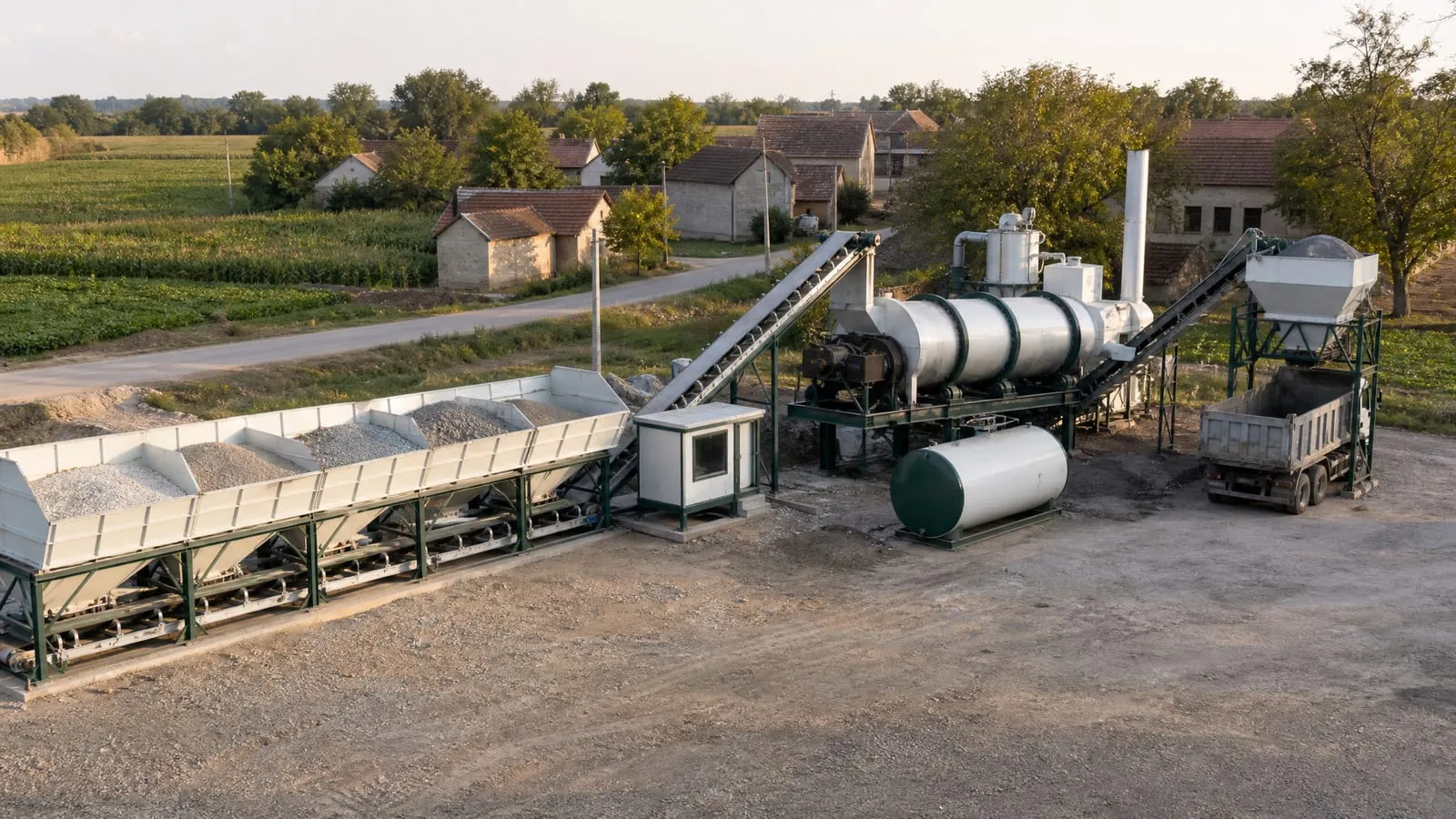
- Rural and farm-to-market road programs with one standard mix
- Base courses on long contracts
- Maintenance programs with a single overlay mix
- Private work — yards, plant roads — with simple requirements
See a typical rural road setup with an RMX-D60.
Projects that need a batch plant
- National highways and airports with tight wearing-course specifications
- Commercial plants supplying many contractors and municipalities
- City work switching between wearing, binder and patching mixes in a night
- Projects with variable aggregate sources
The five-year test
Plants outlive contracts. If today’s job suits a drum plant but the next contracts you plan to bid on need batch production, a containerized or mobile batch plant may be the better long-term buy. If your market is steady rural work, the drum plant saves money every year.
Tell us about your contracts and we will recommend drum or batch — with reasons.