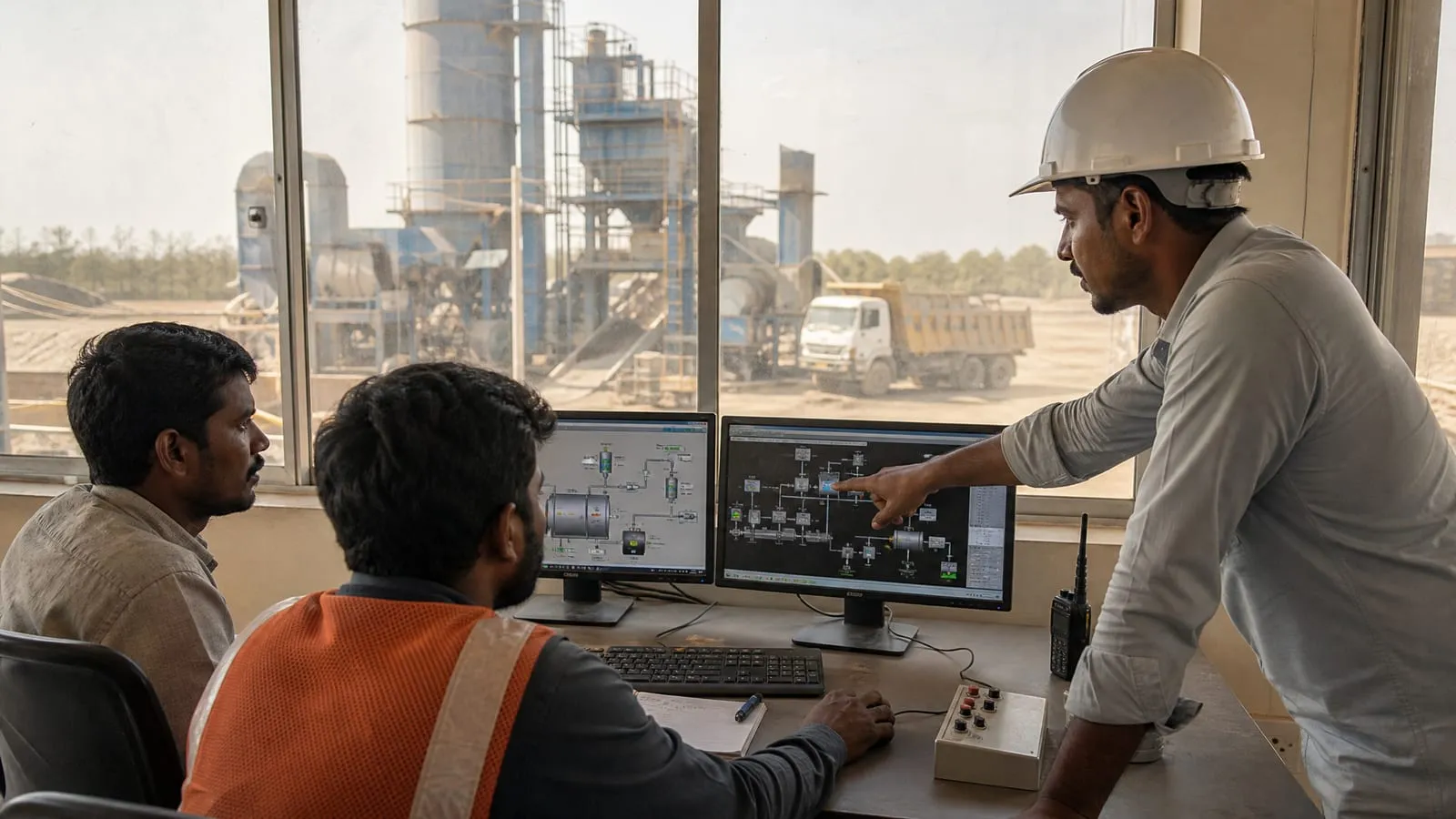
A typical small to mid-size asphalt plant runs with about four to six people per shift, plus truck drivers. The exact number depends on plant size, automation, how many customers you serve and local practice.
Roles and what they do
| Role | Main tasks |
|---|---|
| Plant operator | Runs the control system: start-up, recipes, burner, temperatures, alarms, records |
| Loader driver | Feeds cold bins from stockpiles; keeps stock rotated and tidy |
| Maintenance mechanic | Daily checks, lubrication, belts, chains, wear parts, repairs |
| Electrician (may be shared) | Motors, sensors, cabinets, faults |
| Lab technician | Samples, gradation, binder content, Marshall or other tests |
| Supervisor / plant manager | Planning, safety, staff, supply, customers |
| Dispatcher / weighbridge (commercial plants) | Orders, tickets, truck flow |
Typical crew per shift
| Plant | Typical crew | Notes |
|---|---|---|
| Small drum plant, one mix | About 4 | Operator, loader, maintenance, lab (supervisor may combine roles) |
| Mid-size batch plant, contractor’s own work | About 5–6 | Add a supervisor and electrician |
| Large commercial plant | 7 or more | Second loader, dispatcher, more maintenance |
These are planning figures. Night shifts, double shifts and remote sites with no external services may need more people.
Where automation helps — and where it doesn’t
| Automated | Still needs people |
|---|---|
| Batch weighing and mixing sequence | Loading bins and managing stockpiles |
| Burner and temperature control | Maintenance and repairs |
| Recipe storage and batch records | Lab testing and quality decisions |
| Alarms and interlocks | Safety supervision and traffic control |
Building the team
- Train two people for every critical role — operator and mechanic especially
- Keep the same crew through commissioning so supplier training sticks — see commissioning and training
- Give the lab technician authority to stop production when tests fail
- Write daily routines down — the maintenance checklist and safety checklist are good starting points
Crew cost per ton is one input in the cost per ton calculator. Ask us about training for your team.