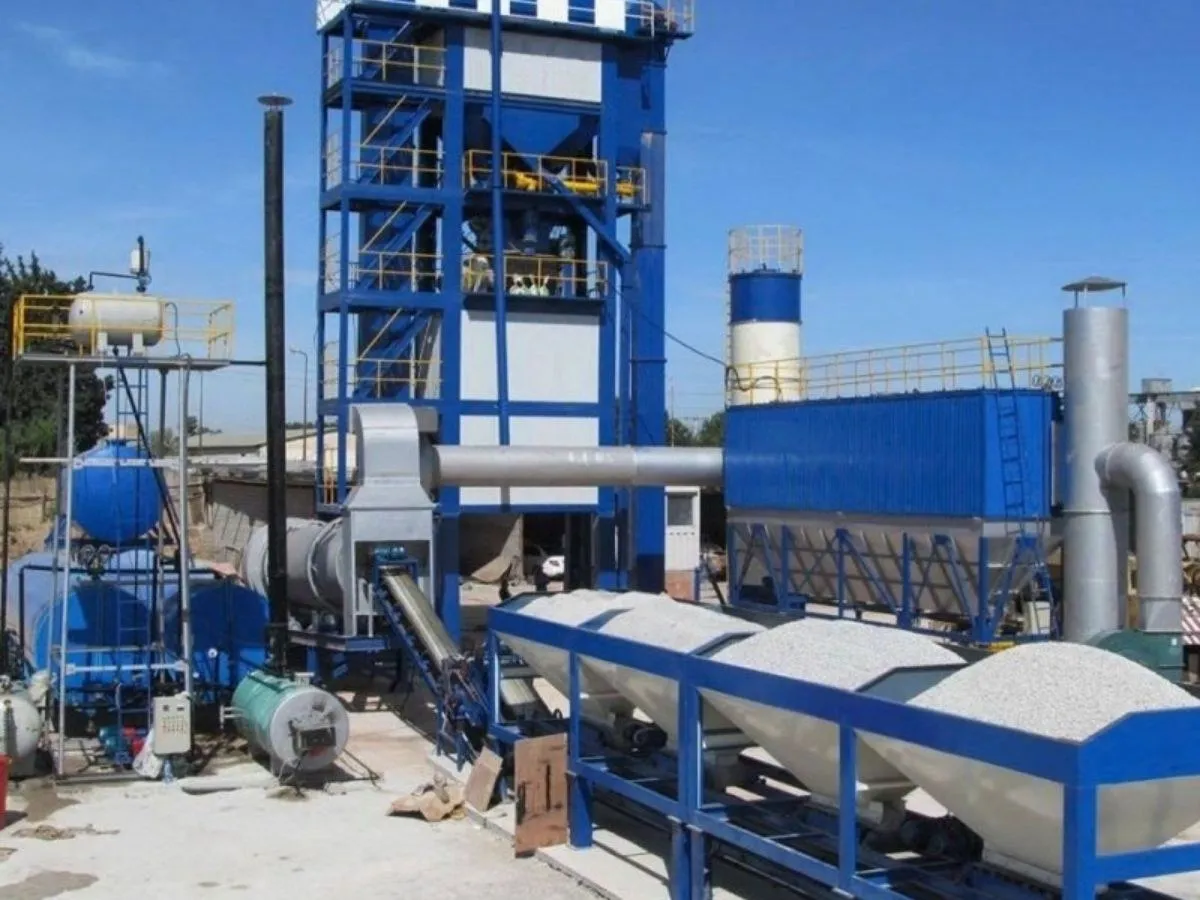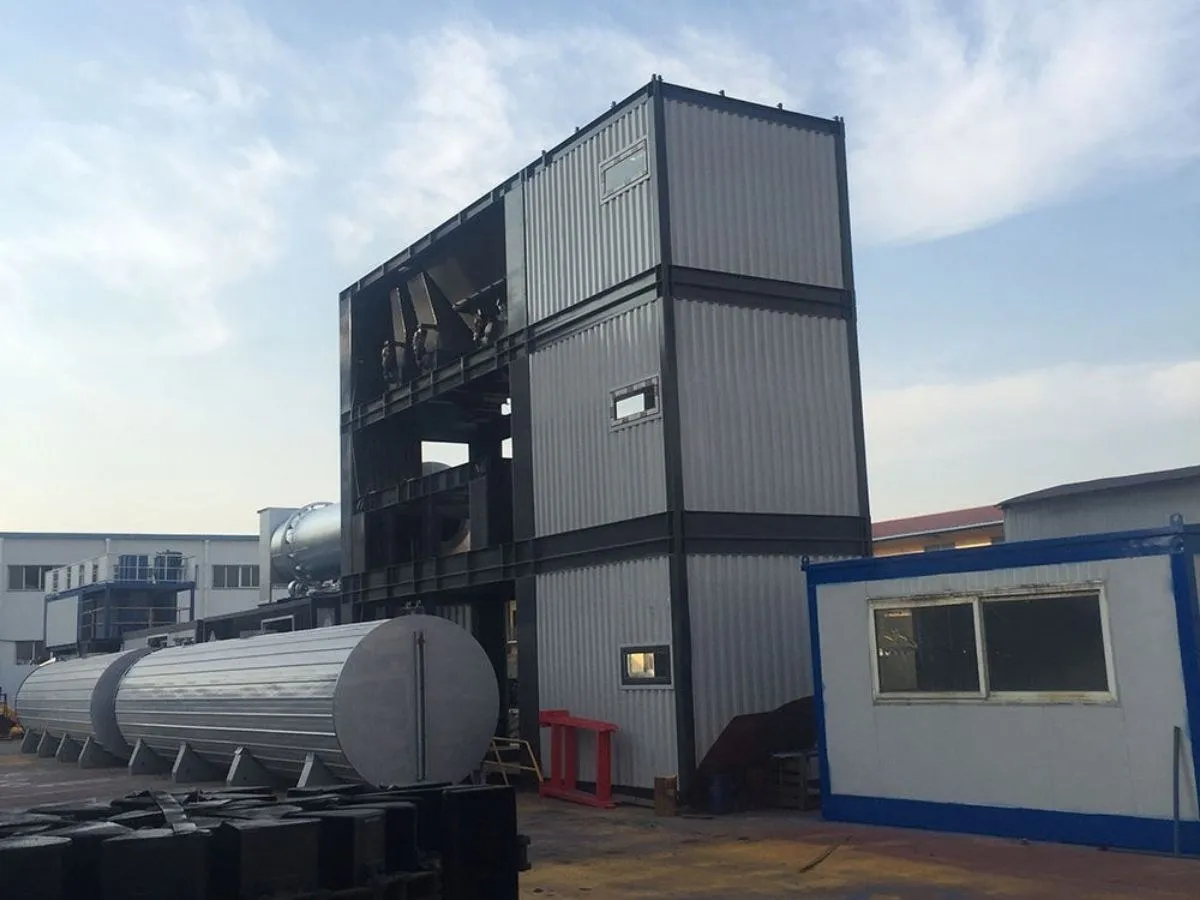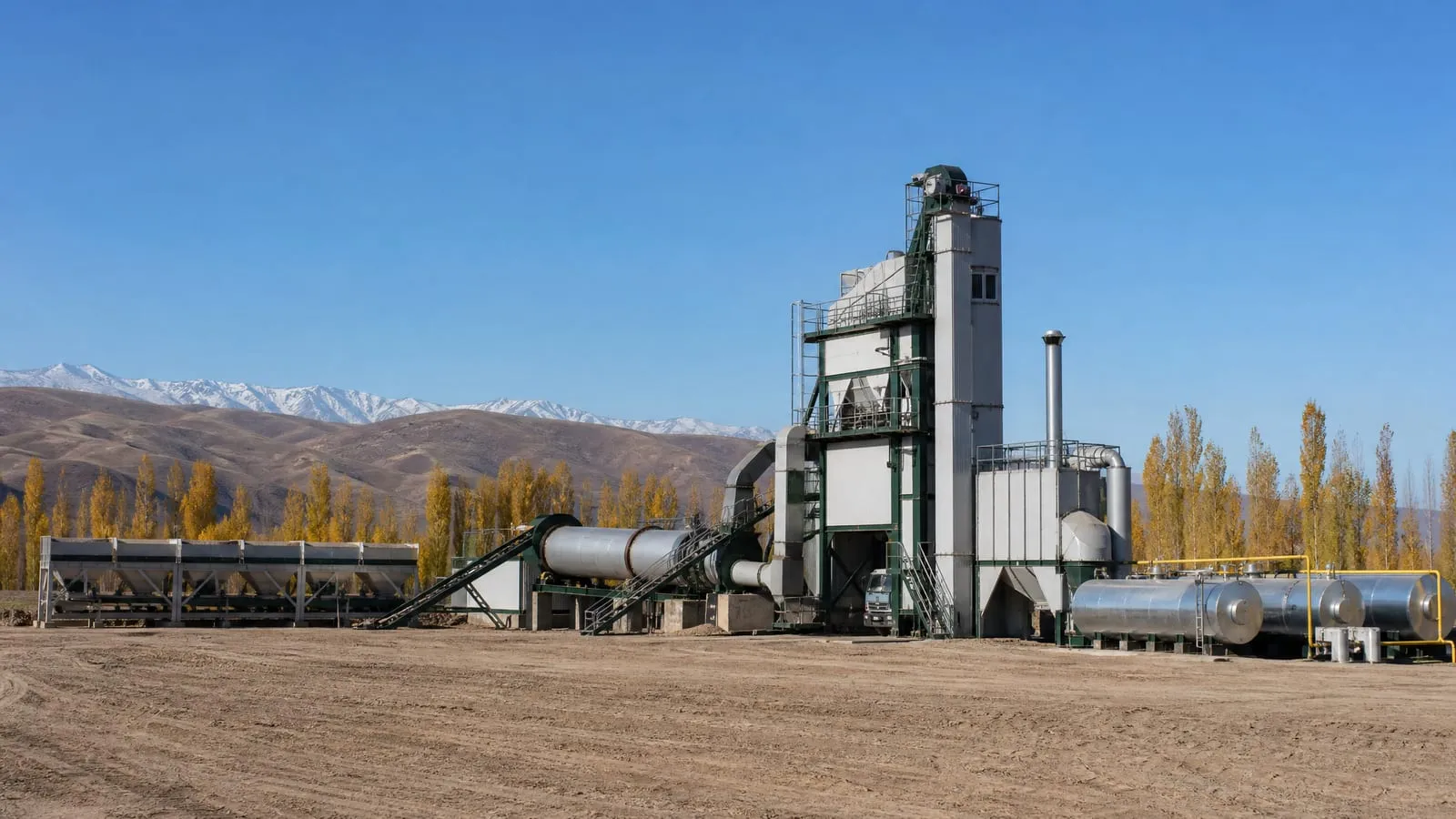
Whether the break is a cold winter or a long rainy season, an idle plant needs protecting — and the downtime is the best time for major maintenance. Use this checklist as a starting point and follow your plant manual.
Shutdown checklist
Production end
- Run the cold feed empty; burn out the drum while turning; let it cool while rotating
- Run the mixer empty and clean it and the gates
- Empty hot bins and the hot mix silo; clean gates and cones
Bitumen system
- Run tanks low, or keep heating on if bitumen will stay
- Clear bitumen from pumps and lines that will not stay heated
- Check thermal-oil heater and system per its manual
Fuel and air
- Drain water from fuel tanks and filters
- Drain compressed air receivers and lines; leave drains open where freezing is possible
- Drain any water lines (dust suppression, wet collector)
Baghouse
- Run the fan to purge moist gas after the last production
- Clean bags with pulse cycles; inspect and record bag condition
- Close inlets to keep rain and moisture out
Electrics
- Isolate main power; lock out
- Keep cabinet heaters on, or use moisture absorbers, against condensation
- Seal cable entries against rodents and dust
Mechanical
- Grease bearings and exposed shafts; cover open gears
- Release tension on belts where the manual recommends
- Cover motors and the burner
Off-season maintenance list
| Job | Why now |
|---|---|
| Replace mixer liners and paddles | Longest job; needs the plant cold |
| Replace worn drum flights; align drum | Same |
| Replace worn filter bags | Before the next season’s dust load |
| Burner overhaul and combustion check | Ready for full firing |
| Elevator chain, buckets, sprockets | Prevent mid-season breakdown |
| Screen meshes and springs | Gradation control |
| Gearbox oil changes | Clean start |
| Structural check and repainting | Corrosion control |
| Electrical insulation tests | Find moisture damage early |
| Order next season’s spare parts | Stock arrives before production |
Details by system are in the maintenance checklist.
Restart checklist
- Walk-around: structure, bolts, guards, signs of damage or animals
- Lubrication: all points per chart; gearbox oil levels
- Electrics: cabinets dry and clean; insulation checks; restore power
- No-load runs: every motor, rotation direction, interlocks, emergency stops
- Compressed air and baghouse: pulse cleaning sequence working
- Bitumen: heat tanks and lines to temperature before pumping
- Burner: ignition, flame and a combustion check — see burner tuning
- Calibration: scales and feeders — see calibration
- Trial mixes: temperature and lab checks before full production
For cold-climate configuration, see high altitude and cold weather. Ask us for a restart support visit.