The short answer
| If your situation is… | Start with | Why |
|---|---|---|
| One site for many years, several customers and mix recipes | Stationary batch plant | Most layout freedom, largest storage, easiest to expand |
| Several short contracts a year within one region, moved by road | Mobile plant | Towed on its own chassis — fastest to relocate |
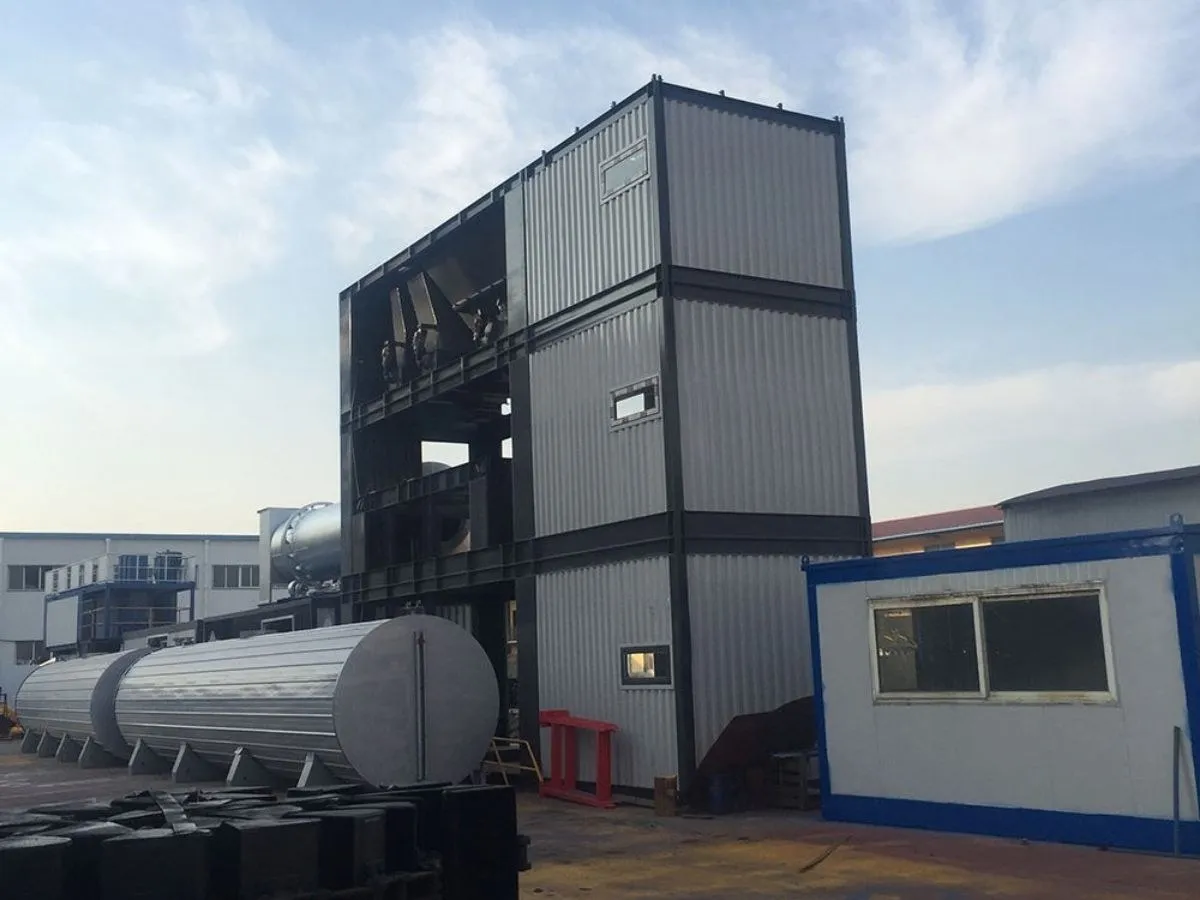
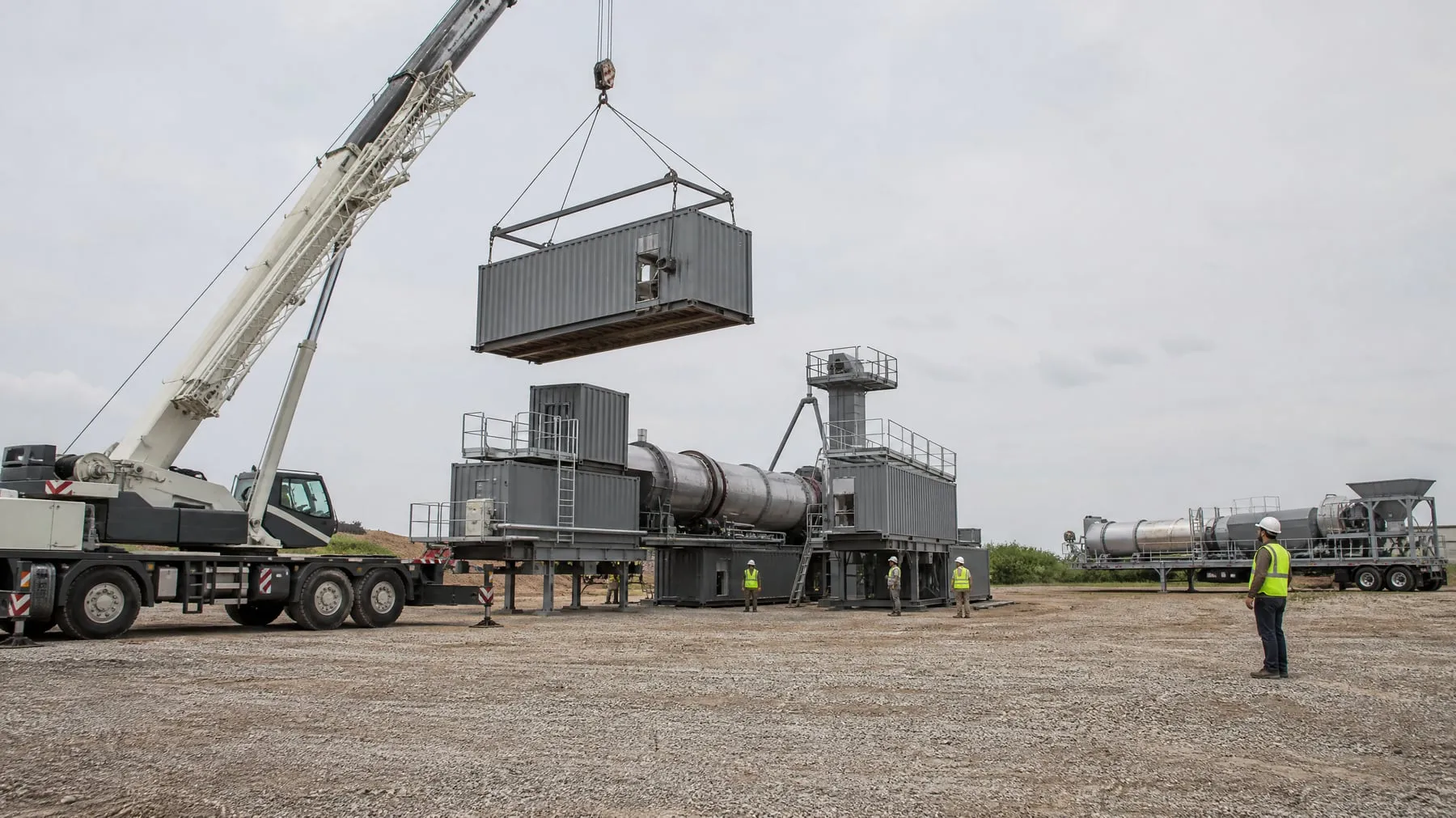
| Export project, remote site or long-distance moves, output above ~160 t/h | Containerized plant | Ships as container-sized freight, no concrete foundation, up to 400 t/h |
| One standard mix for rural roads at the lowest cost per tonne | Drum mix plant (stationary or trailer-mounted) | Simplest continuous process — see batch or drum below |
The rest of this guide explains how to test that first answer against your own project.
What actually differs between the three
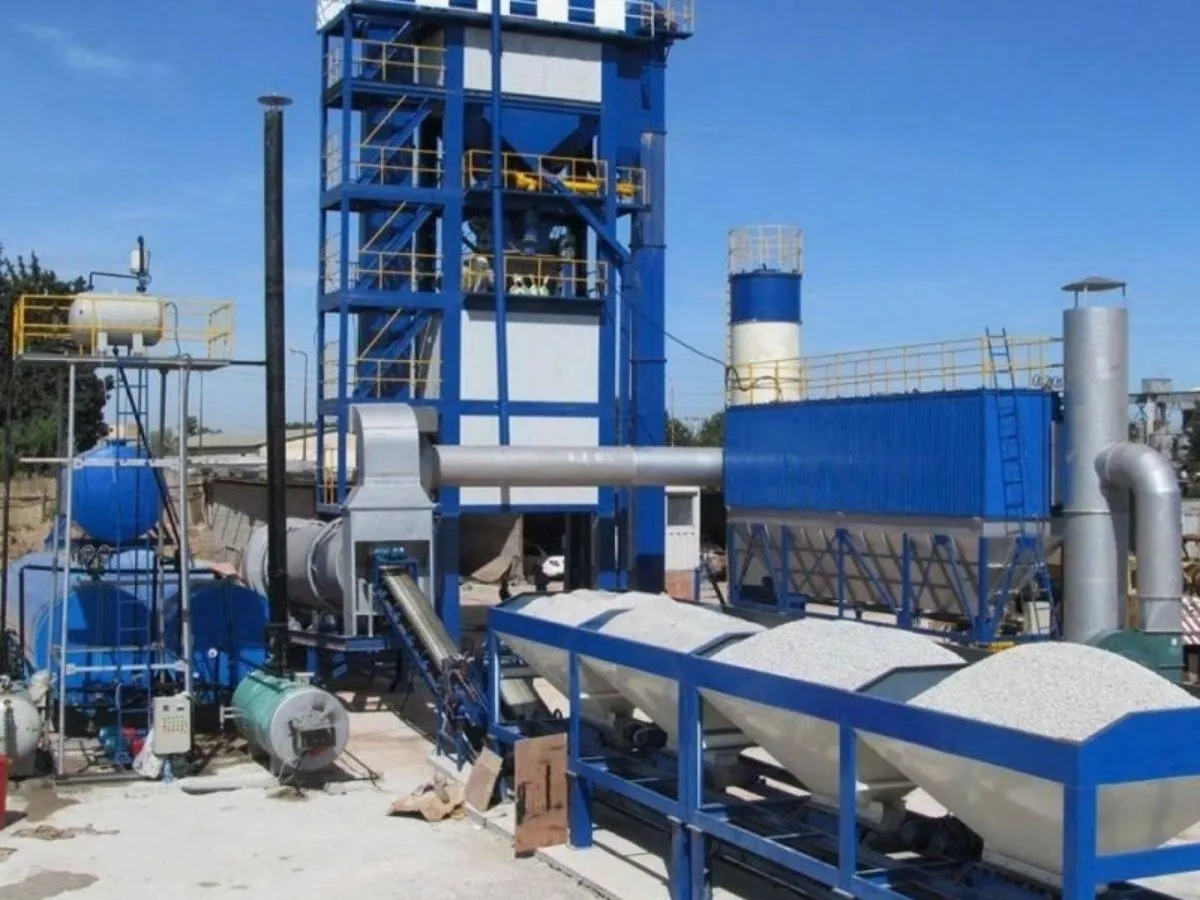
All three types can use the same batch process: aggregate is dried in a rotating drum, screened into hot bins, then aggregate, filler and bitumen are weighed for every batch and mixed. The differences are in the steel structure around that process.
| Stationary | Mobile | Containerized | |
|---|---|---|---|
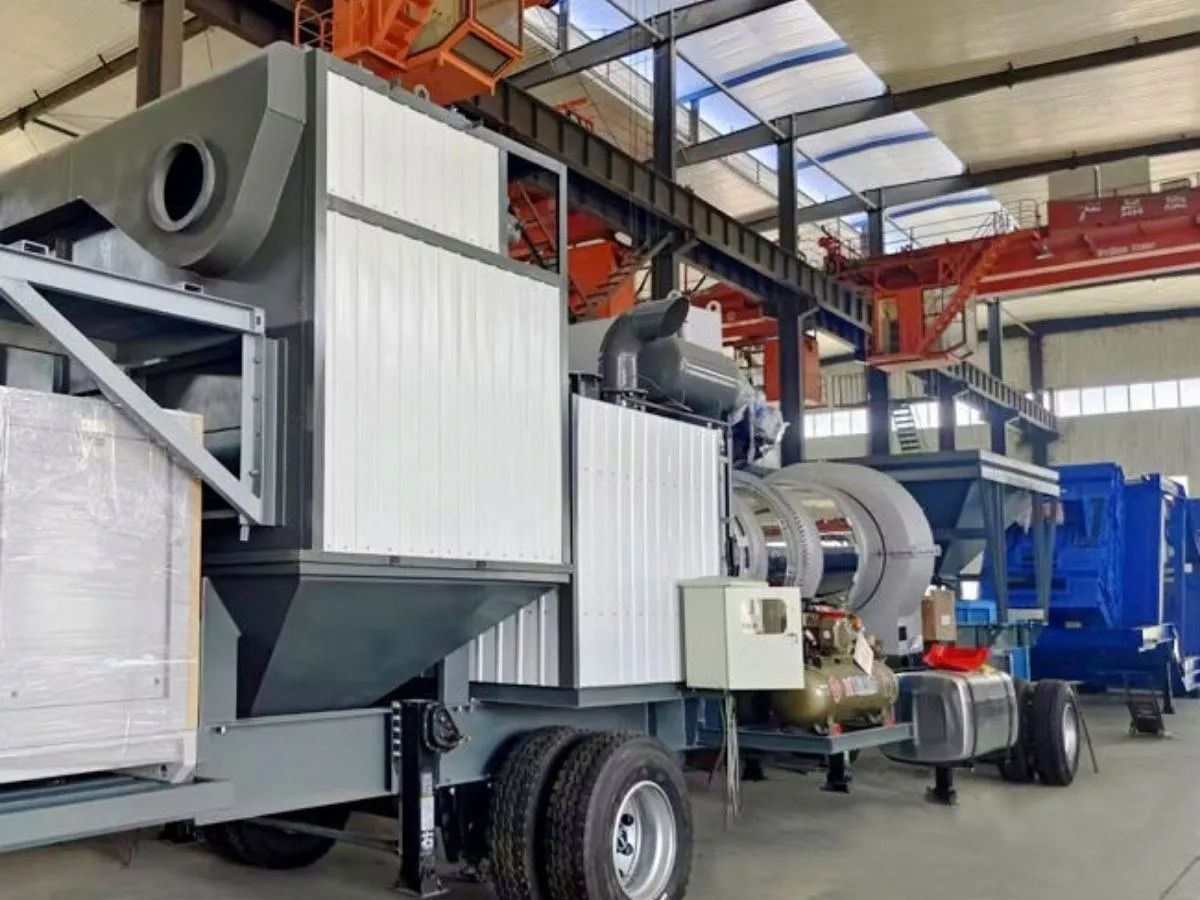
| Structure | Steel sections bolted on site | Main units on wheeled trailer chassis | Units built into container-sized frames |
| Foundations | Concrete foundations | Level, compacted ground; light foundations where needed | Level, compacted ground; no concrete foundation |
| Typical output range (our series) | 60–400 t/h (RMX-B) | 60–160 t/h (RMX-M) | 80–400 t/h (RMX-C) |
| How it travels | Broken down into sections and components | Towed by road | As container freight by sea, rail and road |
| Relocation effort | Highest — new foundations each time | Lowest for road moves | Low — no new foundations |
| Storage and expansion | Most flexible (extra silos, RAP line) | Limited by chassis | Moderate, planned per project |
Five questions that decide it
1. How many times will the plant move in the next five years?
If the honest answer is “never” or “once”, the extra cost of relocatable design brings little return — a stationary plant gives you more for the money. If you expect to move every season or every contract, relocation time starts to dominate your costs, and a mobile or containerized plant pays back.
2. How far, and how, will it travel?
Moves of a few hundred kilometres on your own road network favour a mobile plant: hitch up, tow, level and connect. Moves across borders, by sea or into regions with poor roads favour a containerized plant, because its modules are booked and handled like ordinary container cargo. Check the rules for oversize loads before choosing a mobile plant — permits and escorts can take time to arrange.
3. What output do you really need?
Size the plant on average daily demand and effective working hours, not the busiest day of the year, and check that your trucks and paver can keep up. If you need more than about 160 t/h, the mobile option drops out and the choice is between stationary and containerized.
4. How much site preparation can you accept?
Stationary plants need concrete foundations designed for the loads of the tower, drum, baghouse and silos. That means time, a civil contractor and a site you intend to keep. Containerized plants avoid this: a level, compacted base is enough. If your project starts soon after the plant arrives, that difference matters.
5. Will you sell asphalt to others?
Commercial asphalt suppliers serve many contractors with different recipes and delivery schedules. That usually needs more hot-mix storage and easy recipe changes — both easier on a stationary batch plant, which can also take a RAP line later.
Mobility and mixing are two separate choices
Mobility decides how the plant moves; the mixing method decides how it makes asphalt.
- Batch plants weigh every ingredient per batch. They handle frequent recipe changes and tight specifications well. Stationary, mobile and containerized versions all exist.
- Drum mix plants proportion materials continuously and mix in the drying drum. They are simpler and lower in cost, best for long runs of one standard mix. They can be stationary or trailer-mounted — see the RMX-D drum mix plant.
So a contractor doing rural roads with one base-course mix might choose a trailer-mounted drum plant, while a contractor exporting to a highway project with strict specifications would look at a containerized batch plant.
Common mistakes to avoid
- Buying for the peak day. An oversized plant runs below its efficient range most of the time.
- Ignoring the route to site. Measure bridges, bends and weight limits before choosing unit sizes.
- Forgetting the rest of the site. Aggregate stockpiles, bitumen tanks, fuel storage, truck circulation and power supply all need space, whichever plant you choose.
- Treating “mobile” as “temporary quality”. A well-set-up mobile batch plant produces to the same mix design as a stationary one.
Quick decision checklist
Send us these answers and we will suggest a plant type and model:
- Required output (t/h) and daily working hours
- Number of projects per year and their typical duration
- Distance between sites and how the plant reaches the first site
- Mix types and specifications you must meet
- Fuel and power available on site
- Whether you will also supply other contractors
You can also start with our region guides for Southeast Asia, Africa, Latin America and Central Asia, where climate, power and transport change the answer.