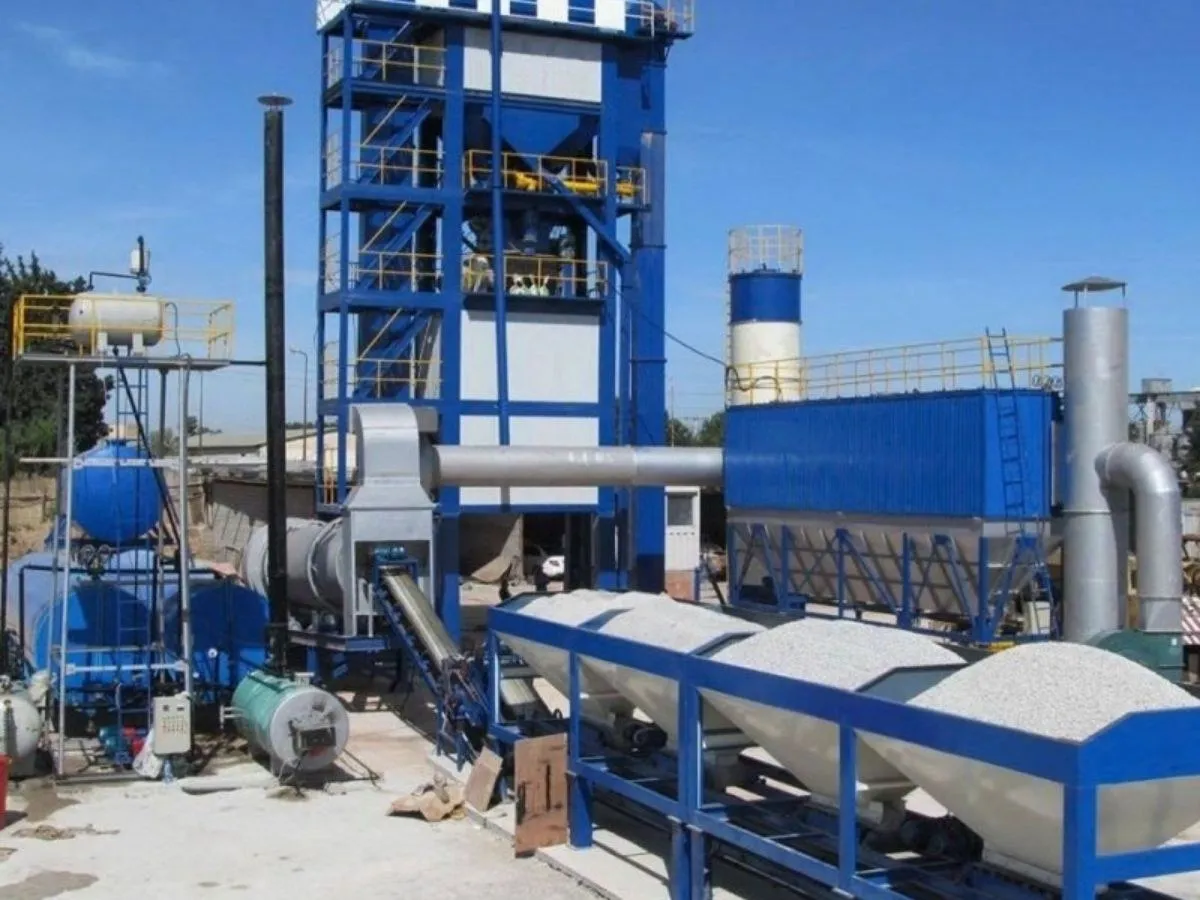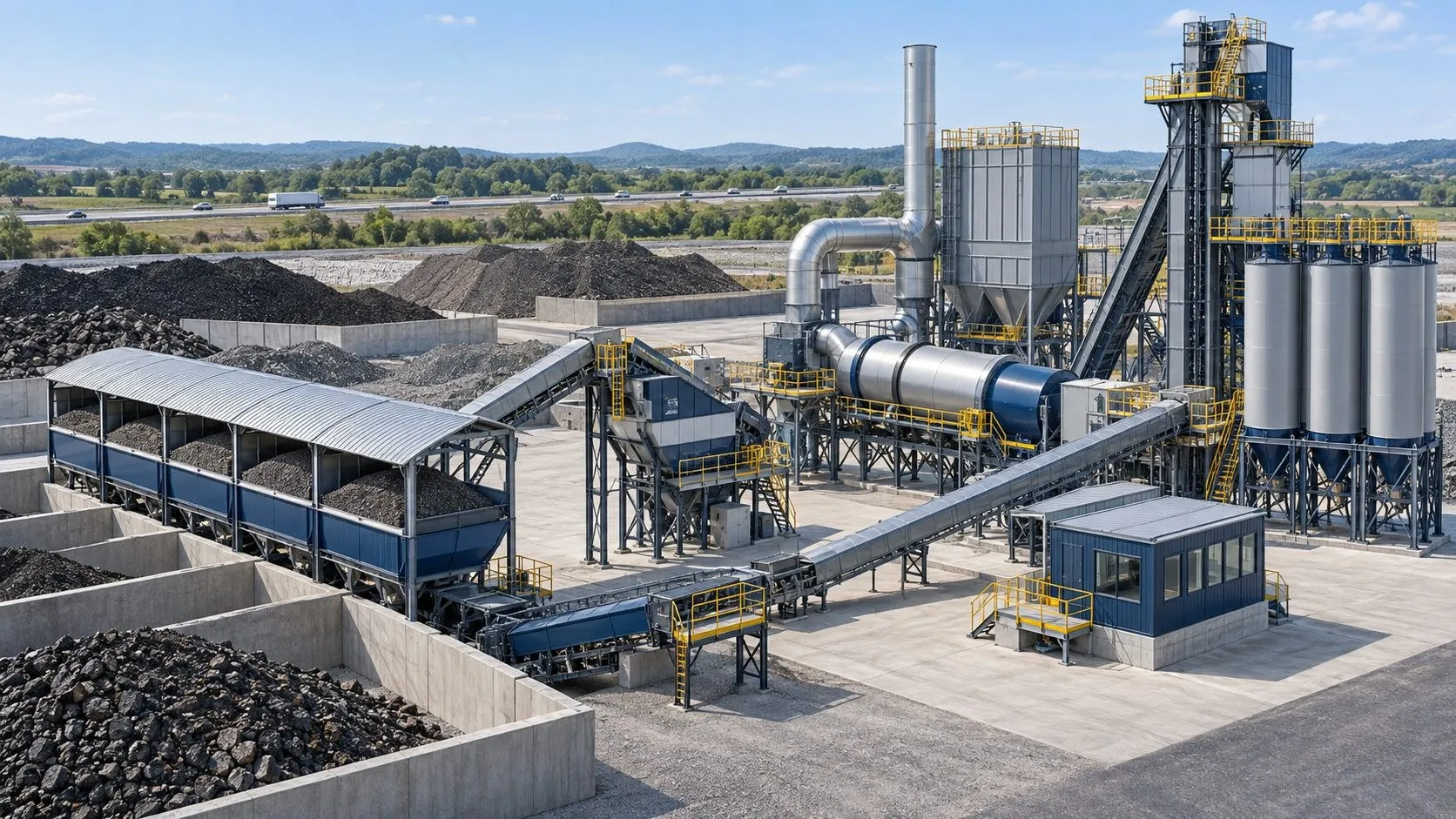
Short answer: Upgrade when the frame, drum and mixer are sound and the weak spots are controls, weighing, burner, baghouse or RAP feed; if the drum, mixer or structure are worn out, a new plant usually wins. Inspect first, list defects with costs, and compare cost per ton over five years rather than the first price.
The table lists the usual upgrades and what each gives you.
What to upgrade
| Item | Why | Result |
|---|---|---|
| Control system (PLC) | Old controls are hard to repair and slow | Faster cycles, batch records, fewer errors |
| Weighing | Drifting scales miss the recipe | Better tolerance on binder and gradation |
| Burner | Old burners waste fuel | Lower fuel use, better flame control |
| Baghouse | Worn bags and old filter | Lower emissions, steadier pressure |
| RAP feed | Wasted reclaimed material | Less new aggregate and bitumen |
| Bitumen heating | Slow or uneven heating | Stable temperature |
When not to upgrade
- The drum shell is thin or cracked.
- The mixer has worn beyond repair.
- The structure has corrosion or movement.
- You need a different capacity or mix range.
A practical order of work
- Inspect the plant and list every defect.
- Price each repair and upgrade.
- Calculate cost per ton over five years for upgrade and for a new plant.
- Compare with customer requirements on tolerance and emissions.
- Plan the work for the off-season; see winter shutdown.
RAP on an existing plant
Adding RAP needs a feed bin, a separate heating drum or other method, and space. See RAP percentage limits and when RAP recycling pays off.
New or used instead
If you decide against an upgrade, see new vs used asphalt plant. Send us your plant model and photos and we will tell you honestly what is worth upgrading.