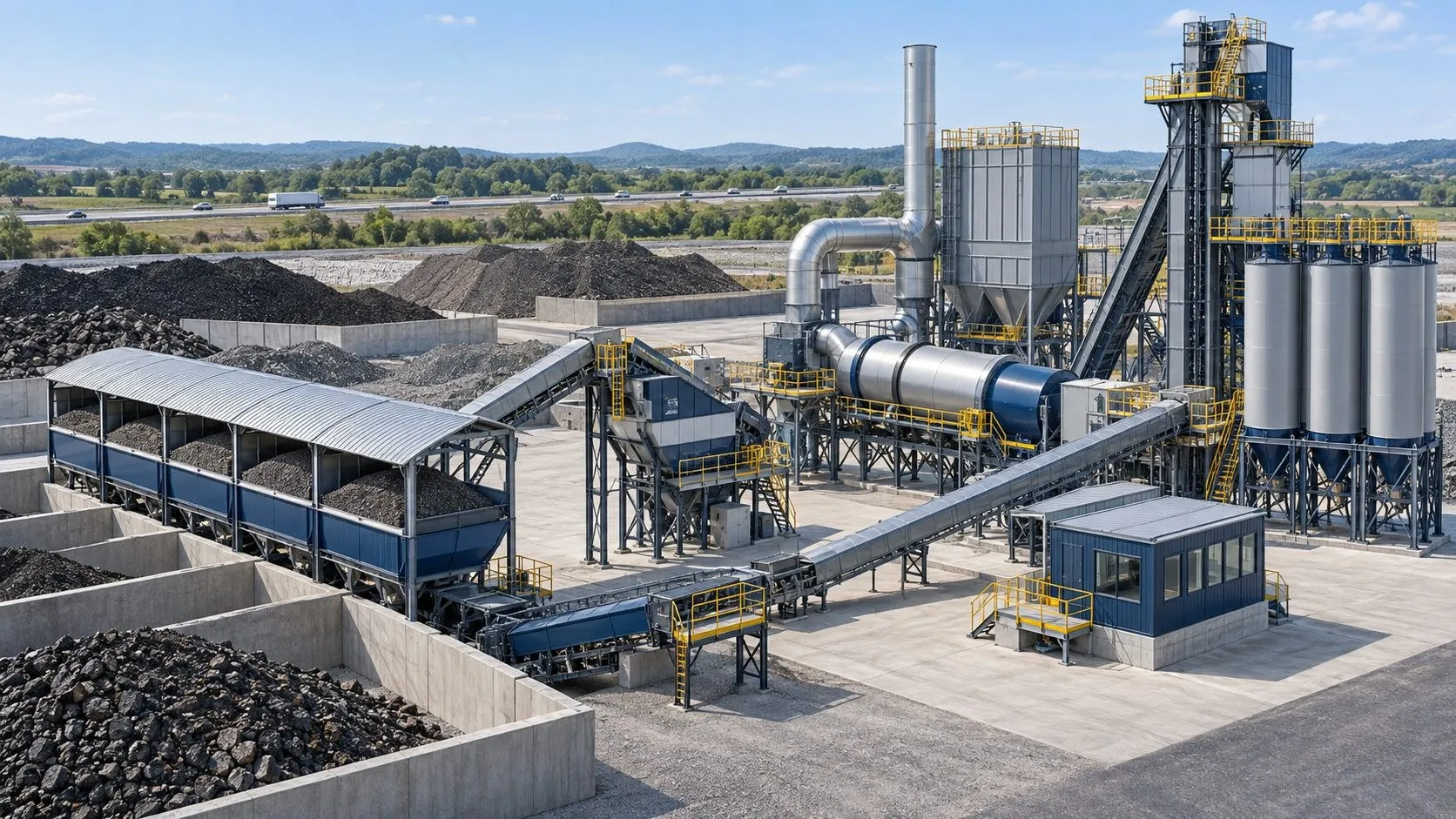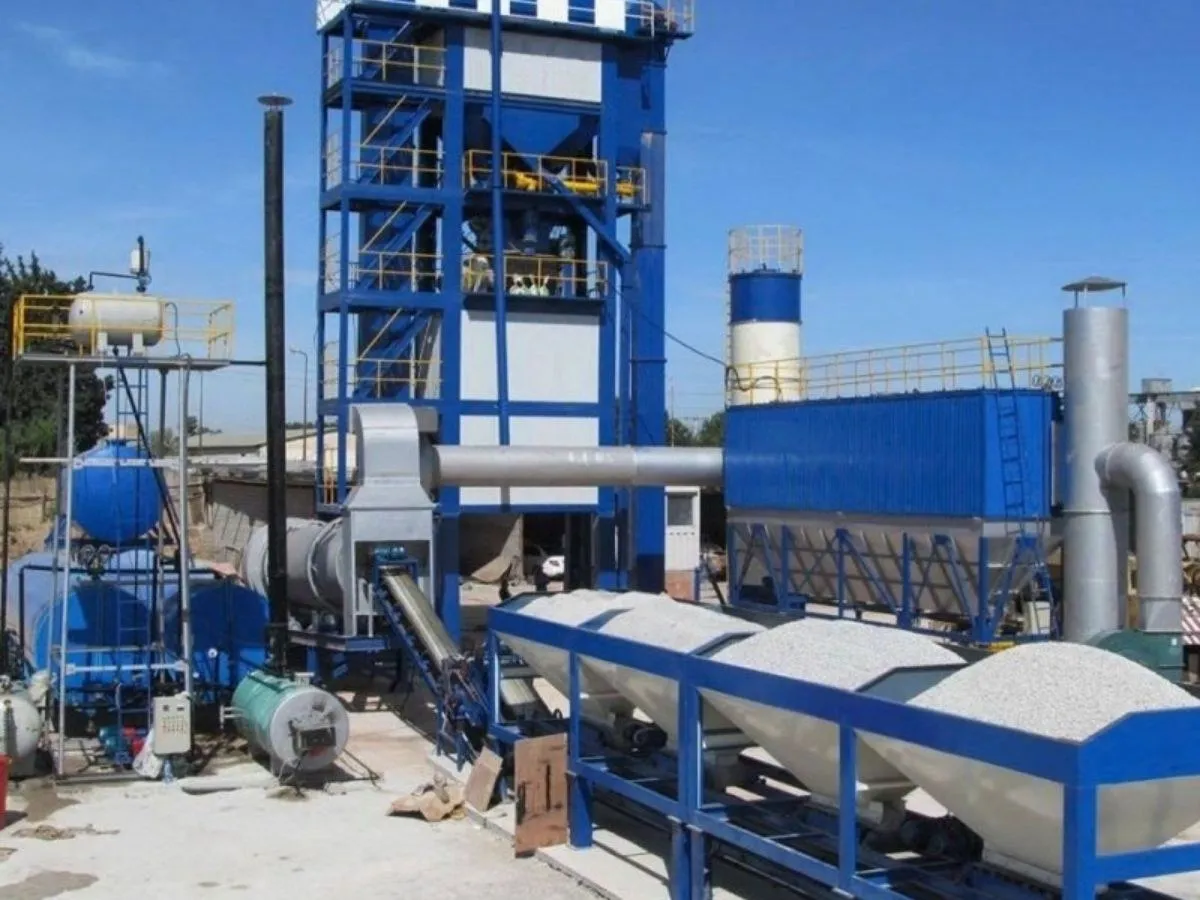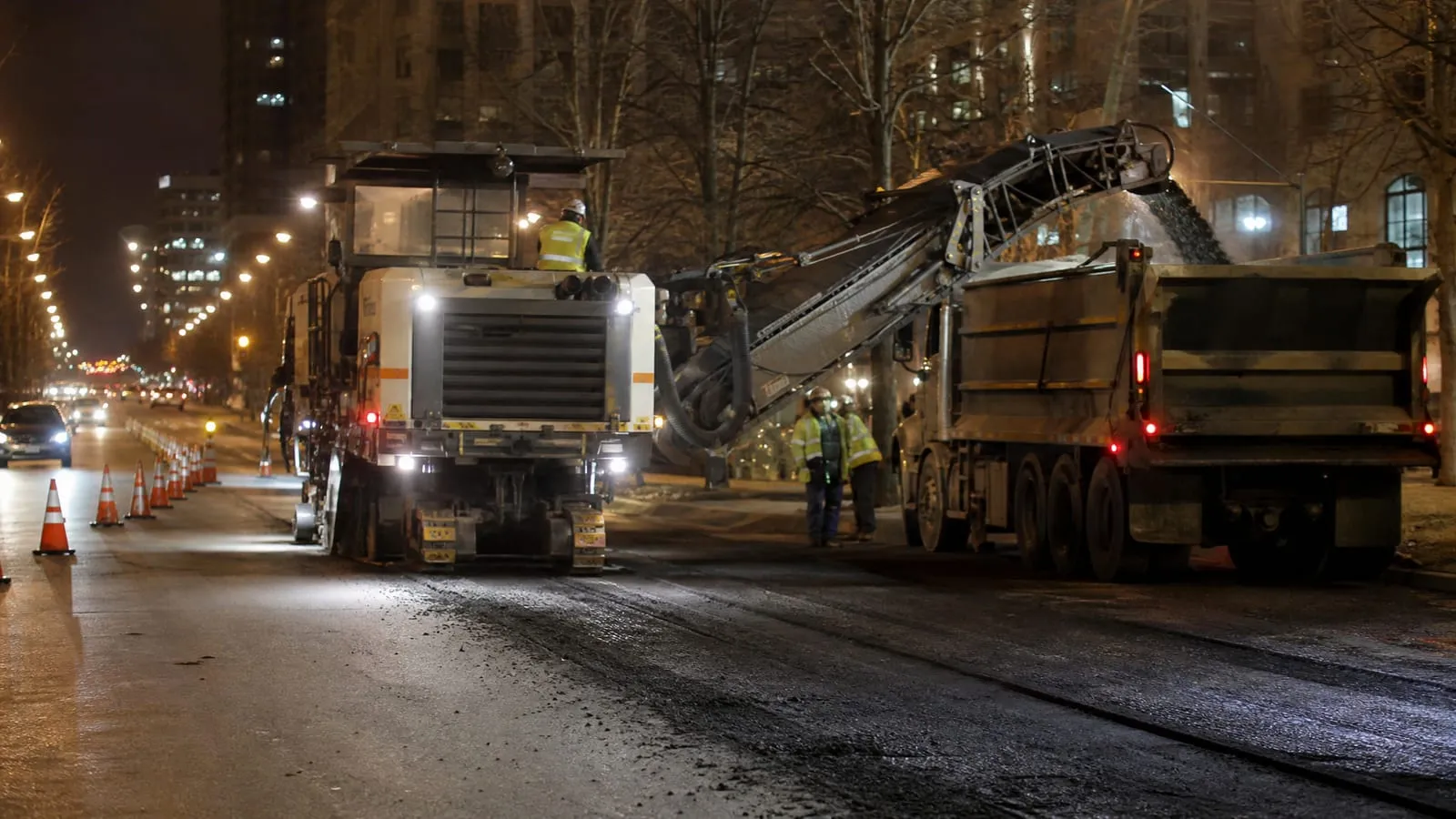
Short answer: A city that mills and repaves streets every year, often at night, is well served by an RMX-R160 batch plant with a separate RAP drum, RAP crushing and screening, covered RAP stockpiles and two hot mix silos. RAP replaces new aggregate and part of the new bitumen, so savings grow with the tons you use. Plant budget is about $390,000–$450,000 FOB before RAP processing and silos.
The project
| Work | Annual city resurfacing: mill and replace the wearing course on many streets |
| RAP supply | Thousands of tons of millings every year from the same program |
| Daily need | About 800–1,100 t of mix, often in night shifts |
| Mixes | Wearing and binder courses; RAP allowed in the specification at set percentages |
| Site | Permanent plant on the city edge |
The challenge
- Millings pile up. Without recycling they are a disposal cost; with recycling they replace new material.
- Night work. Trucks arrive unevenly; paving windows are short and fixed.
- Several mixes per shift. Different streets need different layers.
- Quality. RAP from many streets varies; the mix must still meet specification.
The recommended configuration
| Unit | Specification | Why |
|---|---|---|
| Plant | RMX-R160 batch plant with RAP drum | Batch accuracy with 30–50% RAP |
| RAP line | RAP feed bins, separate RAP drum, heated RAP surge bin and scale | Warms RAP without burning the old binder |
| RAP processing | Crusher and screen for two RAP fractions | Consistent RAP for the mix design |
| RAP storage | Covered stockpiles | Dry RAP: more output, less fuel |
| Storage | Two insulated hot mix silos | Night work, uneven trucks, two mixes at once |
| Additives | Rejuvenator dosing (if the mix design requires it) | Restores aged binder at higher RAP contents |
| Dust | Baghouse sized for 160 t/h | Urban emission limits |
| Fuel | Natural gas where available, or dual fuel | Clean burning near the city |
Making RAP work
- Keep RAP streams separate where streets have very different asphalt
- Crush and screen to two fractions; don’t over-crush
- Cover the stockpiles and build them on a drained base
- Test every stockpile for binder content and gradation; update the mix design
- Start with moderate RAP percentages and increase as quality data builds up
Estimating savings
Savings depend on three local numbers: tons of RAP used per year, the price of new aggregate, and the price of new bitumen. Our recycling plant price page gives a step-by-step method to estimate payback with your own figures.
Production planning
| Item | Planning figure |
|---|---|
| Daily output | about 960 t (160 t/h × 8 h × 75%) |
| RAP used per day at 30% | about 290 t |
| Trucks (20 t) | 6–10 depending on city traffic |
| Crew per shift | Operator, two loader drivers, maintenance, lab technician, supervisor |
Indicative budget
| Item | Indicative figure |
|---|---|
| RMX-R160 plant, FOB China | $390,000 – $450,000 |
| RAP crushing and screening, silos, additive dosing | Quoted per project |
| Site works, foundations, installation | Local quotes — see the price guide |
Variants
- Occasional millings only: a standard RMX-B160 with a cold RAP feed collar and space reserved for a RAP line
- Smaller program: RMX-R120 or RMX-R80
Send us your program and RAP figures to adapt this configuration.