The short answer
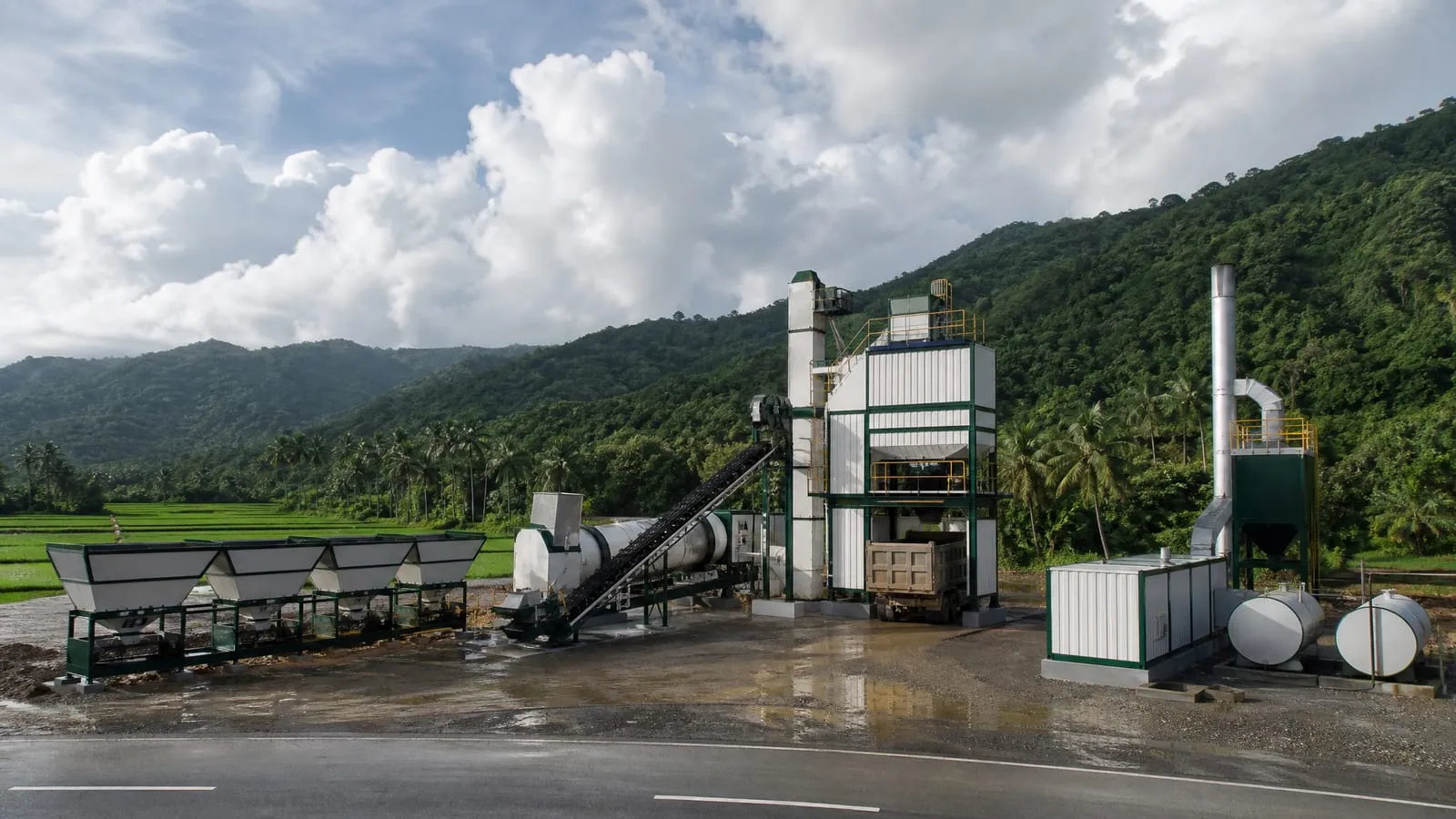
For most road projects in the Philippines, a 60 Hz batch plant of 80–160 t/h, sized for wet-season aggregate, is the right starting point. Choose a containerized plant if the plant will move between provinces or islands, a mobile plant for maintenance work that moves every few months, and a drum mix plant only when the project needs one standard mix and the budget is tight.
The rest of this guide covers the six things that make a plant work in the Philippines — power, rain, specifications, permits, logistics and support — and what to put in your request for quotation.
Philippines at a glance for plant buyers
| Topic | What to know | What it means for the plant |
|---|---|---|
| Grid power | 60 Hz; industrial supply commonly 400/230 V, some 460 V | Order motors, fans and controls for 60 Hz and your site voltage |
| Climate | Wet season roughly June–November on most of the country; tropical cyclones every year | Larger drying capacity, covered fines, sealed electrical cabinets |
| Coastal sites | Many projects within a few kilometers of the sea | Corrosion protection in the paint system and on cable trays |
| Road specifications | DPWH Standard Specifications; hot-laid surface course is Item 310 | Batch plant recommended for tight job-mix tolerances |
| Environment | ECC or CNC and Permit to Operate from DENR-EMB | Baghouse sized for your emission limit; stack sampling port |
| Ports | Manila, Subic, Batangas, Cebu, Davao, Cagayan de Oro and others | Container modules simplify inter-island transport |
| Trade | ASEAN–China Free Trade Area (Form E certificate of origin) | Preferential duty on many machinery lines; check your HS code |
Which plant type fits which Philippine project
| Project | Typical need | Suggested plant | Why |
|---|---|---|---|
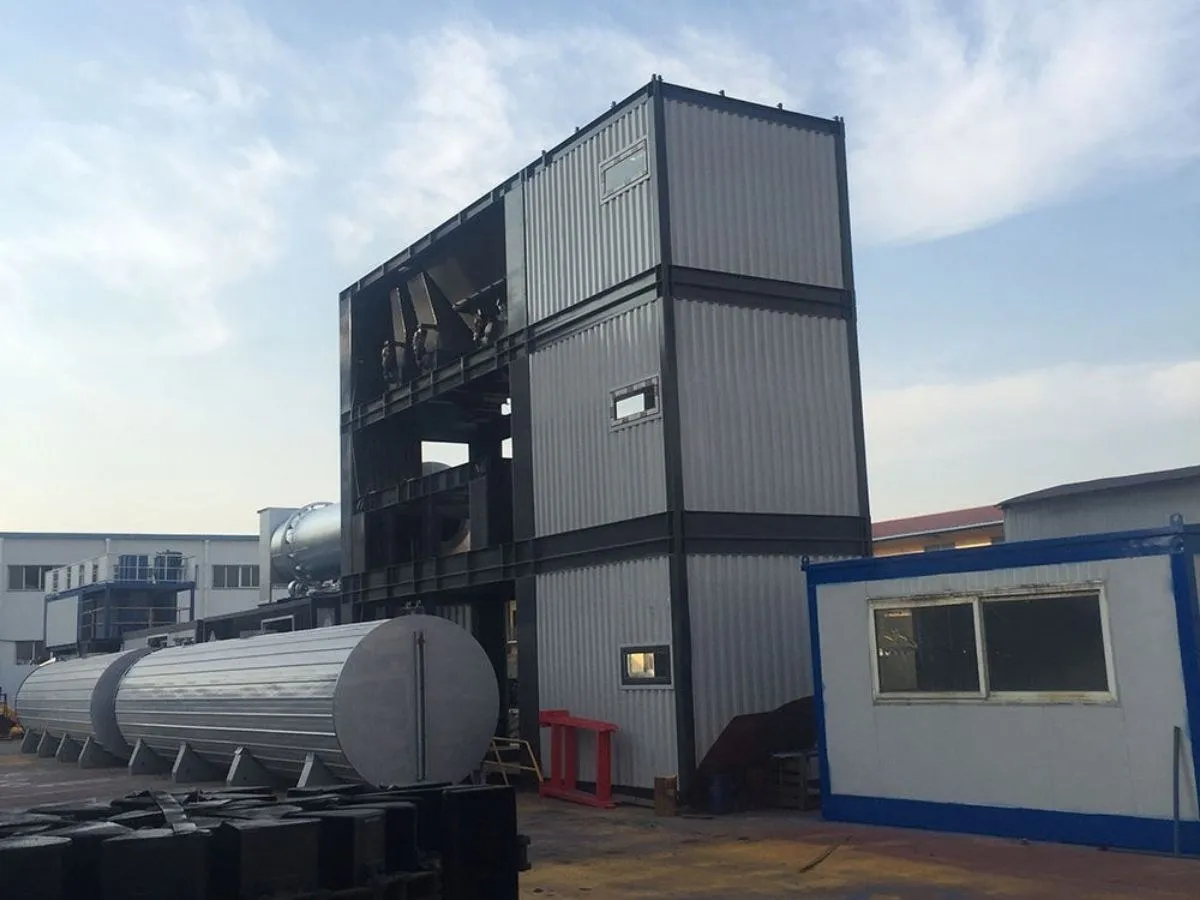
| DPWH national road or bypass | 600–1,200 t/day, Item 310 surface and base | RMX-C120 or RMX-C160 containerized batch | Holds tolerances; moves to the next contract without a concrete foundation |
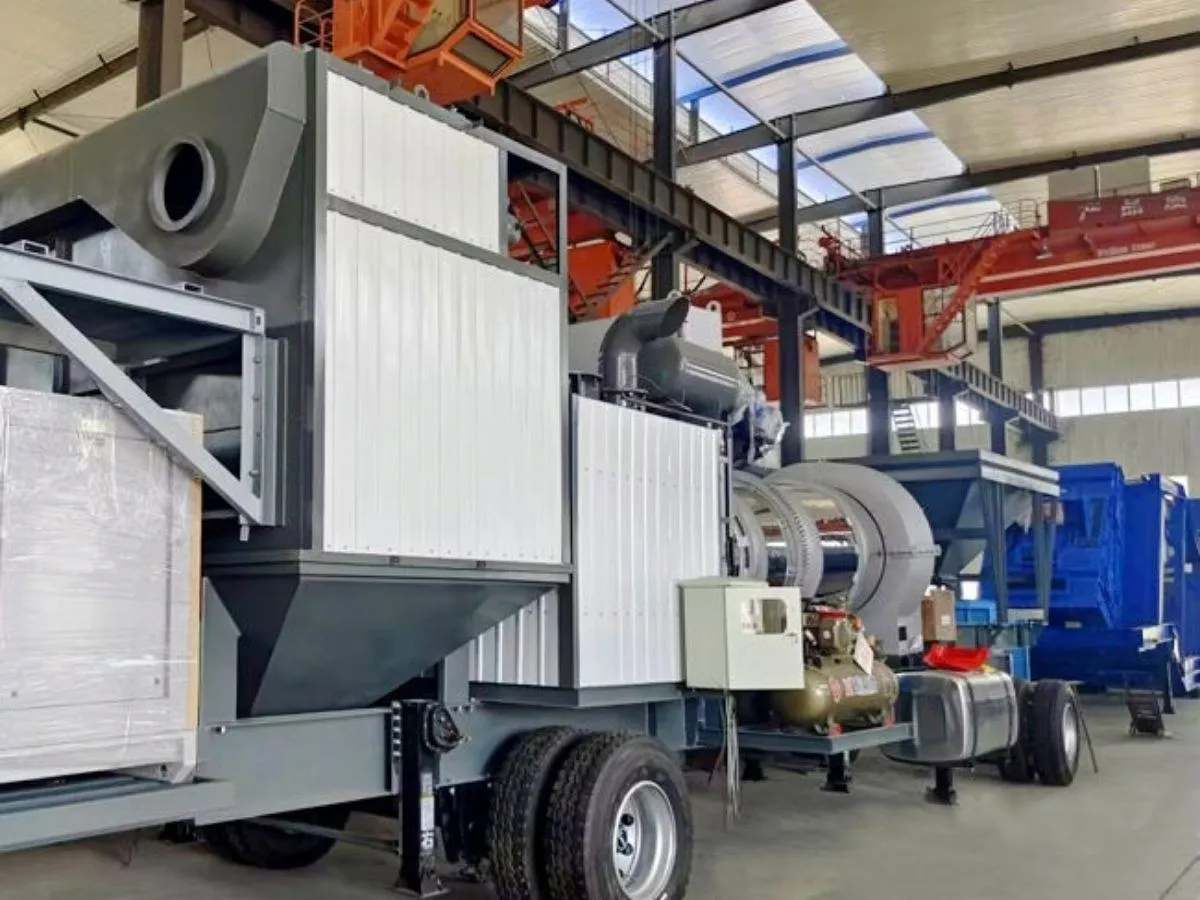
| Provincial roads on one island, several packages | 400–800 t/day, frequent relocation | RMX-M80 or RMX-M120 mobile batch | Towed between sites; producing again within days of arrival |
| Farm-to-market roads and municipal overlays | 200–400 t/day, one standard mix | RMX-D60 or RMX-D80 drum mix | Lowest cost per ton when the recipe rarely changes |
| Commercial supply near Metro Manila, Cebu or Davao | 1,500 t/day and more, many customers | RMX-B240 stationary batch with hot mix silo | Many recipes, storage for truck peaks, long site life |
| City resurfacing with regular milling | Steady RAP supply | RMX-R120 with RAP drum | Uses milled asphalt instead of new aggregate and binder |
These are starting points, not quotations. Real capacity depends on aggregate moisture, truck fleet and working hours — see the next section.
Rain is the biggest design factor
Aggregate that sits in open stockpiles through the wet season often holds 5–7% moisture or more, compared with 3% or less in the dry months. Every extra percent of water has to be evaporated in the drying drum, so a plant’s real output falls as moisture rises — by a quarter or more on the wettest days if the drum and burner were sized for dry stone.
What we specify for Philippine sites:
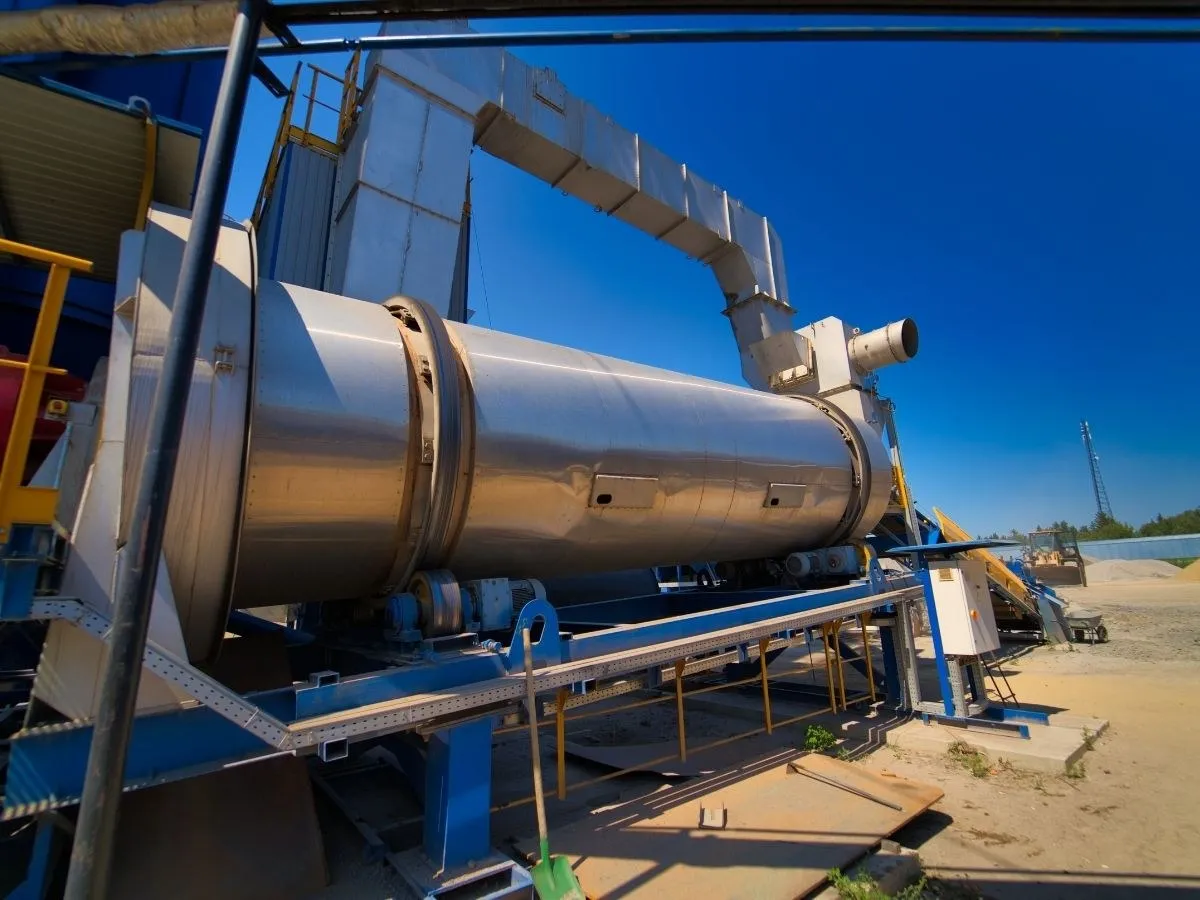
- Drying drum and burner sized for your wet-season moisture, not the catalogue figure at 5% moisture
- Roofed storage for sand and fine aggregate, the fractions that hold the most water, and a sloped, drained stockpile pad
- Sealed, ventilated or air-conditioned electrical cabinets and control room, because heat and humidity shorten the life of electronics
- Rain covers on cold feed bins and belt conveyors, and drainage points on the hot bins
- A hot mix storage silo where showers interrupt paving, so the plant can keep running while trucks wait
If you can tell us your aggregate source and typical wet-season moisture, we size the drum and burner around it and show the expected output at that moisture in the quotation.
Power and fuel
Power. The Philippine grid runs at 60 Hz. A plant built for 50 Hz will run its motors about 20% faster on 60 Hz, which overloads fans and conveyors, so the frequency and voltage must be fixed at the order stage. Many plant sites are outside the reach of a strong grid connection; in that case a diesel generator set sized to the plant’s installed power (shown in each spec table) plus starting margin is the usual solution.
Fuel. Diesel is available everywhere and is the simplest burner fuel. Heavy fuel oil is cheaper per unit of heat but needs heating and filtering, and is easiest to buy near ports and industrial zones. LPG is widely distributed and burns cleanly. Pipeline natural gas is limited to a few areas. Many buyers choose a dual-fuel burner (for example diesel and heavy oil) to switch with price and availability.
Meeting DPWH and LGU specifications
Public road projects follow the DPWH Standard Specifications for Highways, Bridges and Airports (the “Blue Book”). Hot-laid asphalt surface courses are specified under Item 310 – Bituminous Concrete Surface Course, which sets the job-mix formula, its tolerances, air voids and mix temperatures that the project engineer checks.
A batch plant weighs aggregate, filler and bitumen separately for every batch and screens the hot aggregate before weighing, which makes it easier to stay inside the job-mix tolerances — especially when you switch between surface and base course, or between projects. A drum mix plant can meet a single steady specification, but has less room to correct gradation when stockpiles change.
Also plan a field laboratory near the plant for Marshall testing, extraction and gradation. The plant’s control system should record batch weights and temperatures, which helps when the engineer asks for production records.
Permits and approvals
An asphalt plant is a stationary source of air emissions, so the main approvals come from the Environmental Management Bureau (DENR-EMB):
- Environmental Compliance Certificate (ECC) — or a Certificate of Non-Coverage (CNC) for projects below the thresholds, as determined by EMB under the Philippine EIS System
- Permit to Operate for the plant as an air pollution source, typically supported by the plant’s emission control details (baghouse specification, stack height, fuel)
- Local government permits — barangay clearance, mayor’s or business permit, and building permits for foundations and structures
Requirements depend on plant size, location and the project, so confirm them with an environmental consultant or the EMB regional office before you choose a site. We supply the technical documents these applications usually need: layout drawings, baghouse and stack data, fuel and power consumption.
Shipping and getting the plant to site
The sea route from China to the Philippines is short compared with Africa or Latin America, which keeps freight a smaller share of the project cost. A typical batch plant ships in standard 40-ft containers plus open-top or flat-rack units for the drying drum, tower and baghouse sections.
- Main entry ports: Manila (including the international container terminal), Subic, Batangas, Cebu, Davao, Cagayan de Oro and General Santos
- Island sites: containerized modules transfer to inter-island vessels or RoRo ships without dismantling, then travel by truck on provincial roads
- Customs: clearance through the Bureau of Customs with a licensed broker; ask us for a Form E certificate of origin to claim ASEAN–China preferential duty, and budget VAT on the landed value
- Inland transport: check bridge limits and road widths for the heaviest piece on the packing list (usually the drying drum or mixer section)
Our shipping checklist walks through documents, Incoterms and packing in more detail.
How Roadmixa supports Philippine projects
We do not have an office in the Philippines, and we say so plainly. This is how support works:
- Before the order: our engineers review your site, aggregate, fuel and power, and recommend a configuration — in English, by email, WhatsApp or video call
- Installation and commissioning: engineers travel to site to supervise installation, set up the burner and control system, and run trial production with your crew
- Training: operators and maintenance staff are trained on site, in English, using your own plant
- After delivery: remote troubleshooting from our engineers, and spare parts shipped by sea or by air for urgent items; we recommend a first-year wear-parts stock on site
- Warranty: 12 months, as set out in the sales contract
What to include in your request for quotation
Send us these details and we will reply with a configuration and indicative price:
- Output needed per hour and per day, and the mixes (Item 310 surface course, base course, others)
- Site location (province or city) and nearest port
- How long the plant will stay at the first site, and whether it will move between islands
- Aggregate source and expected wet-season moisture
- Power available (grid voltage, or generator) and fuel you can buy reliably
- Any emission limit or permit condition already known
Send your project details — or check the price guide first for a budget range.
Sources
Philippine grid frequency and industrial supply voltages; Philippine Tariff Commission ACFTA tariff finder; DPWH Standard Specifications for Highways, Bridges and Airports, Volume II (Item 310); DENR Environmental Management Bureau, Philippine EIS System (ECC/CNC). Requirements change — confirm current rules with the relevant agency before you commit.